“Touch Me Not” or “Hold Me Not”? What the Greek of John 20:17 Really Says
“Touch me not” or “hold me not”? The Greek of John 20:17 means stop clinging, most modern Bibles agree, and Joseph Smith wrote “Hold me not” back in 1832.
Read More

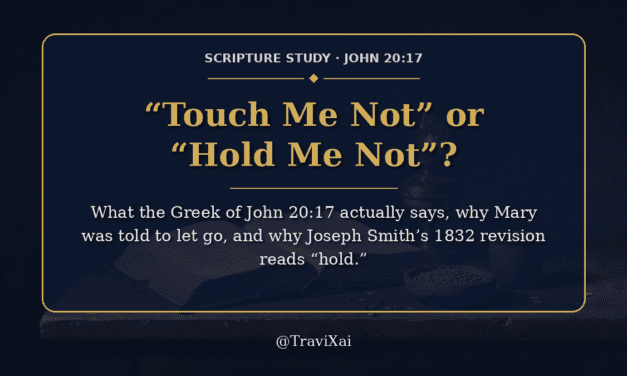
“Touch me not” or “hold me not”? The Greek of John 20:17 means stop clinging, most modern Bibles agree, and Joseph Smith wrote “Hold me not” back in 1832.
Read More
Lehi’s family carried a scripture record out of Jerusalem that held more than our Old Testament does. Jonah R. Barnes’s 2024 book asks what was on it, using texts that surfaced after 1830. Here’s the question, the scriptural groundwork, and why it matters.
Read More
Six lines of evidence that work together: a book dictated in one draft, eleven witnesses who never took it back, Hebrew structures nobody was looking for, an old-world journey that checks out on the map, a falling away the Bible predicted, and a restoration it promised.
Read More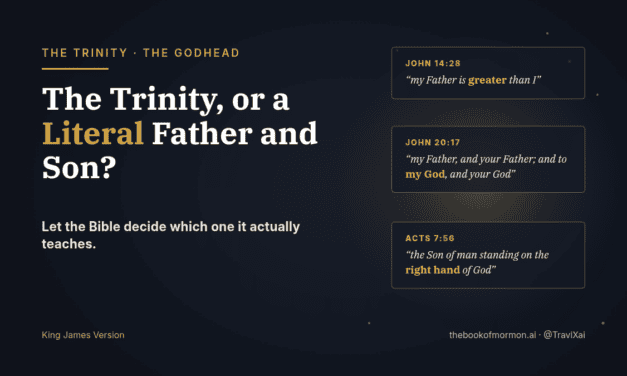
No verse says God is one being in three persons. Jesus prays to his Father, says “my Father is greater than I,” and sits at his right hand. Let the Bible decide.
Read More
For more than a century critics said Nephi’s “most precious steel” proved the Book of Mormon was a fraud, because Israelites in 600 BC supposedly knew nothing of steel. Then archaeologists found a steel sword a few miles from Jerusalem, dated to Laban’s lifetime.
Read MoreThis is not an official website of The Church of Jesus Christ of Latter-day Saints.
For official Church information, visit ChurchofJesusChrist.org.