Advertisement

Category: Historic Christianity

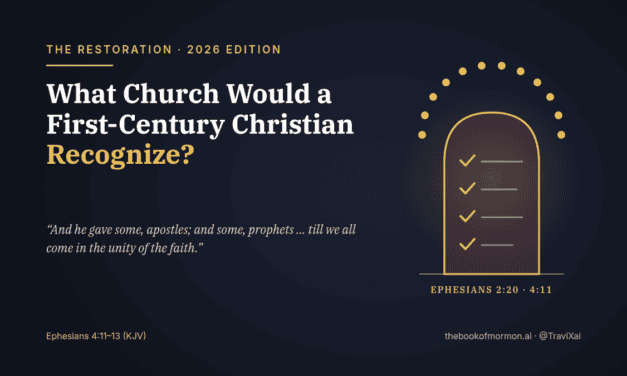
What Church Would a First-Century Christian Recognize? (2026 Edition)

Drop a Christian from first-century Ephesus into 2026 and hand him a New Testament checklist: apostles and prophets (Ephesians 2:20; 4:11–13), the Twelve kept full (Acts 1), the seventy (Luke 10:1), elders, bishops, and deacons, baptism by immersion, the Holy Ghost by laying on of hands (Acts 8:17), baptism for the dead (1 Corinthians 15:29), revelation, and Christ’s name. A fair, verse-by-verse comparison.

Read More
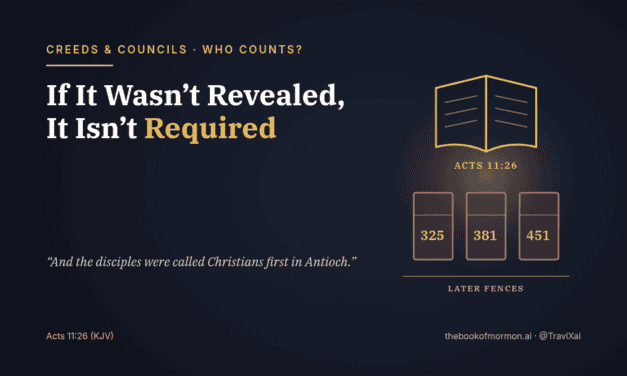
If It Wasn’t Revealed, It Isn’t Required: Councils and Who Counts as Christian

The Bible defines a Christian in one verse: “the disciples were called Christians first in Antioch” (Acts 11:26). Jesus’ own tests are fruits, love, and keeping His commandments. Then Nicaea (325), a 380 imperial edict, Constantinople (381), and Chalcedon (451) added vocabulary no apostle used and enforced it with anathemas. If God didn’t reveal it, no one gets to require it.

Read More

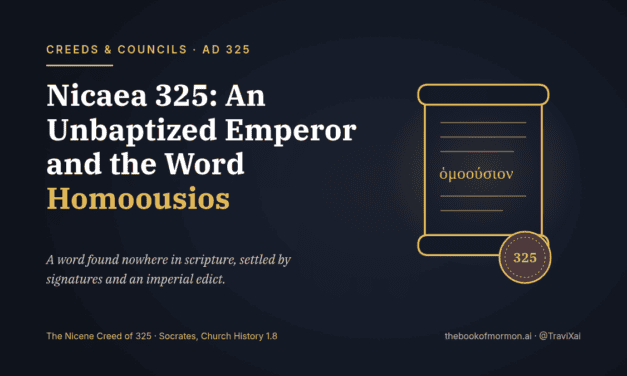
Nicaea 325: An Unbaptized Emperor and the Word ‘Homoousios’

The Council of Nicaea was convened by Constantine, a catechumen who wasn’t baptized until his deathbed in 337. Its key word, homoousios, appears nowhere in scripture; Athanasius admits the bishops adopted it because every Bible phrase also applied to people. Here’s what Eusebius, Socrates, and Jerome actually record, the myths to drop, and how Acts 15 settled doctrine instead.

Read More

The Canon Was Never Meant to Close

From the voice in Eden to Sinai, the prophets, Christ, and the apostles, God always spoke through prophets, and every major change came with a prophet’s name, a date, God’s own words, and a reason. The closing of the canon has none. Here is the full story: the councils and the Reformation that drew the lists, the books the Bible cites but we don’t have, the prophets it promises for the last days, the “we are Moses’ disciples” pattern, and how God reopened the heavens.

Read More
Loading

This is not an official website of The Church of Jesus Christ of Latter-day Saints.

For official Church information, visit ChurchofJesusChrist.org.