

Category: Sola Scriptura
“He Shall Be Called a Nazarene”: The Prophets Missing From the Old Testament
Matthew 2:23 quotes “the prophets,” but no Old Testament verse says it. Jesus, James, and Paul quote missing scripture too. So why is Zenos a fraud?
Read More
Abiathar or Ahimelech? Mark 2:26 vs. 1 Samuel 21:1–6
Mark 2:26 names Abiathar; 1 Samuel 21 says Ahimelech gave David the bread. The fixes defenders use, and the grace critics won’t give Helaman 8:21.
Read More
Is the Bible All of God’s Words? The Gaps, Lost Books, and Discoveries That Say No
Is the Bible all of God’s words? Its own pages say no: centuries of silence, 20 books it cites but lacks, slain prophets, and finds like the Dead Sea Scrolls.
Read More
Who Was Joseph’s Father? Matthew 1:16 vs. Luke 3:23
Matthew says Joseph’s father was Jacob; Luke says Heli. What both genealogies say, the fixes neither text states, and the charity critics won’t give Mosiah.
Read More
Jude Says Enoch “Prophesied”: Why Jude 1:14 Isn’t Paul Quoting a Pagan Poet
Paul quoted pagan poets, so Jude quoting Enoch means nothing? Read how each source is introduced. Paul cites “your own poets.” Jude says Enoch “prophesied,” the verb Jesus used for Isaiah.
Read More
How Did Judas Die? Matthew 27:5 vs. Acts 1:18
Matthew says Judas hanged himself and the chief priests bought the field. Acts says Judas bought the field and fell headlong. Here’s what each text says, the “rope broke” fix that’s in neither one, and why critics won’t give the Book of Mormon the same courtesy.
Read More
Who Killed Goliath? 1 Samuel 17 vs. 2 Samuel 21:19
1 Samuel 17 says David killed Goliath. The Hebrew of 2 Samuel 21:19 says Elhanan did, and the KJV added “the brother of” in italics. Here’s the text, the excuses, and the standard critics would never accept for the Book of Mormon.
Read More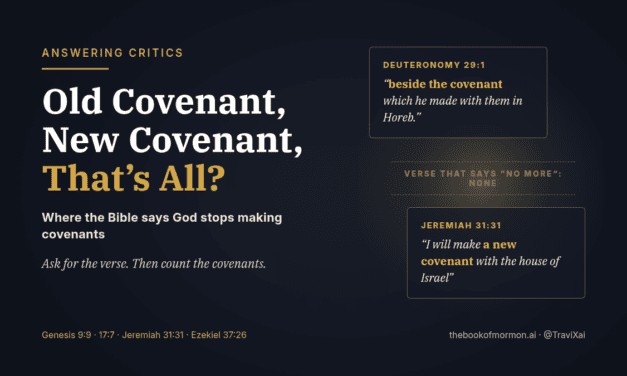
“Old Covenant, New Covenant, That’s All”? Where the Bible Says God Stops Making Covenants
Critics say there’s the Old Covenant and the New Covenant, and that’s all we need. Ask for the verse. God made covenants with Noah, Abraham, Israel at Sinai and again in Moab, Phinehas, and David, and the prophets promised more. Adding a covenant is the Bible’s pattern, not proof of a false church.
Read More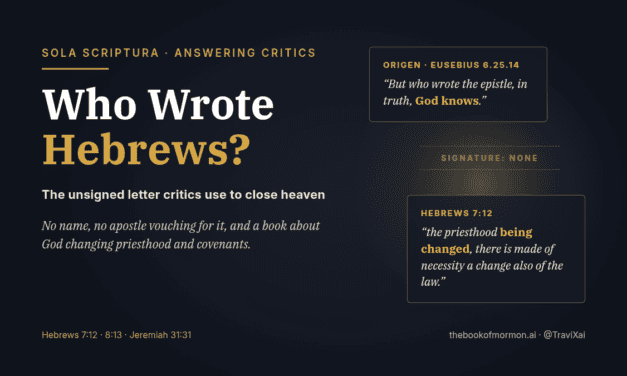
Who Wrote Hebrews? The Unsigned Letter Critics Use to Close Heaven
Critics quote Hebrews to say the New Covenant is final and God is done. But who wrote Hebrews, and which apostle ever vouched for it? Origen said only God knows. Then read what Hebrews actually teaches: God changes priesthood and covenants when He chooses, and the Bible never says He’d stop.
Read More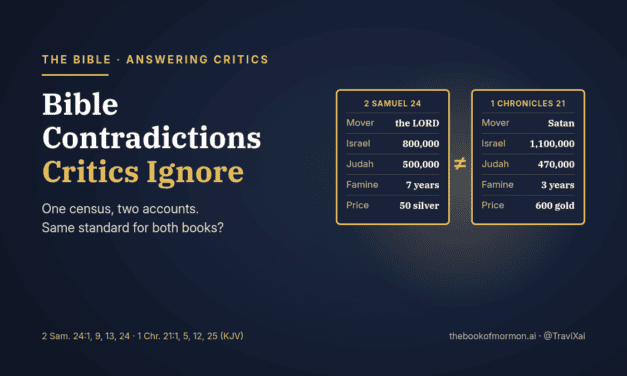
Bible Contradictions Critics Ignore: 2 Samuel 24 vs. 1 Chronicles 21
Critics say one mistake would prove the Book of Mormon false. But the Bible tells the story of David’s census twice, and the accounts differ on who moved David (the LORD or Satan), how many men were counted, how long the famine would last, and what David paid. Here is how evangelical scholars harmonize them, what those answers concede, and why “the mistakes of men” was never a problem for Latter-day Saints.
Read More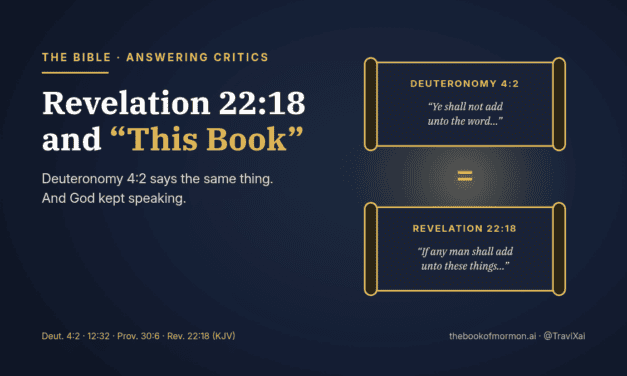
Revelation 22:18 and “This Book”: Deuteronomy 4:2 Says the Same
“If any man shall add unto these things…” Critics quote Revelation 22:18 to prove nothing can be added to the Bible. But “this book” is John’s own prophecy, Moses gave the same warning in Deuteronomy 4:2 before God sent Joshua, Isaiah, Jeremiah, and the whole New Testament, and the warning binds men who tamper with God’s word, not God.
Read More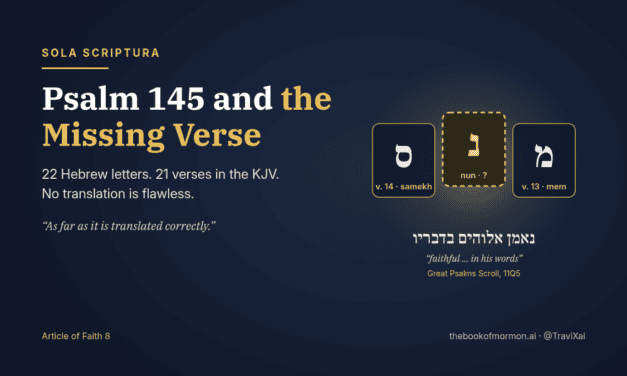
Psalm 145 and the Missing Verse: No Translation Is Flawless
Psalm 145 walks through the Hebrew alphabet one verse at a time, but the King James Bible has 21 verses for 22 letters. The missing nun line survives in the Dead Sea Scrolls and the Septuagint, and modern Bibles disagree about it. Here is what that means for inerrancy and for Article of Faith 8.
Read More