

Tag: Eusebius
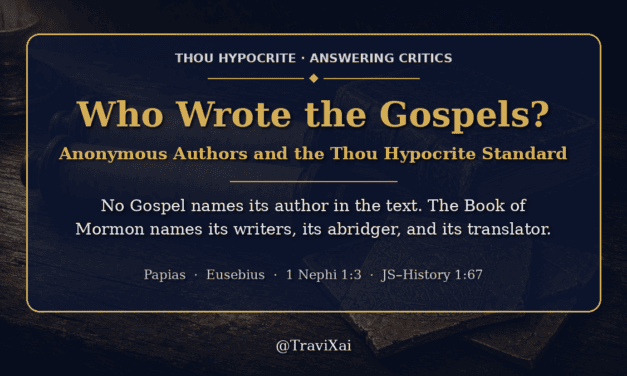
Who Wrote the Gospels? Anonymous Authors and the Thou Hypocrite Standard
No Gospel names its author in the text. Here’s where Matthew, Mark, Luke, and John got their names, and why the Book of Mormon has the better paper trail.
Read More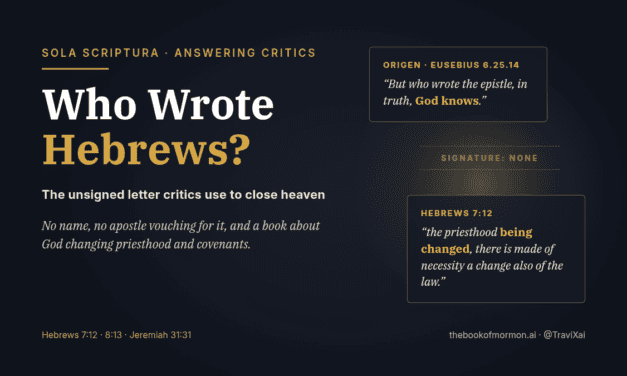
Who Wrote Hebrews? The Unsigned Letter Critics Use to Close Heaven
Critics quote Hebrews to say the New Covenant is final and God is done. But who wrote Hebrews, and which apostle ever vouched for it? Origen said only God knows. Then read what Hebrews actually teaches: God changes priesthood and covenants when He chooses, and the Bible never says He’d stop.
Read More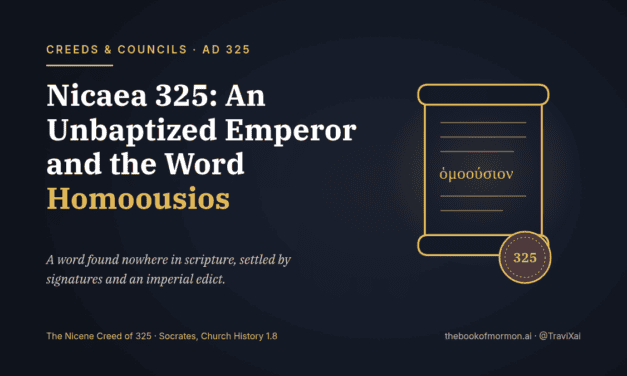
Nicaea 325: An Unbaptized Emperor and the Word ‘Homoousios’
The Council of Nicaea was convened by Constantine, a catechumen who wasn’t baptized until his deathbed in 337. Its key word, homoousios, appears nowhere in scripture; Athanasius admits the bishops adopted it because every Bible phrase also applied to people. Here’s what Eusebius, Socrates, and Jerome actually record, the myths to drop, and how Acts 15 settled doctrine instead.
Read More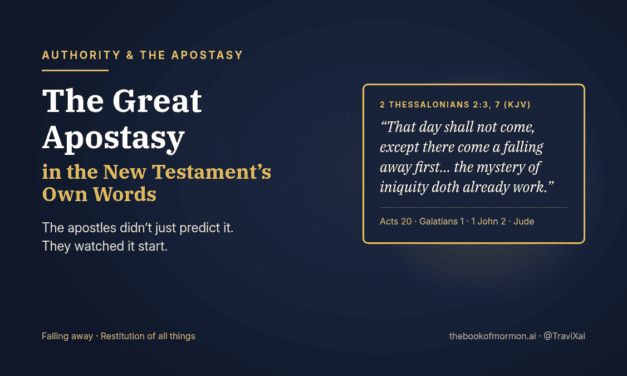
The Great Apostasy in the New Testament’s Own Words
Critics call the Great Apostasy a Latter-day Saint invention, but Paul, Peter, John, and Jude wrote it down first. From the “falling away” of 2 Thessalonians 2:3 and the wolves of Acts 20 to “doth already work,” “so soon removed,” and “even now are there many antichrists,” the New Testament records the apostles watching the falling away begin, and it promises a “restitution of all things” (Acts 3:21).
Read More
Same Divine Nature Isn’t Consubstantial: Reading the Verses Critics Cite
Yes, the Son shares the Father’s divine nature. No, that doesn’t make them one substance. A verse-by-verse look at John 1:1, John 10:30, Colossians 2:9, Hebrews 1:3, Philippians 2:6, and where “consubstantial” really came from.
Read More