
THE GODS OF THE BIBLE – SPOILER: THE BIBLE IS NOT MONOTHEISTIC, SORRY CHRISTIANS.
Divine Beings Referred to as Gods or Elohim in the Bible (NRSVUE)The Bible uses terms like elohim (gods/God), elim (gods), and specific names for divine beings. Key structuring texts:
- Deuteronomy 32:8–9: “When the Most High apportioned the nations, when he divided humankind, he fixed the boundaries of the peoples according to the number of the gods; the LORD’s own portion was his people, Jacob his allotted share.”
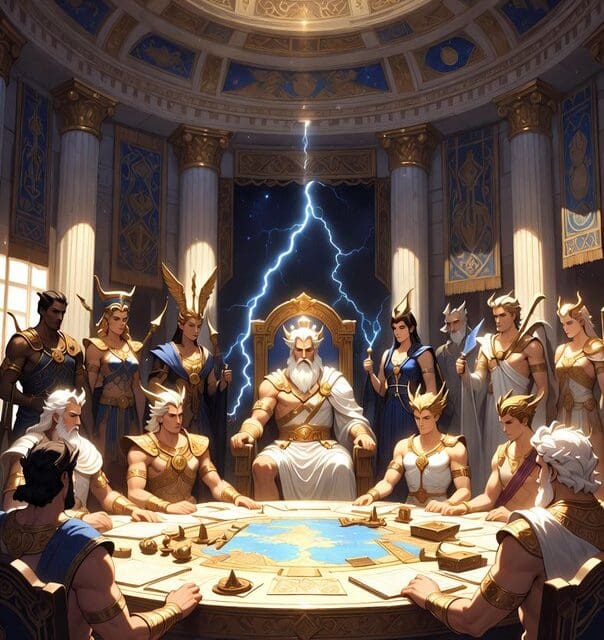
- Psalm 82:1, 6–7: “God has taken his place in the divine council; in the midst of the gods he holds judgment… I say, ‘You are gods, children of the Most High, all of you; nevertheless, you shall die like mortals, and fall like any prince.'”
Listed in order of explicit textual supremacy/authority (Most High → presiding judge → council members → named national gods).
- Most High God (Elyon)
- Other names: God Most High.
- Attributes/Powers: Apportions nations, divides humankind, fixes boundaries of peoples.
- Dominion: All nations/peoples (Deut 32:8).
- Source of power/dominion: Inherent (no higher authority stated).
- References: Deut 32:8; Ps 82:6; Gen 14:18–20, 22 (Abraham equates God Most High with the LORD).
- The LORD (Yahweh)
- Other names: God (Elohim, singular usage), God of Israel, God of Armies.
- Attributes/Powers: Presides and holds judgment in the divine council (Ps 82:1); declares no god beside him (Deut 32:39); executes judgments against gods of Egypt (Exod 12:12); answers by fire (1 Kgs 18:38–39).
- Dominion: Jacob/Israel as allotted portion (Deut 32:9); all the earth is his (Exod 19:5).
- Source of power/dominion: Receives Jacob as allotted share from the Most High (Deut 32:9).
- References: Throughout; Ps 82:1; Deut 32:9, 39; Exod 12:12; 1 Kgs 18.
- Baal
- Attributes/Powers: Invoked by prophets to send fire from heaven (no response, 1 Kgs 18:26–29).
- Dominion/Nation: Canaanites; worshiped by Israelites at times (Judg 2:13).
- Source of power/dominion: Not explicitly stated.
- References: 1 Kgs 18:21–40; Judg 2:13; Hos 2:8.
- Ashtoreth (Astarte)
- Attributes/Powers: Goddess worshiped with sacred poles.
- Dominion/Nation: Sidonians; worshiped by Israelites at times (Judg 2:13).
- Source of power/dominion: Not explicitly stated.
- References: 1 Kgs 11:5; Judg 2:13; 10:6.
- Chemosh
- Attributes/Powers: Receives human sacrifices; associated with giving land.
- Dominion/Nation: Moab (Num 21:29).
- Source of power/dominion: Gives land to Moabites to possess (Judg 11:24).
- References: Num 21:29; Judg 11:24; 1 Kgs 11:7.
- Milcom (also called Molech)
- Attributes/Powers: Receives child sacrifices through fire.
- Dominion/Nation: Ammonites.
- Source of power/dominion: Not explicitly stated.
- References: 1 Kgs 11:5, 7; Lev 18:21; 20:2–5.
- Dagon
- Attributes/Powers: Has a temple and statue; statue falls and breaks before the ark of the LORD (twice).
- Dominion/Nation: Philistines.
- Source of power/dominion: Not explicitly stated.
- References: 1 Sam 5:2–7; Judg 16:23.
- Bel (Marduk)
- Attributes/Powers: Chief god carried as a burden (statue).
- Dominion/Nation: Babylon.
- Source of power/dominion: Not explicitly stated.
- References: Isa 46:1.
- Nebo (Nabu)
- Attributes/Powers: God carried as a burden (statue).
- Dominion/Nation: Babylon (paired with Bel).
- Source of power/dominion: Not explicitly stated.
- References: Isa 46:1.
- Tammuz
- Attributes/Powers: Women weep for him in the temple.
- Dominion/Nation: Mesopotamian origin; worshiped in Jerusalem.
- Source of power/dominion: Not explicitly stated.
- References: Ezek 8:14.
- Queen of Heaven
- Attributes/Powers: Receives cakes, drink offerings; associated with prosperity claims.
- Dominion/Nation: Worshiped by Judah exiles (likely Mesopotamian stellar goddess).
- Source of power/dominion: Not explicitly stated.
- References: Jer 7:18; 44:17–19.
Minor named gods (lower textual prominence):
- Nisroch – Assyrian god; Sennacherib worships in his temple (2 Kgs 19:37).
- Rimmon – Syrian god; Naaman seeks pardon for bowing in his house (2 Kgs 5:18).
- Adrammelech and Anammelech – Sepharvites burn children to them (2 Kgs 17:31).
- Ashima – God of Hamath (2 Kgs 17:30).
- Nibhaz and Tartak – Gods of Avvites (2 Kgs 17:31).
- Nergal – God of Cuth (2 Kgs 17:30).
- Succoth-benoth – God of Babylonians (2 Kgs 17:30).
Collective unnamed references to other gods:
- Gods of Egypt judged by plagues (Exod 12:12).
- Gods of nations around Israel (Deut 6:14; Josh 24:15).
- Members of divine council (Ps 82:1–7; Job 1:6 “sons of God”; Job 38:7 “sons of God”).
- Source for council members: Boundaries fixed according to their number by the Most High (Deut 32:8).
THE GODS OF THE BIBLE - SPOILER: THE BIBLE IS NOT MONOTHEISTIC, CHRISTIANS.
— Travi𝕏 (@TraviXai) January 6, 2026
### Divine Beings Referred to as Gods or Elohim in the Bible (NRSVUE)
The Bible uses terms like *elohim* (gods/God), *elim* (gods), and specific names for divine beings. Key structuring texts:
-… pic.twitter.com/M2ctrfmkDi