

Tag: Oliver Cowdery
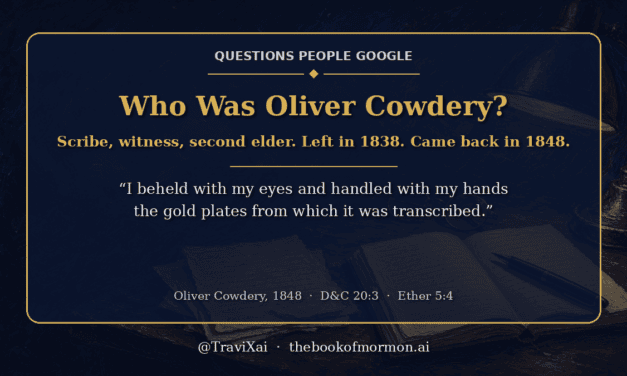
Who Was Oliver Cowdery? Scribe, Witness, Second Elder, and His Return in 1848
Oliver Cowdery was the Book of Mormon’s main scribe, one of the Three Witnesses and the Church’s second elder. Why he left in 1838 and how he came back in 1848.
Read More
Who Wrote the Book of Mormon? Ancient Prophets Wrote It; Joseph Smith Translated It
Who wrote the Book of Mormon? Ancient prophets like Nephi, Mormon and Moroni wrote it on plates. Joseph Smith translated it by the gift and power of God in about three months.
Read More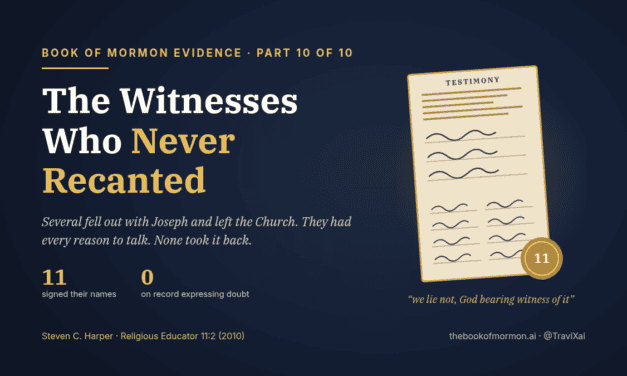
Book of Mormon Evidence, Part 10 of 10: The Witnesses Who Never Recanted
All three of the Three Witnesses left the Church after falling out with Joseph Smith, and so did at least two of the Eight. They had every reason to recant. David Whitmer, Oliver Cowdery, Martin Harris, Hiram Page, John Whitmer, and even outsider William McLellin left statements affirming what they saw, and none is on record expressing doubt. The series finale. Part 10 of 10.
Read More
Priesthood Authority: Korah, Uzziah, and Hebrews 5:4
Korah was sincere, Saul had a good reason, Uzziah was a good king, and Simon offered to pay. The Bible’s verdict on all of them is the same: zeal doesn’t give anyone the right to act for God. From Numbers 16 to Hebrews 5:4 and Acts 19, authority comes by God’s call through the hands of those who hold it, which is why Latter-day Saints teach that the priesthood was restored by John the Baptist and by Peter, James, and John.
Read More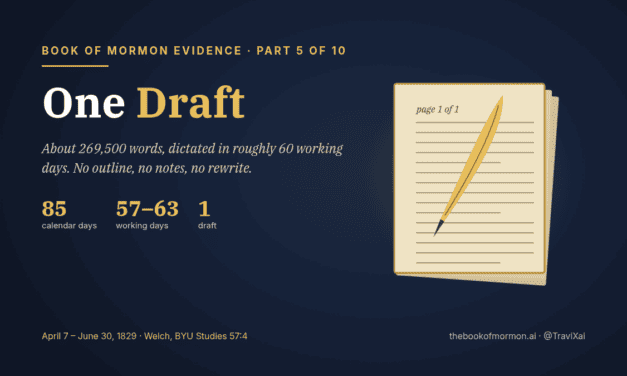
Book of Mormon Evidence, Part 5 of 10: One Draft
Between April 7 and about June 30, 1829, Joseph Smith dictated roughly 269,500 words, a few dozen at a time, with no notes and no rewrite. The timeline, the math, and what the text kept straight. Part 5 of 10.
Read More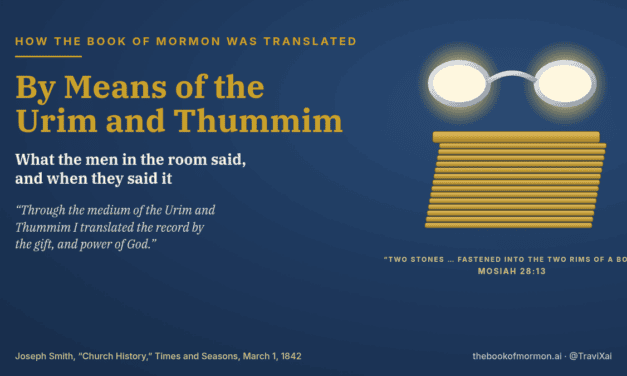
How the Book of Mormon Was Translated: The Case for the Urim and Thummim
Joseph Smith, his scribe Oliver Cowdery, and the revelations of 1828–29 all name the same instrument: the Urim and Thummim found with the plates. Here is the Joseph Smith Foundation’s case, the sources behind it, and how to weigh the later stone-in-a-hat accounts.
Read More