
Eight men signed their names to a claim you can weigh: they handled the plates. Some later left the Church. None of them recanted that witness.
The Eight Witnesses were Christian Whitmer, Jacob Whitmer, Peter Whitmer Jr., John Whitmer, Hiram Page, Joseph Smith Sr., Hyrum Smith, and Samuel H. Smith. In June 1829 Joseph Smith showed them the gold plates. They handled the leaves, saw the engravings, and “hefted” the record. Their signed testimony has been printed in the Book of Mormon since 1830. Five died in the Church. Three left in 1838. Church History Topics records that each of the eight reaffirmed his testimony of examining the plates. The Three Witnesses saw by the power of God. The Eight handled the object.
Who they wereFour Whitmers, one brother-in-law, and three Smiths
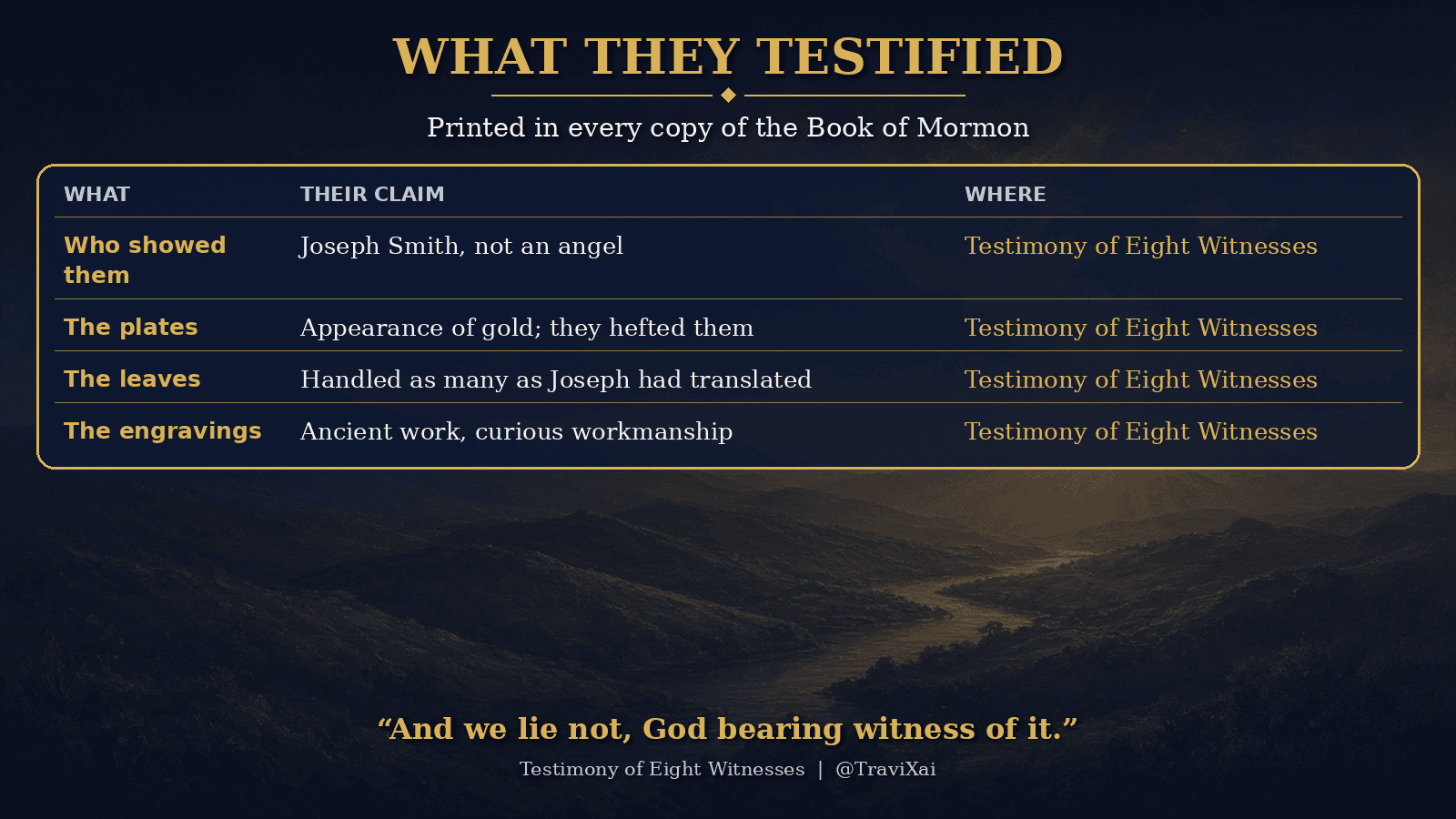
The Eight Witnesses of the Book of Mormon are Christian Whitmer, Jacob Whitmer, Peter Whitmer Jr., John Whitmer, Hiram Page, Joseph Smith Sr., Hyrum Smith, and Samuel H. Smith. Their signed statement, the Testimony of Eight Witnesses, has been printed with the Book of Mormon since the first edition in 1830. Unlike the Three Witnesses, they were not shown the plates by an angel. Joseph Smith showed them the plates himself. They “did handle with our hands” as many of the leaves as he had translated, “saw the engravings thereon,” and “have seen and hefted, and know of a surety that the said Smith has got the plates of which we have spoken.” Then they put their names to it: “And we lie not, God bearing witness of it.”
Church History Topics draws the contrast cleanly: the Three declared that an angel showed them the plates and that they heard the voice of the Lord; the Eight declared that Joseph himself showed them the plates and allowed each to “heft” them and examine the engravings. That is not a weaker testimony. It is a different one, and the book promised both. See Who Were the Three Witnesses of the Book of Mormon?, Who Was Hyrum Smith?, and Where Are the Golden Plates Now?.
The book promised “a few” more2 Nephi 27:13 is not an afterthought
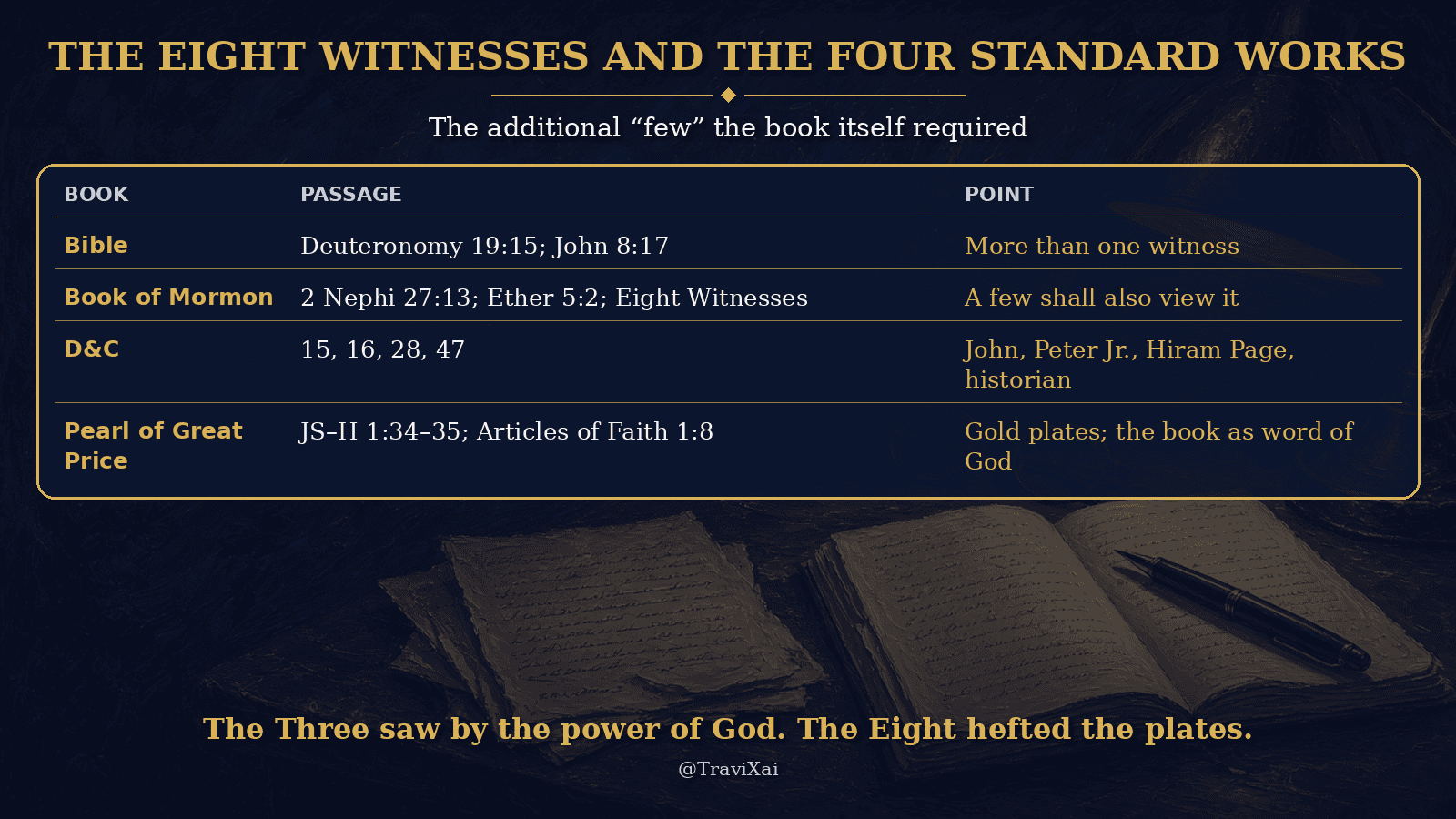
After promising three witnesses who would behold the book “by the power of God,” Nephi added a second clause: “And there is none other which shall view it, save it be a few according to the will of God, to bear testimony of his word unto the children of men” (2 Nephi 27:13). Ether had already said the plates might be shown “unto those who shall assist to bring forth this work,” and then, separately, “unto three shall they be shown by the power of God” (Ether 5:2–3). The Eight are those “few.” The Three are the three. Treating the Eight as a lesser copy of the Three misses the design.
The Bible’s law of witnesses is not exhausted by three names. “At the mouth of two witnesses, or at the mouth of three witnesses, shall the matter be established” (Deuteronomy 19:15). Jesus said, “It is also written in your law, that the testimony of two men is true” (John 8:17). Eleven signed testimonies, of two different kinds, is not a shortage of witnesses. It is more than the rule required. See Is the Book of Mormon True? and Who Wrote the Book of Mormon?.
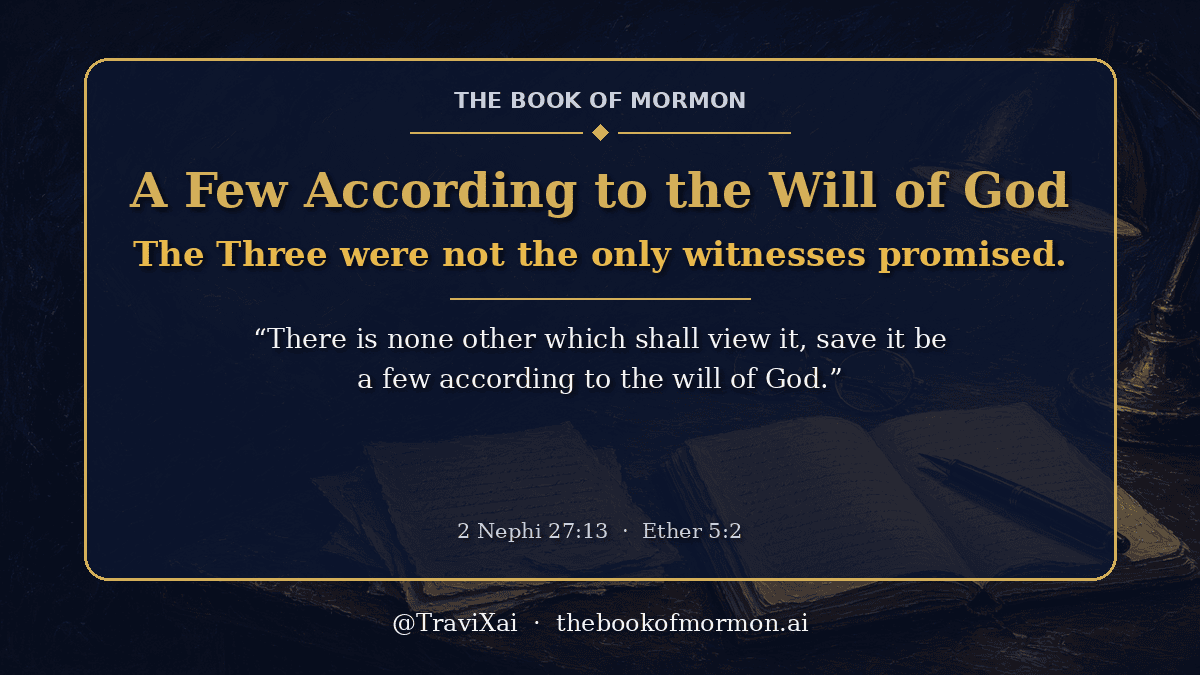
The names, the break, and the ones who did not recantFamily testimony that survived a family split
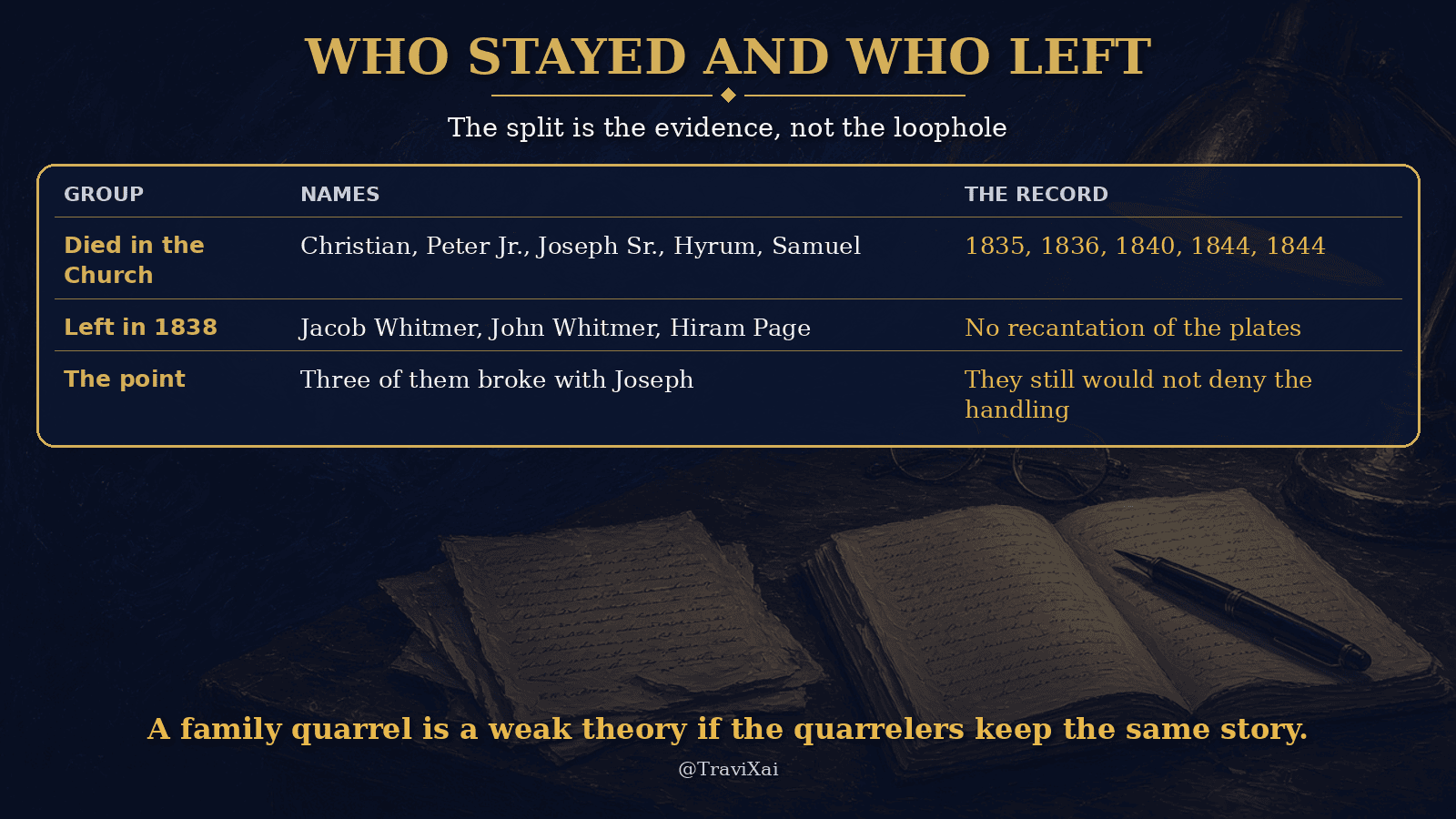
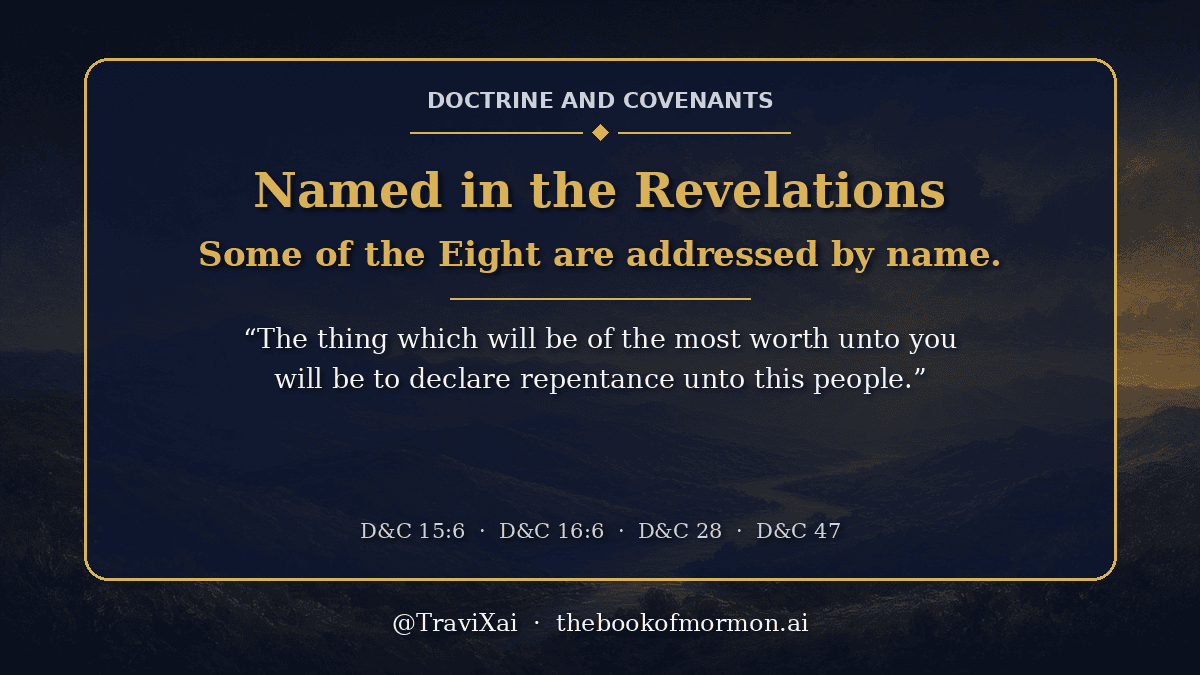
Five of the eight remained in the Church until death: Christian Whitmer (d. 1835), Peter Whitmer Jr. (d. 1836), Joseph Smith Sr. (d. 1840 in Nauvoo), Hyrum Smith (martyred at Carthage, June 27, 1844), and Samuel H. Smith (d. July 30, 1844). Peter Whitmer Jr. was also among the six original members of the Church on April 6, 1830. John Whitmer was called as Church historian (D&C 47). In June 1829 the Lord had already told John, and separately Peter Whitmer Jr., that “the thing which will be of the most worth unto you will be to declare repentance unto this people, that you may bring souls unto me” (D&C 15:6; D&C 16:6).
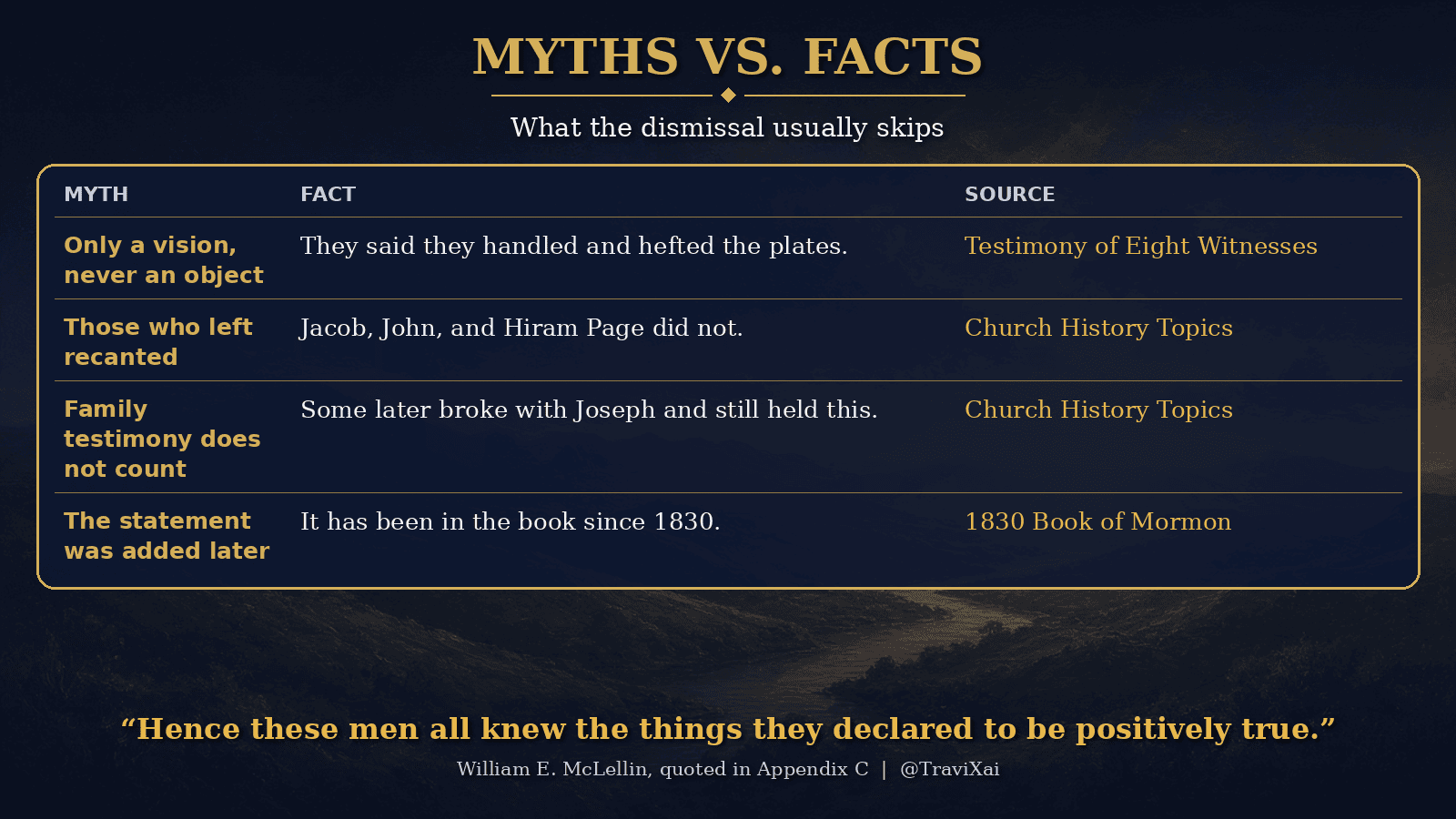
Three of the eight left in the 1838 Missouri crisis: Jacob Whitmer, John Whitmer, and Hiram Page. Hiram had already been corrected in 1830 for writing revelations from a seer stone: “those things which he hath written from that stone are not of me and that Satan deceiveth him” (D&C 28:11). That rebuke is in the canon. So is this fact, recorded in Church History Topics: each of the Eight “reaffirmed his testimony of examining the plates, though some eventually became estranged from the Church.” A man can be wrong about a stone and still have hefted a set of plates. The later break did not become a denial.
The “they were all family” objection is weaker than it sounds. Yes, four were Whitmer brothers, Hiram Page had married their sister Catherine, and three were Smiths. Family can collude. Family can also fall out. These families did fall out, bitterly, in 1838. Jacob, John, and Hiram spent the rest of their lives outside the Church, and they still would not say they had not handled the plates. Come Follow Me, Appendix C, quotes William E. McLellin, who left the Church himself and still could not get around the witnesses: “eight men saw the plates, and handled them. Hence these men all knew the things they declared to be positively true. And that too while they were young, and now when old they declare the same things.”
Why the hefting mattersA physical object, named and signed
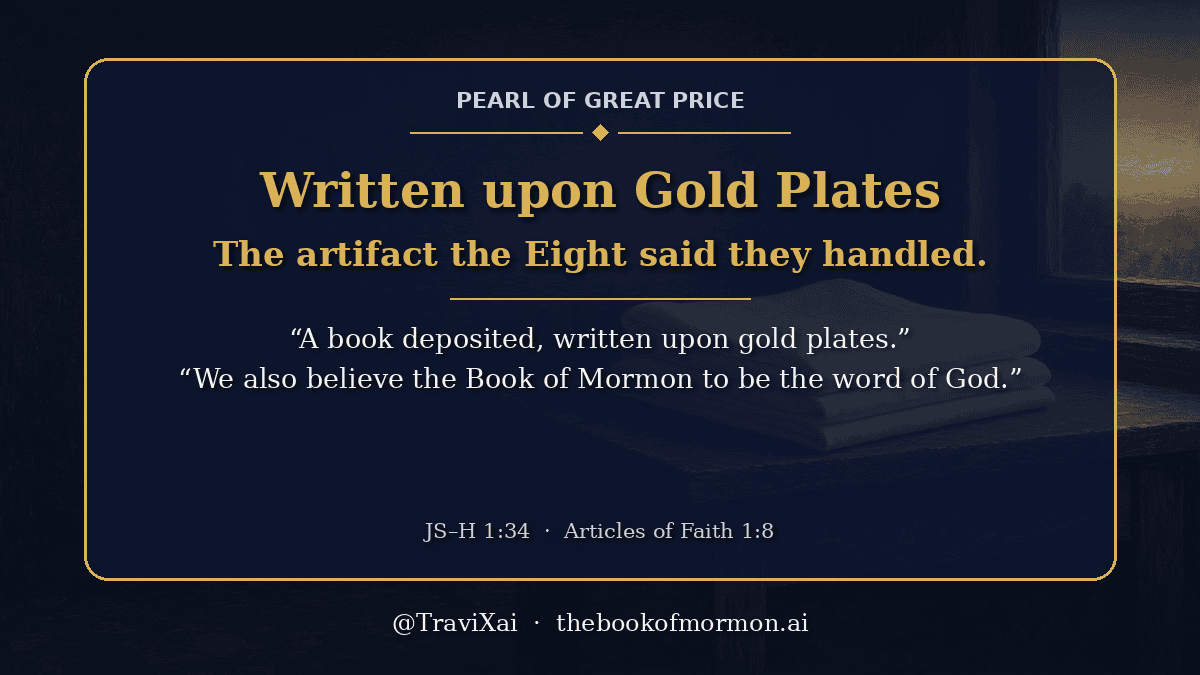
Critics sometimes try to dissolve the Three Witnesses into a “vision” and then stop, as if that settled the plates. The Eight Witnesses will not let that move work. Their statement is about weight, leaves, engravings, and “the appearance of gold.” Joseph Smith—History had already said Moroni described “a book deposited, written upon gold plates” (Joseph Smith—History 1:34). The Articles of Faith confess the conclusion: “We also believe the Book of Mormon to be the word of God” (Articles of Faith 1:8). The Eight did not claim to hear God’s voice on that occasion. They claimed to handle the object the voice had already confirmed to the Three.
Taken together, the two testimonies do what 2 Nephi 27 said they would do. Three behold the book by the power of God. A few others view it “according to the will of God, to bear testimony of his word.” Then, as Nephi finished the thought, “wo be unto him that rejecteth the word of God” (2 Nephi 27:14). The remaining question is not whether eleven men signed their names. They did. The question is whether their word will be given a fair hearing, including the part where some of them later broke with Joseph and still would not break with the plates. See Who Was David Whitmer? and Was Joseph Smith a Prophet?.
Check the premiseThe presuppositions baked into the question
Before this question can be answered fairly, the person asking has to justify a few assumptions packed inside it:
- That the Eight are just a weaker version of the Three. The book promised two kinds of witness: three who would see by the power of God, and “a few” others who would also view the record (2 Nephi 27:12–13). The Eight testified they handled the plates.
- That family testimony can be dismissed as collusion. Three of the eight later broke with Joseph and with the Church. They still affirmed that they had examined the plates.
- That leaving the Church equals a recantation. Church History Topics states that each of the Eight reaffirmed his testimony, including those who became estranged.
- That a “visionary” Three Witnesses experience means there were no plates to handle. The Eight said they hefted the object. The two statements stand together, not as substitutes.
FAQQuick answers
Who were the Eight Witnesses of the Book of Mormon?
Christian Whitmer, Jacob Whitmer, Peter Whitmer Jr., John Whitmer, Hiram Page, Joseph Smith Sr., Hyrum Smith, and Samuel H. Smith. Their testimony is printed in every copy of the Book of Mormon.
How is their testimony different from that of the Three Witnesses?
Joseph Smith showed the Eight the plates, and they handled and hefted them. The Three were shown the plates by an angel and heard God’s voice. The book promised both (2 Nephi 27:12–13).
What did the Eight Witnesses say they saw?
Plates “which have the appearance of gold,” leaves they handled, and engravings “of ancient work, and of curious workmanship.” They said they “have seen and hefted” the plates.
Did any of the Eight Witnesses leave the Church?
Yes. Jacob Whitmer, John Whitmer, and Hiram Page left in 1838. The other five remained in the Church until death.
Did any of the Eight Witnesses recant?
No. Church History Topics states that each of them reaffirmed his testimony of examining the plates, including those who became estranged from the Church.
Were they all members of one family?
Four were Whitmer brothers, Hiram Page had married their sister, and three were Smiths. That closeness is real, and so is the later split: some of them broke with Joseph and still held to this testimony.
Who was Hiram Page?
A witness who had married Catherine Whitmer. In 1830 he was corrected for writing revelations from a seer stone (D&C 28). He later left the Church and still did not deny the plates.
Where can I read their testimony?
In every copy of the Book of Mormon, under “The Testimony of Eight Witnesses,” and in 2 Nephi 27:13, which promised that “a few” besides the three would view the record.
SummaryKey takeaways
- The Eight Witnesses signed a testimony, printed since 1830, that they handled and hefted the plates Joseph showed them.
- They are the “few according to the will of God” promised in 2 Nephi 27:13, distinct from the Three Witnesses of 2 Nephi 27:12.
- Five remained in the Church until death, including Hyrum Smith, martyred at Carthage in 1844.
- Jacob Whitmer, John Whitmer, and Hiram Page left in 1838 and still did not recant.
- The two testimonies answer two different doubts: an angelic confirmation, and a physical object.
Read 2 Nephi 27, the Testimony of Eight Witnesses, and the Testimony of Three Witnesses tonight. For quick, sourced answers, open Galatians18, and follow me on X at @TraviXai.
Sources
- King James Bible (churchofjesuschrist.org): Deuteronomy 19:15 · John 8:17
- Book of Mormon: Ether 5:2–4 · 2 Nephi 27:12–14 · The Testimony of Eight Witnesses · The Testimony of Three Witnesses
- Doctrine and Covenants: D&C 15:1–6 · D&C 16:1–6 · D&C 28:11–13 · D&C 47:1
- Pearl of Great Price: JS–H 1:34–35 · Articles of Faith 1:8
- Church History Topics, “Witnesses of the Book of Mormon” · Come Follow Me, Appendix C: The Three Witnesses
- Featured image and in-article graphic: original graphics by thebookofmormon.ai (painterly backgrounds; no photographs or likenesses of real people).