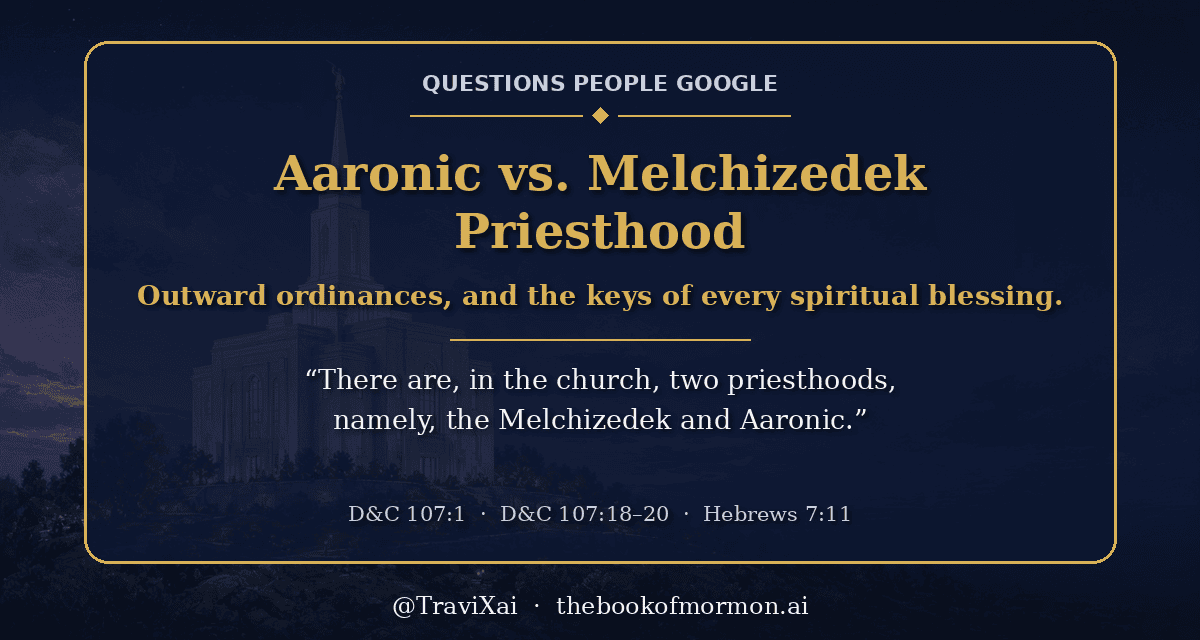

One prepares, the other exalts. Here is the difference between the two priesthoods, from Aaron and Melchizedek to the present day.
The question often assumes the two are competing priesthoods, or that a second priesthood is unbiblical. Neither is true. “There are, in the church, two priesthoods, namely, the Melchizedek and Aaronic” (D&C 107:1). The Aaronic, or lesser, priesthood holds “the keys of the ministering of angels” and administers “outward ordinances” such as baptism and the sacrament. The Melchizedek, or higher, priesthood holds “the keys of all the spiritual blessings of the church” (D&C 107:18–20). Hebrews 7:11 makes the same distinction.
The differenceTwo divisions of one priesthood
“There are, in the church, two priesthoods, namely, the Melchizedek and Aaronic, including the Levitical Priesthood” (D&C 107:1). They are not rivals. They are “two divisions or grand heads” (D&C 107:6), and the Aaronic “is an appendage to the greater, or the Melchizedek Priesthood, and has power in administering outward ordinances” (D&C 107:13–14).
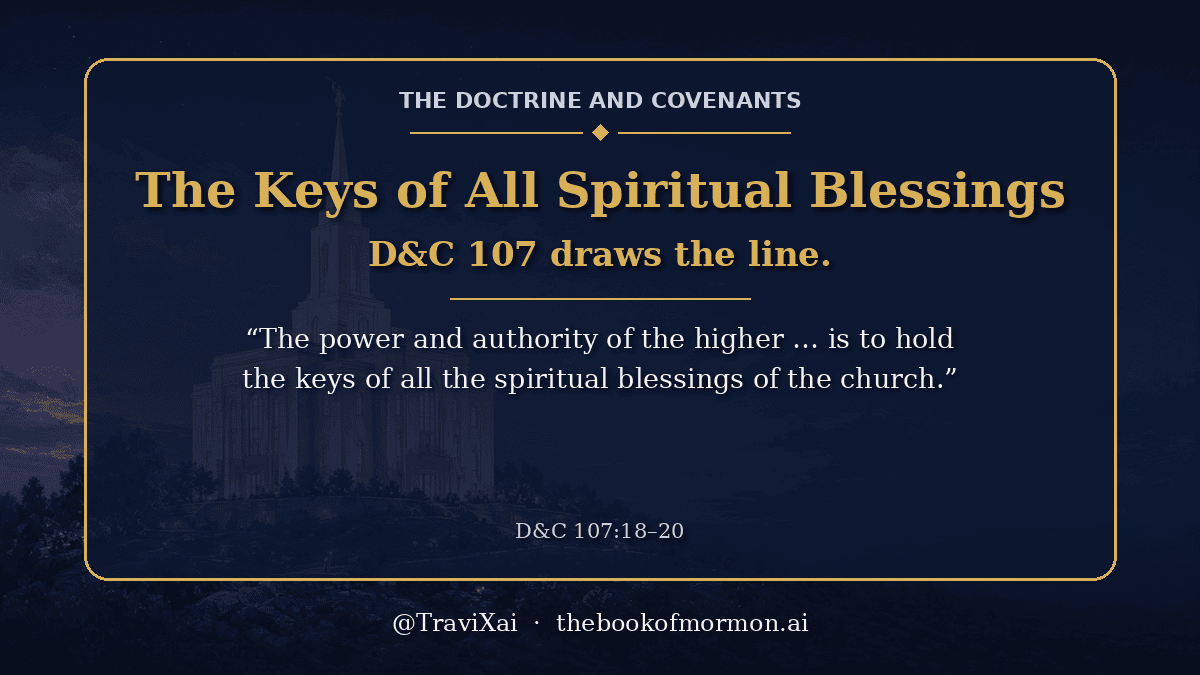
Their authority differs. “The power and authority of the higher, or Melchizedek Priesthood, is to hold the keys of all the spiritual blessings of the church—to have the privilege of receiving the mysteries of the kingdom of heaven, to have the heavens opened unto them, to commune with the general assembly and church of the Firstborn, and to enjoy the communion and presence of God the Father, and Jesus the mediator of the new covenant. The power and authority of the lesser, or Aaronic Priesthood, is to hold the keys of the ministering of angels, and to administer in outward ordinances, the letter of the gospel, the baptism of repentance for the remission of sins” (D&C 107:18–20).
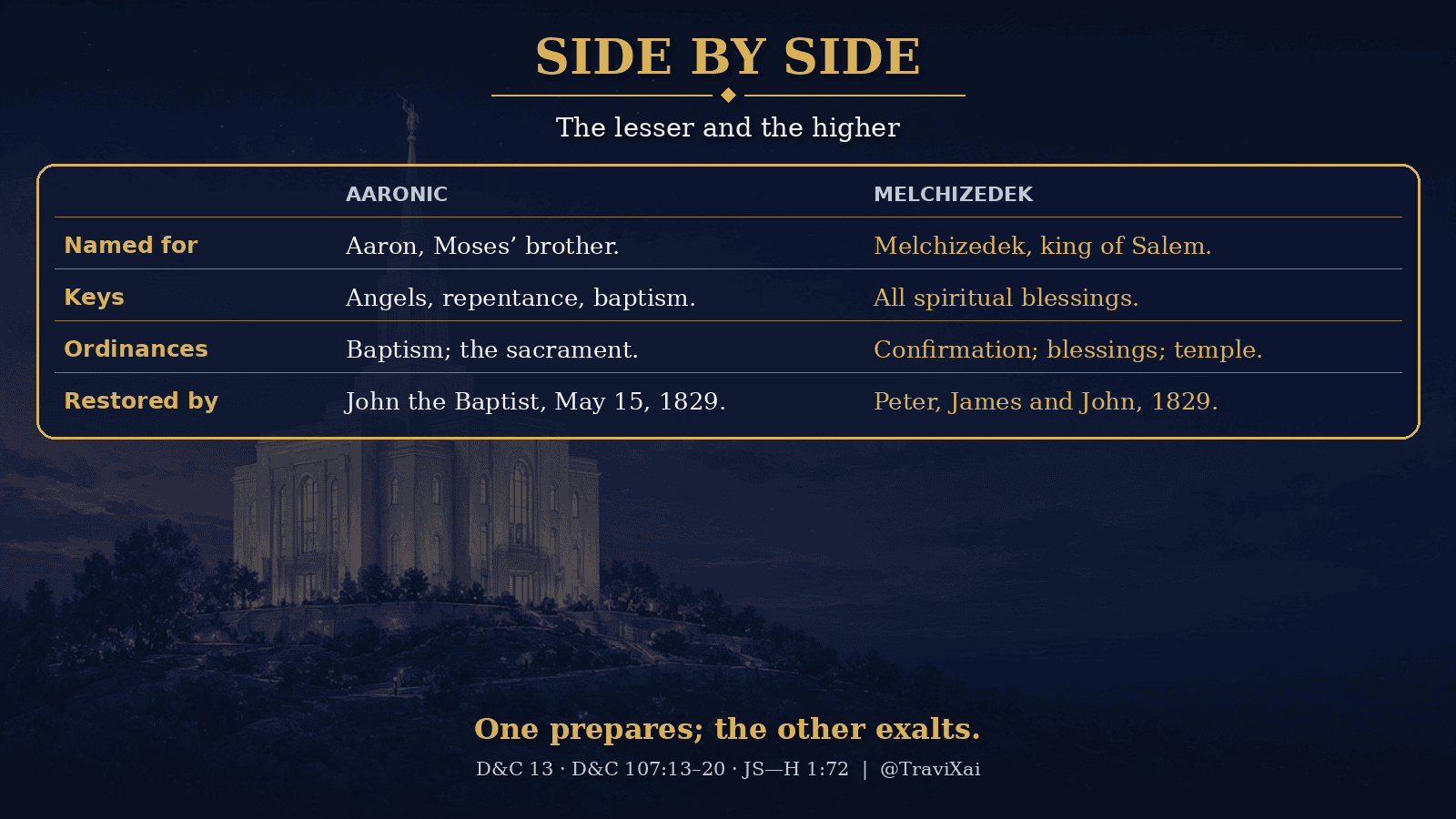
The names have reasons. The Aaronic Priesthood is named for Aaron “because it was conferred upon Aaron and his seed, throughout all their generations” (D&C 107:13). The higher is called Melchizedek “because Melchizedek was such a great high priest. Before his day it was called the Holy Priesthood, after the Order of the Son of God. But out of respect or reverence to the name of the Supreme Being, to avoid the too frequent repetition of his name,” the ancients called it after Melchizedek (D&C 107:2–4).
The officesDeacon to apostle
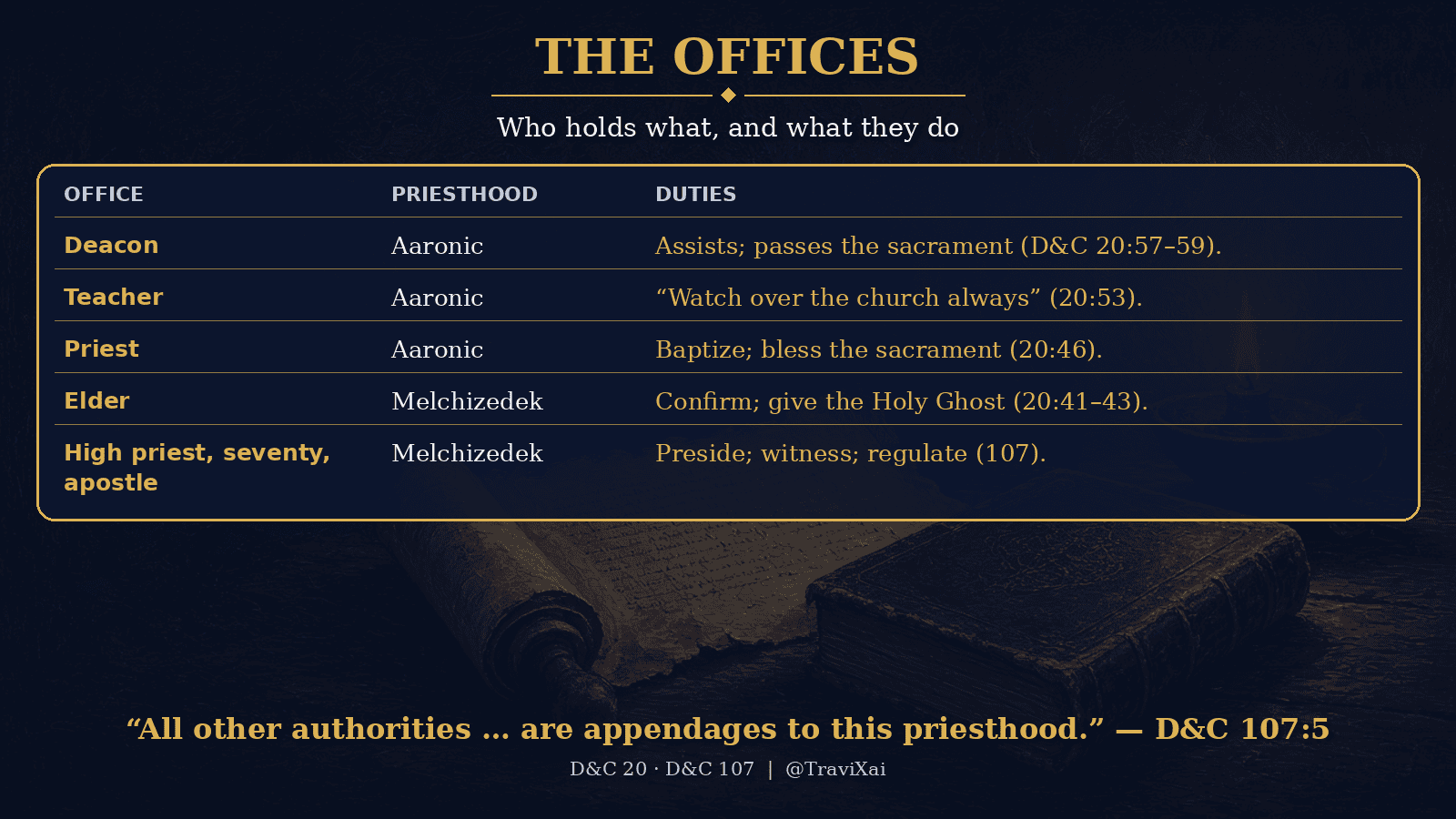
The Aaronic offices are deacon, teacher and priest, with the bishop presiding. A priest’s “duty is to preach, teach, expound, exhort, and baptize, and administer the sacrament” (D&C 20:46). The teacher’s “duty is to watch over the church always, and be with and strengthen them” (D&C 20:53), assisted by deacons. Teachers and deacons do not “baptize, administer the sacrament, or lay on hands,” but they “warn, expound, exhort, and teach, and invite all to come unto Christ” (D&C 20:57–59). In the Church today, young men are ordained deacons in the year they turn 12, teachers at 14 and priests at 16.
The Melchizedek offices are elder, high priest, patriarch, seventy and apostle. “The office of an elder comes under the priesthood of Melchizedek” (D&C 107:7), and the elder’s duties include confirming the baptized “by the laying on of hands for the baptism of fire and the Holy Ghost” (D&C 20:38–45). “The Melchizedek Priesthood holds the right of presidency, and has power and authority over all the offices in the church in all ages of the world, to administer in spiritual things” (D&C 107:8). See What Is the Priesthood? for the broader question, including women and priesthood authority.
The BibleAaron at Sinai, Melchizedek at Salem
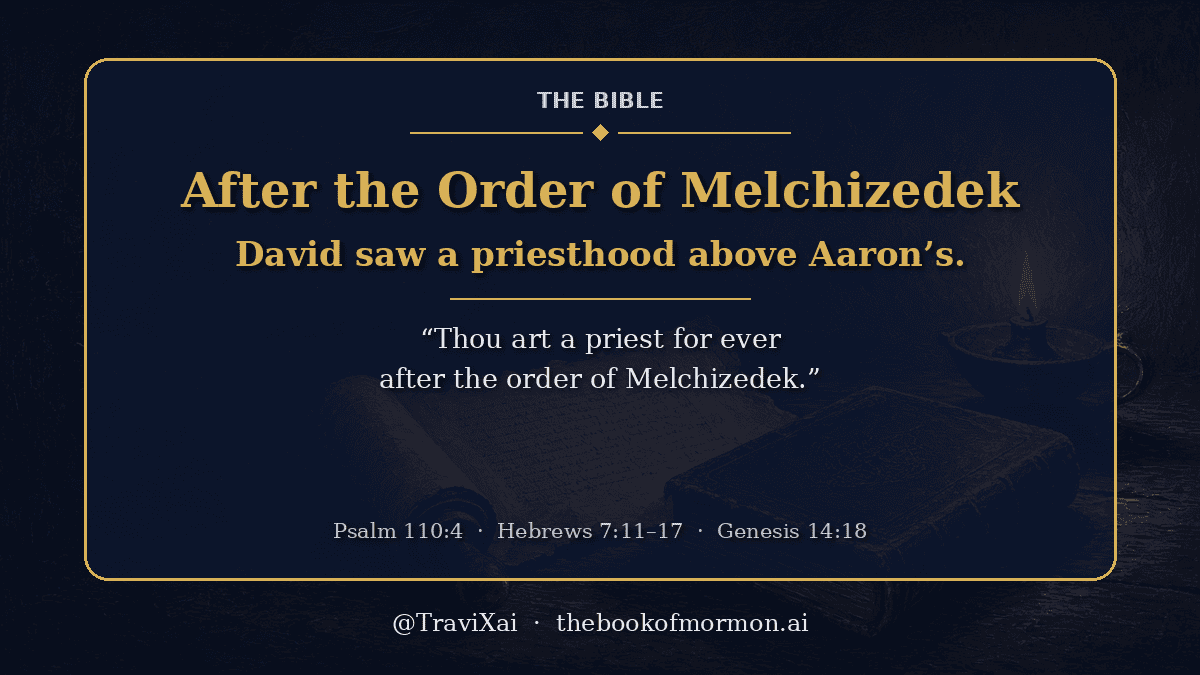
The Lord set apart Aaron’s line: “take thou unto thee Aaron thy brother, and his sons with him … that he may minister unto me in the priest’s office” (Exodus 28:1), with the Levites assisting “to do the service of the tabernacle” (Numbers 3:6–7). Long before that, “Melchizedek king of Salem brought forth bread and wine: and he was the priest of the most high God” (Genesis 14:18). David foresaw a priesthood above Aaron’s: “The Lord hath sworn, and will not repent, Thou art a priest for ever after the order of Melchizedek” (Psalm 110:4).
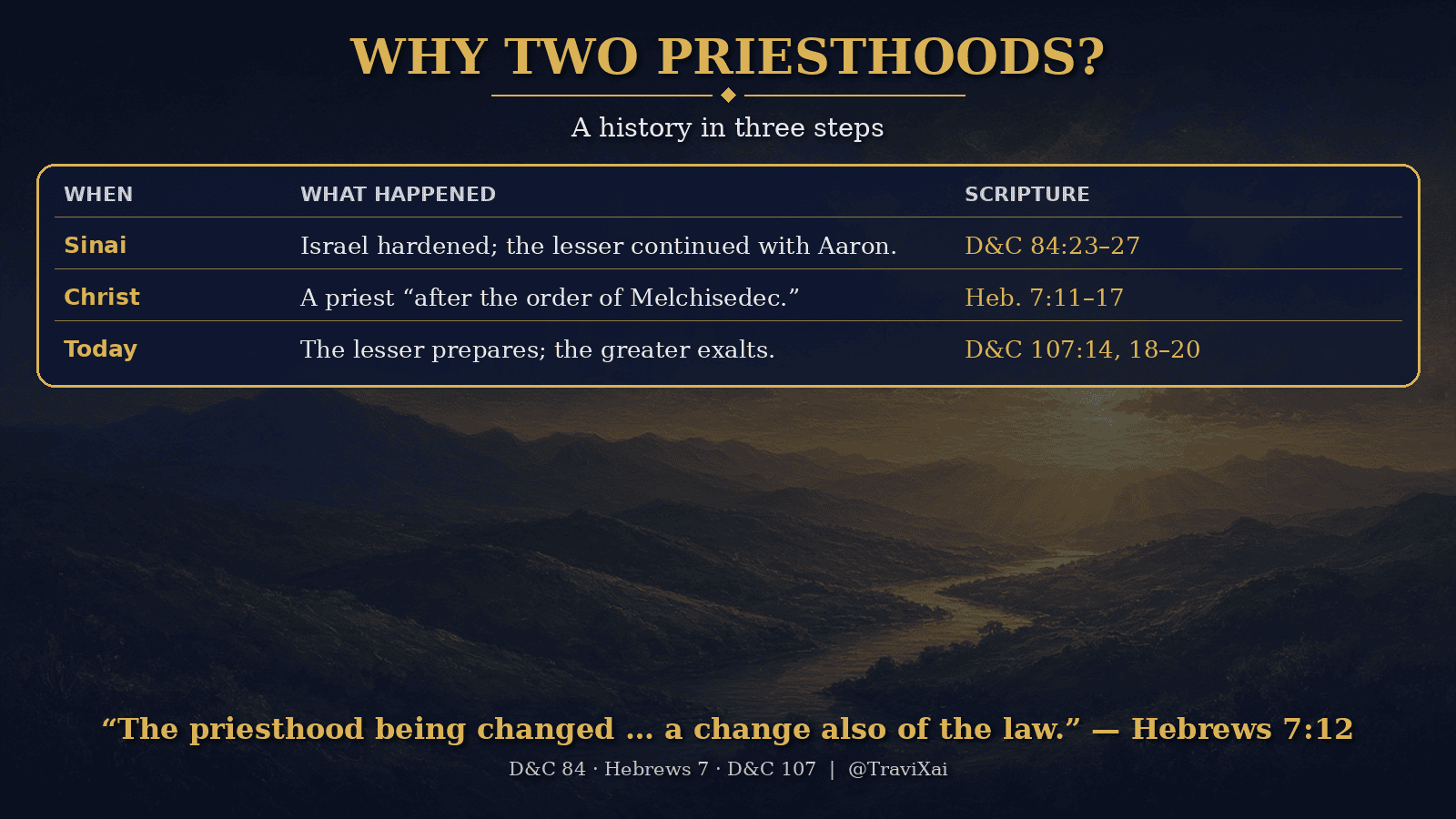
Hebrews makes the distinction explicit: “If therefore perfection were by the Levitical priesthood … what further need was there that another priest should rise after the order of Melchisedec, and not be called after the order of Aaron? For the priesthood being changed, there is made of necessity a change also of the law.” Christ is a priest “not after the law of a carnal commandment, but after the power of an endless life” (Hebrews 7:11–17). Two priesthoods, a lesser and a greater, are a New Testament teaching.
The Book of MormonThe holy order of the Son
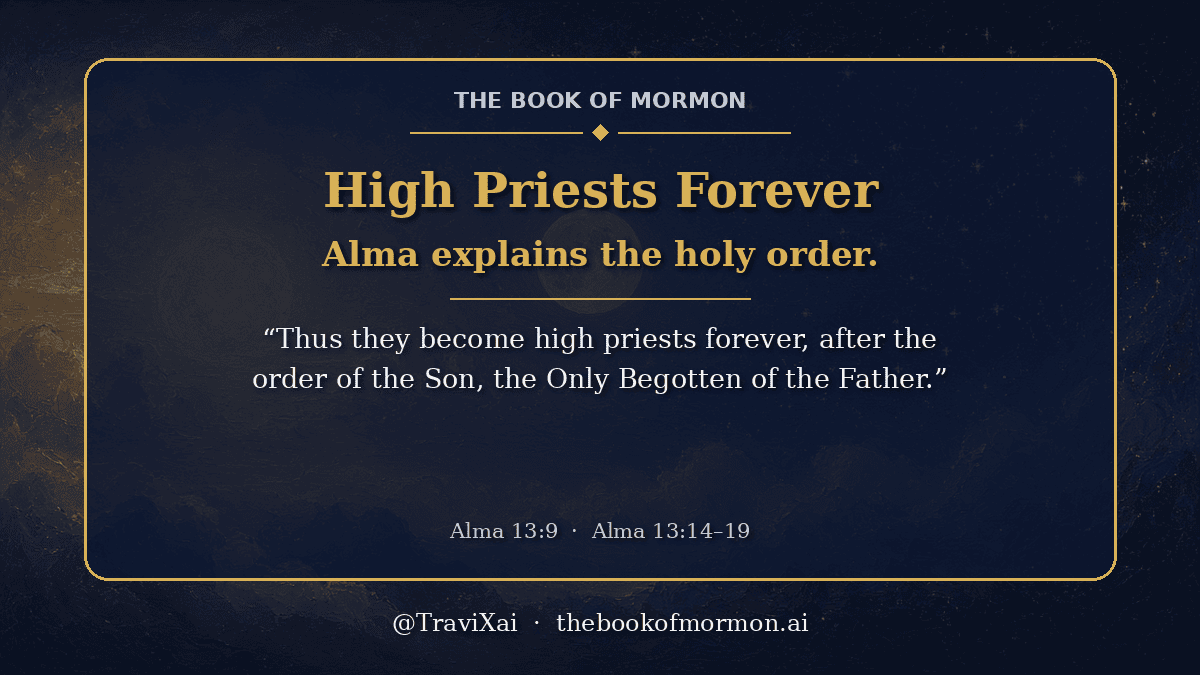
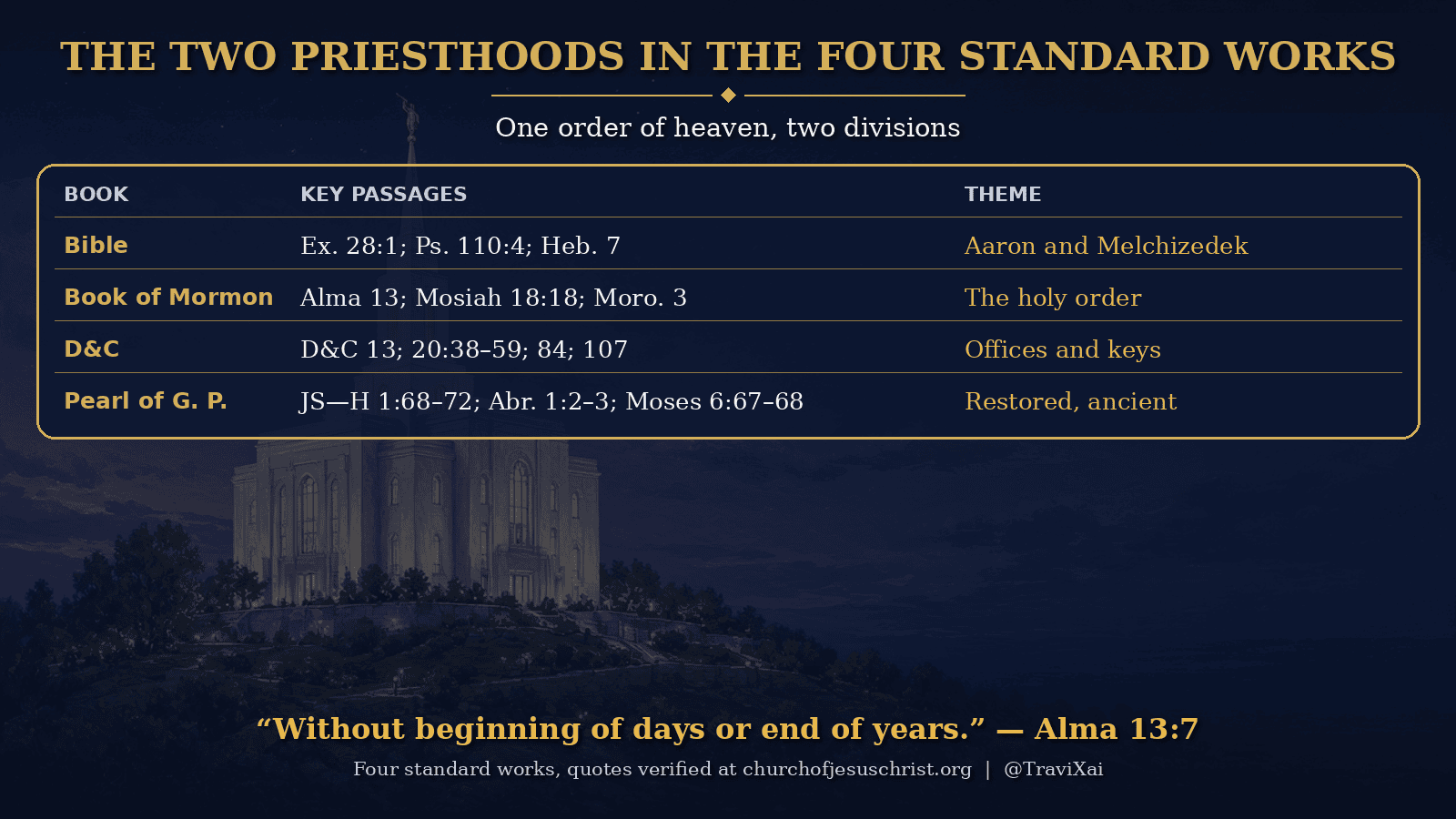
Alma 13 is the Book of Mormon’s chapter on the higher priesthood. It is “after the order of his Son, which order was from the foundation of the world; or in other words, being without beginning of days or end of years,” and those ordained “become high priests forever, after the order of the Son, the Only Begotten of the Father” (Alma 13:7–9). Alma calls Melchizedek a “high priest after this same order,” the one “to whom Abraham paid tithes,” who “did preach repentance unto his people. And behold, they did repent” (Alma 13:14–19). That is more than the Bible tells us about him.
The Nephites used priesthood offices too. Alma, “having authority from God, ordained priests; even one priest to every fifty” (Mosiah 18:18), and the disciples ordained priests and teachers by the laying on of hands “by the power of the Holy Ghost” (Moroni 3:1–4). Lehi descended from Manasseh, not Levi (Alma 10:3), so Latter-day Saints understand the Nephite priesthood as the higher order Alma 13 describes.
The Doctrine and CovenantsWhy there are two, and where they lead
“This greater priesthood administereth the gospel and holdeth the key of the mysteries of the kingdom, even the key of the knowledge of God. Therefore, in the ordinances thereof, the power of godliness is manifest. And without the ordinances thereof, and the authority of the priesthood, the power of godliness is not manifest unto men in the flesh” (D&C 84:19–21). Moses tried to bring Israel into God’s presence, they hardened their hearts, and the higher priesthood was taken. But “the lesser priesthood continued, which priesthood holdeth the key of the ministering of angels and the preparatory gospel,” with “the house of Aaron among the children of Israel until John” (D&C 84:26–27). John the Baptist, born to a priest of Aaron’s line (Luke 1:5), is the one who restored it.
The oath and covenant
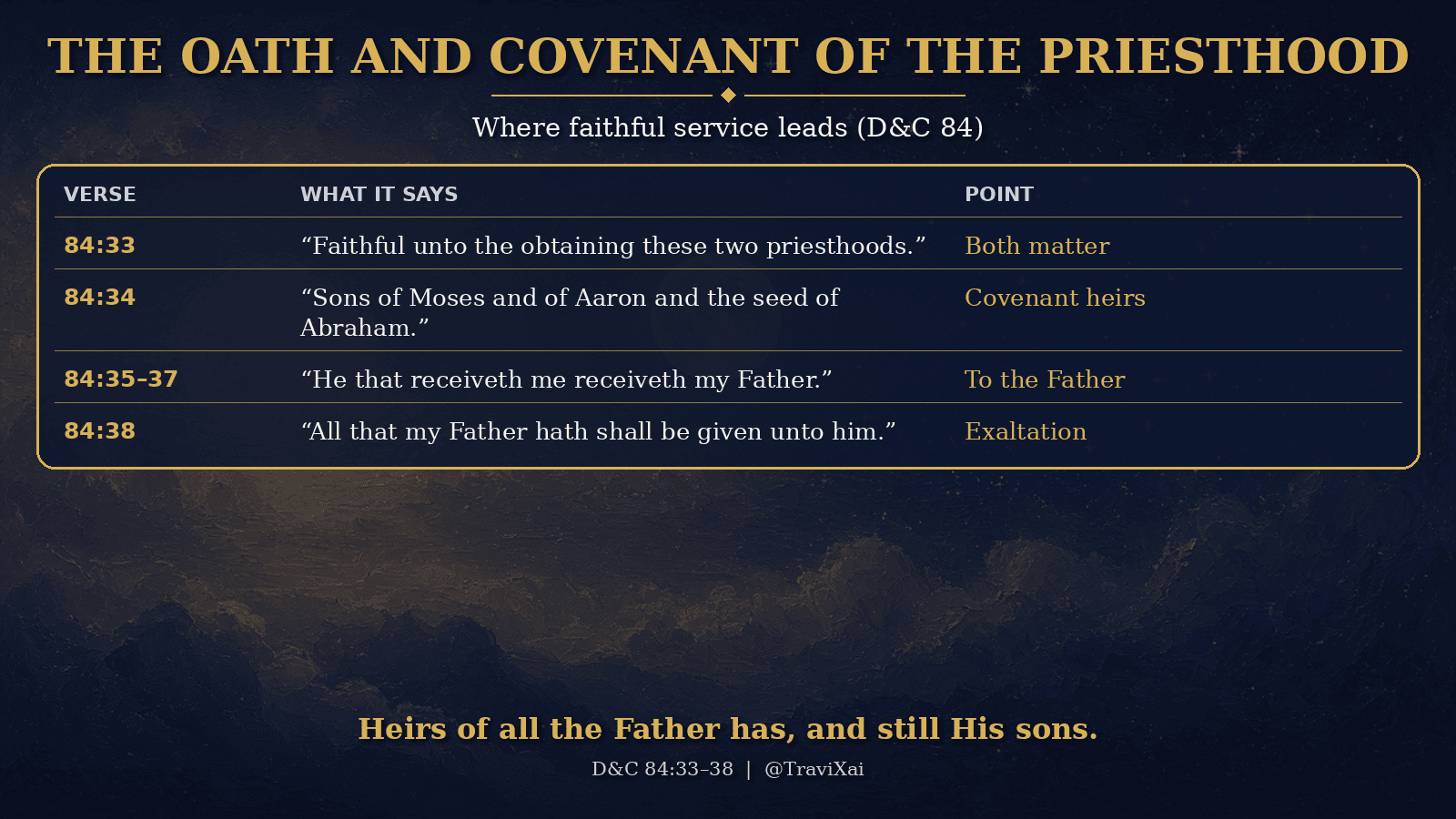
Section 84 then says where both priesthoods lead: “For whoso is faithful unto the obtaining these two priesthoods of which I have spoken, and the magnifying their calling, are sanctified by the Spirit unto the renewing of their bodies. They become the sons of Moses and of Aaron and the seed of Abraham … And also all they who receive this priesthood receive me, saith the Lord … And he that receiveth me receiveth my Father; and he that receiveth my Father receiveth my Father’s kingdom; therefore all that my Father hath shall be given unto him” (D&C 84:33–38). That is exaltation, inheriting everything the Father has. The promise is a gift from the Father to His sons, and it never makes them His equals in rank. He remains their Father, and they remain His children. See Do Latter-day Saints Get Their Own Planet?.
The Pearl of Great PriceRestored by those who held it
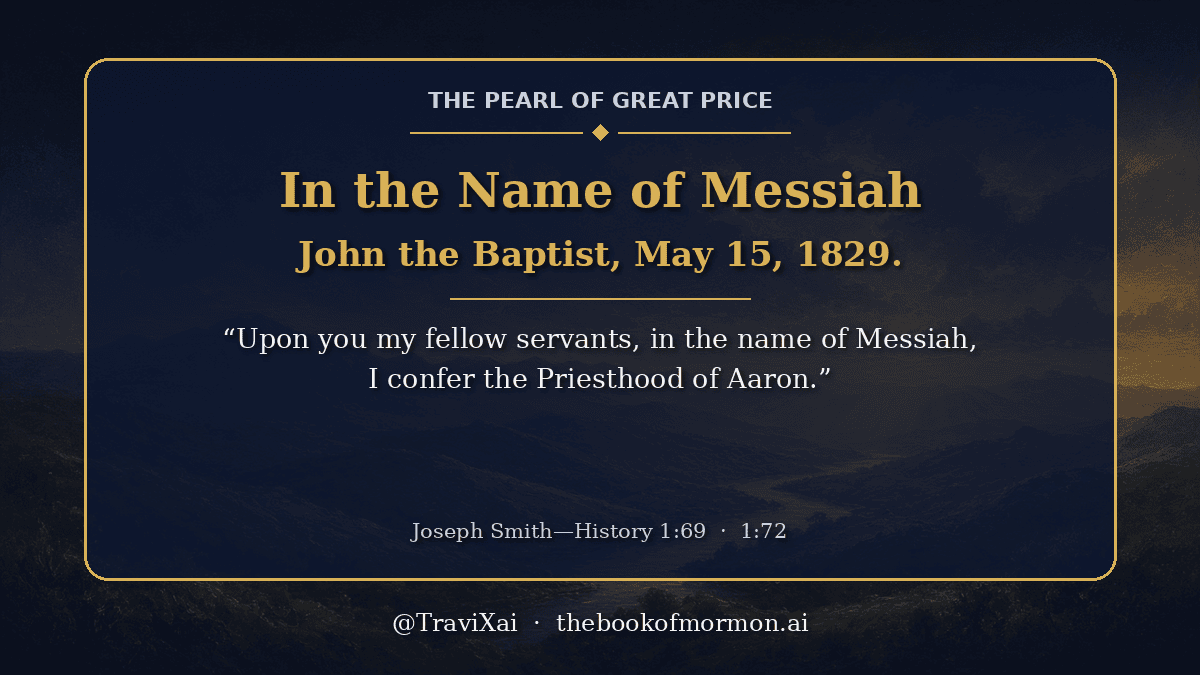
On May 15, 1829, John the Baptist laid his hands on Joseph Smith and Oliver Cowdery: “Upon you my fellow servants, in the name of Messiah, I confer the Priesthood of Aaron, which holds the keys of the ministering of angels, and of the gospel of repentance, and of baptism by immersion for the remission of sins.” He said “this Aaronic Priesthood had not the power of laying on hands for the gift of the Holy Ghost,” and that he “acted under the direction of Peter, James and John, who held the keys of the Priesthood of Melchizedek, which Priesthood, he said, would in due time be conferred on us” (Joseph Smith—History 1:68–72). The difference between the two priesthoods was explained by the man who restored the lesser one.
The higher priesthood is ancient. Abraham “became a rightful heir, a High Priest, holding the right belonging to the fathers. It was conferred upon me from the fathers; it came down from the fathers, from the beginning of time … even the right of the firstborn, or the first man, who is Adam” (Abraham 1:2–3). Adam himself was told: “thou art after the order of him who was without beginning of days or end of years, from all eternity to all eternity. Behold, thou art one in me, a son of God; and thus may all become my sons” (Moses 6:67–68). See What Is the Restoration of the Gospel?.
Check the premiseThe presuppositions baked into the question
Before this question can be answered fairly, the person asking has to justify a few assumptions packed inside it:
- That Christians cannot have two priesthoods. Hebrews 7:11–17 contrasts the Levitical priesthood with the order of Melchizedek, and Psalm 110:4 promised the second.
- That Christ ended all priesthood except His own. He gave His apostles authority (Matthew 10:1; 16:19), and the Church ordained elders (Acts 14:23).
- That “lesser” means unimportant. The Aaronic Priesthood holds “the keys of the ministering of angels” and performs baptism (D&C 13:1; 107:20).
- That the Melchizedek Priesthood is a Latter-day Saint invention. It goes back to Melchizedek, Abraham and Adam (Genesis 14:18; Abraham 1:2–3; Moses 6:67).
FAQQuick answers
What is the difference between the Aaronic and Melchizedek Priesthood?
The Aaronic administers outward ordinances such as baptism and the sacrament. The Melchizedek holds “the keys of all the spiritual blessings of the church” (D&C 107:18–20).
What are the offices of the Aaronic Priesthood?
Deacon, teacher and priest, with the bishop presiding (D&C 20:46–59; 107:13–17).
What are the offices of the Melchizedek Priesthood?
Elder, high priest, patriarch, seventy and apostle (D&C 107:7–12, 23–25).
Who restored the Aaronic Priesthood?
John the Baptist, on May 15, 1829, to Joseph Smith and Oliver Cowdery (D&C 13:1; Joseph Smith—History 1:68–72).
Who restored the Melchizedek Priesthood?
Peter, James and John, in 1829 (D&C 27:12; 128:20).
Why is it called the Melchizedek Priesthood?
Out of reverence, to avoid repeating the name of the Son of God. It was first called “the Holy Priesthood, after the Order of the Son of God” (D&C 107:2–4).
Can an Aaronic Priesthood holder give the gift of the Holy Ghost?
No. John the Baptist said the Aaronic Priesthood “had not the power of laying on hands for the gift of the Holy Ghost” (Joseph Smith—History 1:70).
What is the oath and covenant of the priesthood?
The promise in D&C 84:33–38 that those faithful to both priesthoods receive the Father’s kingdom: “all that my Father hath shall be given unto him.”
SummaryKey takeaways
- Two divisions of one priesthood: the Aaronic is an appendage to the Melchizedek (D&C 107:14).
- Aaronic: deacon, teacher, priest. Baptism and the sacrament.
- Melchizedek: elder to apostle. Confirmation, blessings, temple ordinances, presidency.
- Hebrews 7 and Psalm 110 teach the same distinction.
- Both lead to “all that my Father hath” (D&C 84:38), with the Father always above us.
Read D&C 107:1–20 and Hebrews 7 together. For quick, sourced answers, open Galatians18, and follow me on X at @TraviXai.
Sources
- King James Bible (churchofjesuschrist.org): Genesis 14:18 · Exodus 28:1 · Numbers 3:6–7 · Psalm 110:4 · Matthew 10:1 · Luke 1:5 · Acts 14:23 · Hebrews 7:11–17
- Book of Mormon: Mosiah 18:18 · Alma 10:3 · Alma 13:7–9 · Alma 13:14–19 · Moroni 3:1–4
- Doctrine and Covenants: D&C 13:1 · D&C 20:38–59 · D&C 27:12 · D&C 84:19–27 · D&C 84:33–38 · D&C 107:1–20
- Pearl of Great Price: Joseph Smith—History 1:68–72 · Abraham 1:2–3 · Moses 6:67–68
- Featured image and in-article graphic: original graphics by thebookofmormon.ai (painterly backgrounds; no photographs or likenesses of real people).