
Advertisement

Tag: Ephesians 4:11

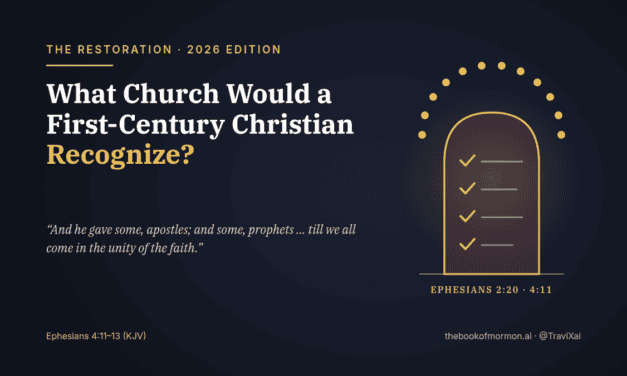
What Church Would a First-Century Christian Recognize? (2026 Edition)

Drop a Christian from first-century Ephesus into 2026 and hand him a New Testament checklist: apostles and prophets (Ephesians 2:20; 4:11–13), the Twelve kept full (Acts 1), the seventy (Luke 10:1), elders, bishops, and deacons, baptism by immersion, the Holy Ghost by laying on of hands (Acts 8:17), baptism for the dead (1 Corinthians 15:29), revelation, and Christ’s name. A fair, verse-by-verse comparison.

Read More
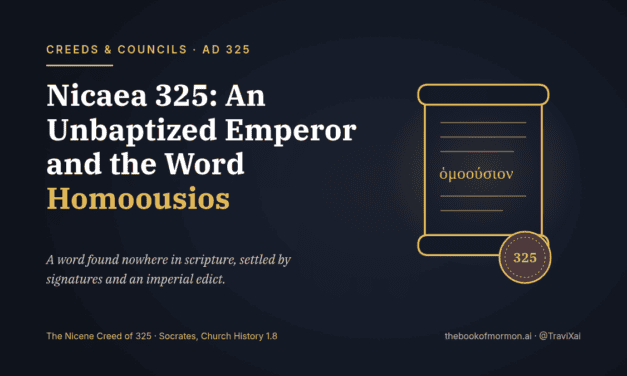
Nicaea 325: An Unbaptized Emperor and the Word ‘Homoousios’

The Council of Nicaea was convened by Constantine, a catechumen who wasn’t baptized until his deathbed in 337. Its key word, homoousios, appears nowhere in scripture; Athanasius admits the bishops adopted it because every Bible phrase also applied to people. Here’s what Eusebius, Socrates, and Jerome actually record, the myths to drop, and how Acts 15 settled doctrine instead.

Read More

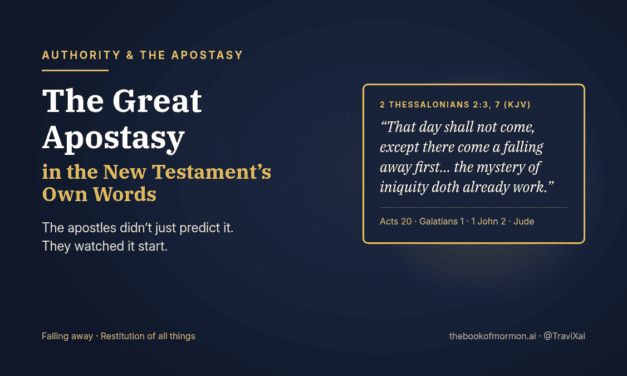
The Great Apostasy in the New Testament’s Own Words

Critics call the Great Apostasy a Latter-day Saint invention, but Paul, Peter, John, and Jude wrote it down first. From the “falling away” of 2 Thessalonians 2:3 and the wolves of Acts 20 to “doth already work,” “so soon removed,” and “even now are there many antichrists,” the New Testament records the apostles watching the falling away begin, and it promises a “restitution of all things” (Acts 3:21).

Read More
Loading

This is not an official website of The Church of Jesus Christ of Latter-day Saints.

For official Church information, visit ChurchofJesusChrist.org.