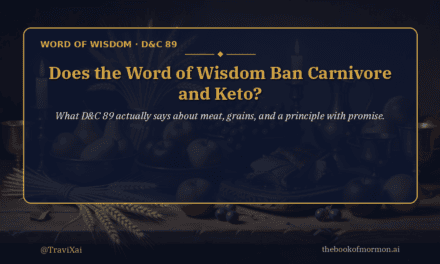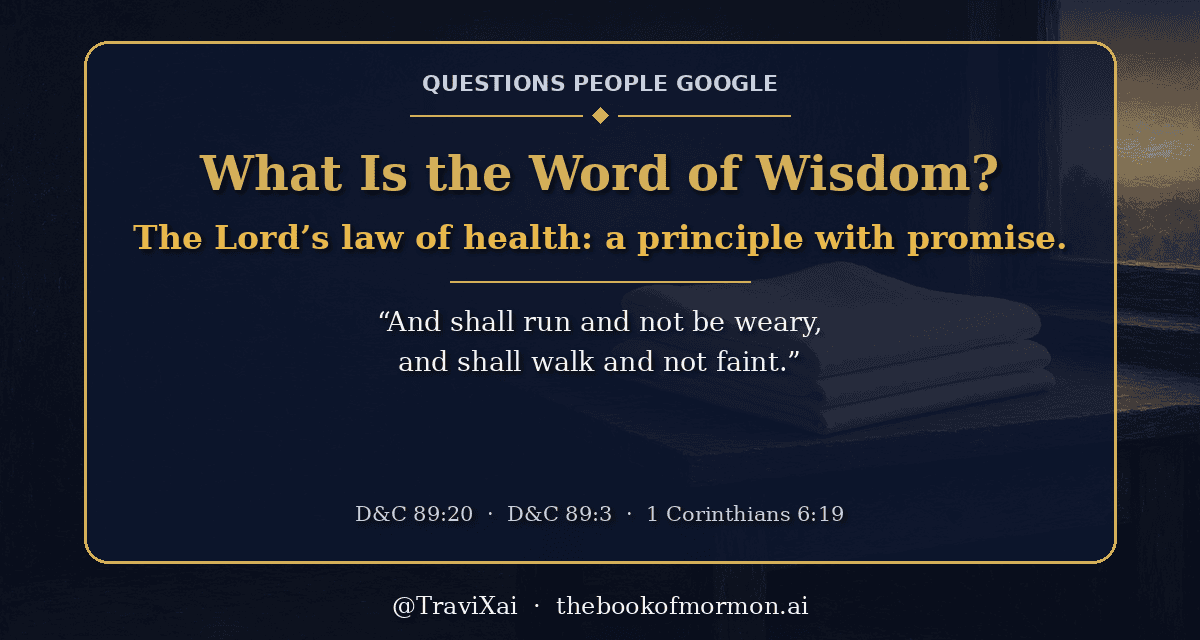

Twenty-one verses from 1833 that changed what millions eat and drink, and attached a promise no health guru could make. Here is what the Word of Wisdom says and how it is lived.
The question often assumes the Word of Wisdom is just a list of banned drinks, or an optional suggestion. It is neither. It is the revelation in Doctrine and Covenants 89, given to Joseph Smith on February 27, 1833. Latter-day Saints abstain from alcohol, tobacco, coffee and tea, and avoid harmful drugs; we eat grain, fruit and wholesome food, and meat “sparingly.” Given at first “not by commandment,” it became binding by the early 1920s. Its promise: health, “great treasures of knowledge,” and the strength to “run and not be weary” (D&C 89:19–20).
What it isThe Lord’s law of health
The Word of Wisdom is a revelation Joseph Smith received on February 27, 1833, in Kirtland, Ohio, now Doctrine and Covenants 89. Latter-day Saints call it the Lord’s law of health. It tells us what not to put into our bodies (alcohol, tobacco and “hot drinks,” understood from the beginning as tea and coffee), what to eat with thanksgiving (grain, fruit and wholesome herbs, with meat “sparingly”), and what God promises to those who keep it.
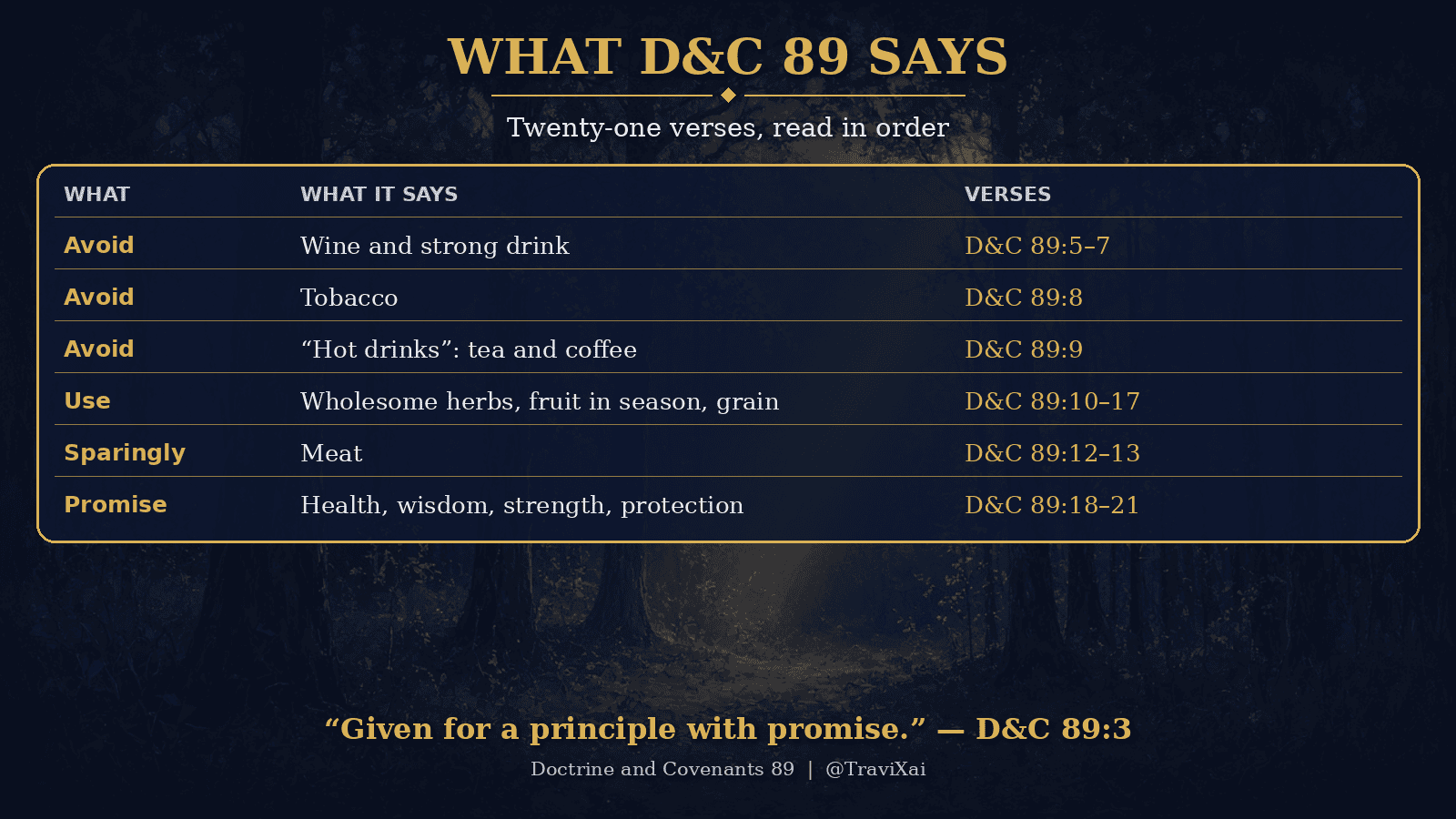
It introduces itself carefully: “not by commandment or constraint, but by revelation and the word of wisdom, showing forth the order and will of God in the temporal salvation of all saints in the last days — Given for a principle with promise, adapted to the capacity of the weak and the weakest of all saints” (D&C 89:2–3). And it tells you why: “In consequence of evils and designs which do and will exist in the hearts of conspiring men in the last days, I have warned you, and forewarn you” (D&C 89:4). Read that in an age of tobacco marketing, alcohol advertising and engineered addiction, and tell me it was not a warning ahead of its time.
The textWhat D&C 89 actually says
The prohibitions are short. “Strong drinks are not for the belly, but for the washing of your bodies.” “Tobacco is not for the body, neither for the belly, and is not good for man, but is an herb for bruises and all sick cattle.” “Hot drinks are not for the body or belly” (D&C 89:7–9). Wine was allowed for the sacrament in 1833 (verses 5–6); the Church has used water since the early 1900s.
Then the positive side, which people skip: “all wholesome herbs God hath ordained for the constitution, nature, and use of man — Every herb in the season thereof, and every fruit in the season thereof; all these to be used with prudence and thanksgiving. Yea, flesh also of beasts and of the fowls of the air, I, the Lord, have ordained for the use of man with thanksgiving; nevertheless they are to be used sparingly” (D&C 89:10–12). “All grain is good for the food of man” (verse 16). If you want the meat question in detail, I covered it in Does the Word of Wisdom Ban Carnivore and Keto?. If you want coffee, tea and caffeine, see Can Latter-day Saints Drink Coffee?. I won’t repeat either here.
And the promise: “all saints who remember to keep and do these sayings, walking in obedience to the commandments, shall receive health in their navel and marrow to their bones; And shall find wisdom and great treasures of knowledge, even hidden treasures; And shall run and not be weary, and shall walk and not faint. And I, the Lord, give unto them a promise, that the destroying angel shall pass by them, as the children of Israel, and not slay them” (D&C 89:18–21). Notice the condition: “walking in obedience to the commandments.” Skipping coffee while ignoring everything else is not what is promised.
HistoryHow it came, and how it became binding
The revelation came in the context of the School of the Prophets, which met in a small room above Newel K. Whitney’s store in Kirtland. The men smoked and chewed tobacco there, and Emma Smith, troubled by the state of the room, raised it with Joseph. Joseph asked the Lord and received section 89. The Church’s history also places it in a national debate: temperance and health reformers were arguing about alcohol, tobacco, tea, coffee and meat. The Word of Wisdom did not simply copy any of them. Some reformers, like the Shakers, discouraged meat; the revelation said the Lord “ordained” it, to be used sparingly.
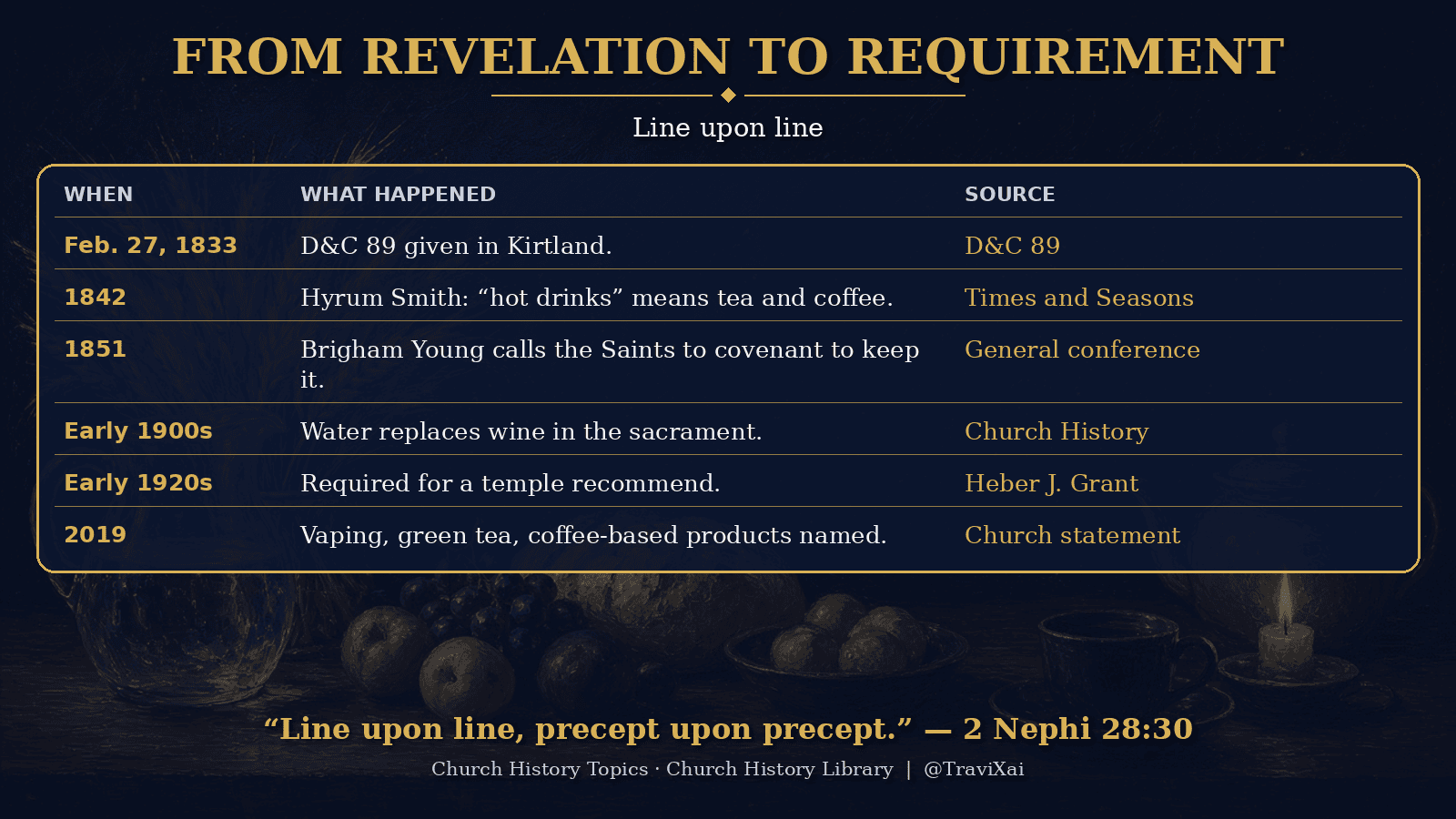
It was given gently and enforced gradually. In 1842 Hyrum Smith wrote, “‘hot drinks are not for the body, or belly;’ there are many who wonder what this can mean; whether it refers to tea, or coffee, or not. I say it does refer to tea, and coffee.” In September 1851 Brigham Young asked the Saints in general conference to covenant to abstain from tea, coffee, tobacco and whiskey. By the early 1920s, under President Heber J. Grant, keeping it was required for a temple recommend. That is not the Church moving the goalposts. That is the pattern the Lord described: “I will give unto the children of men line upon line, precept upon precept, here a little and there a little” (2 Nephi 28:30).
How it is livedWhat Latter-day Saints actually do
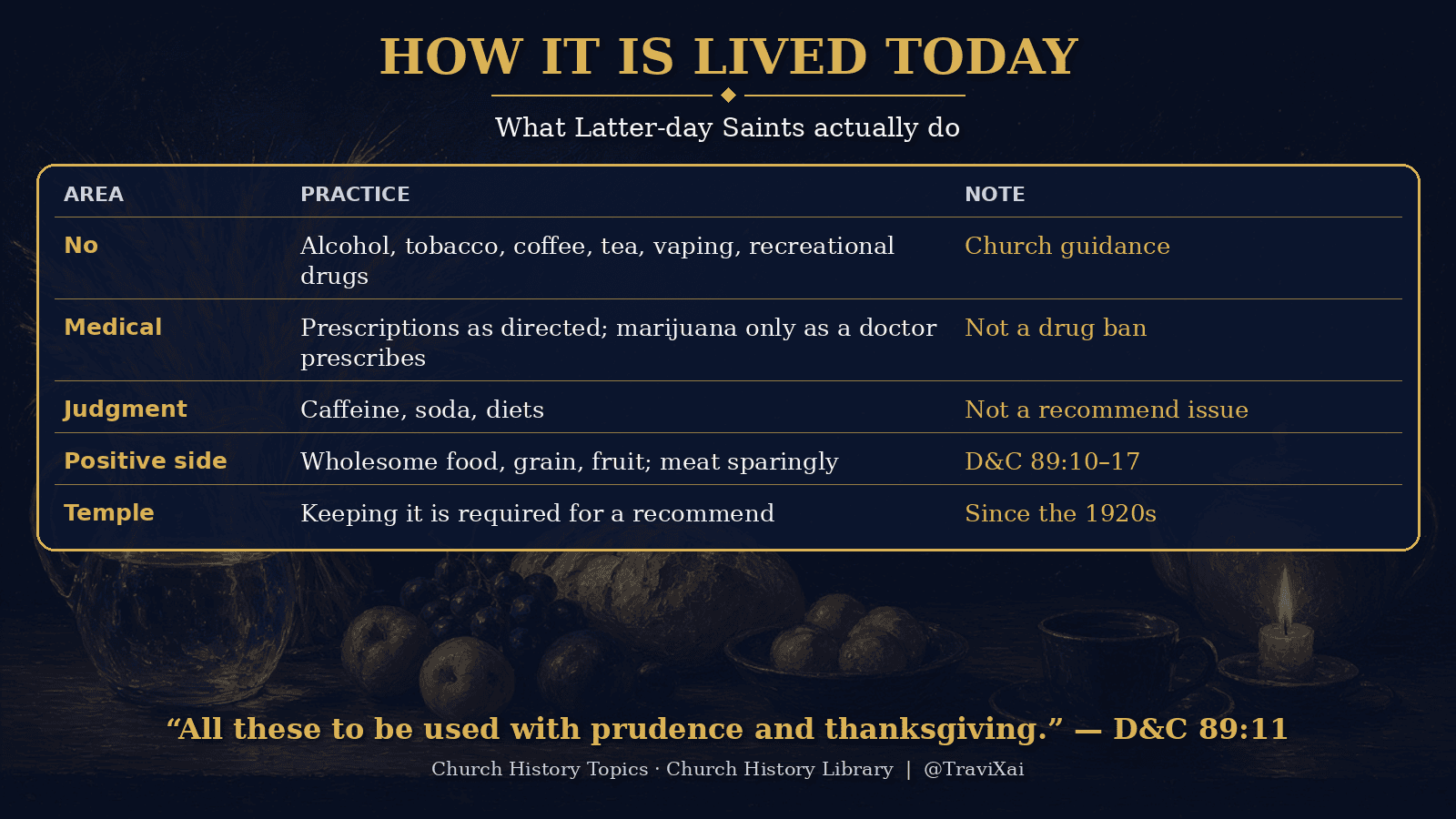
Today a Latter-day Saint keeping the Word of Wisdom does not drink alcohol, coffee or tea, and does not use tobacco, vape or use recreational drugs. In 2019 the Church specifically named “vaping or e-cigarettes, green tea, and coffee-based products” as against it. Prescription drugs used as directed are fine; the Church says substances such as marijuana and opioids “should be used only for medicinal purposes as prescribed by a competent physician.” Caffeine itself has been left to personal judgment and is not a temple recommend question. Bishops ask about the Word of Wisdom in temple recommend interviews, and it is part of baptismal preparation.
Does it work? The best-known data is James Enstrom and Lester Breslow’s 25-year study of active Latter-day Saints in California (Preventive Medicine, 2008). Among married, never-smoking, weekly church-attending members with at least 12 years of schooling, life expectancy at age 25 was 84 for men and 86 for women, about 10 years longer for men and 6 for women than U.S. whites of the time. The authors found the same pattern in people of any faith with the same characteristics, which is exactly the point: the habits work, and the Lord told us about them in 1833.
The BibleDaniel and the temple of the body
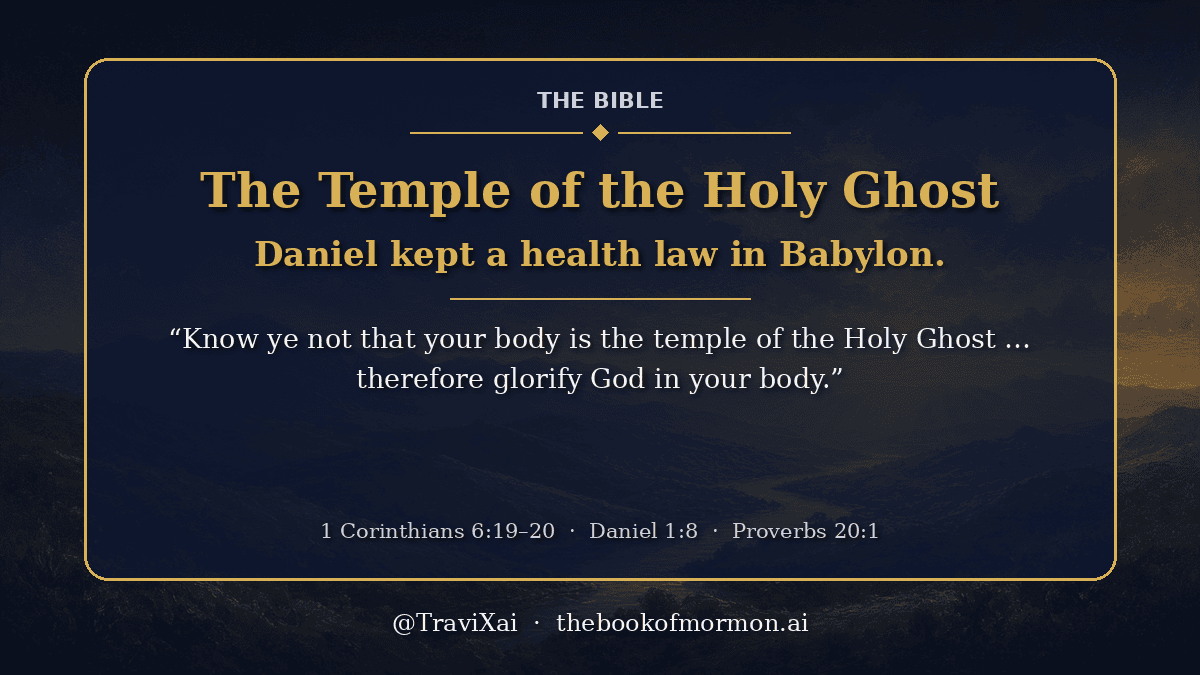
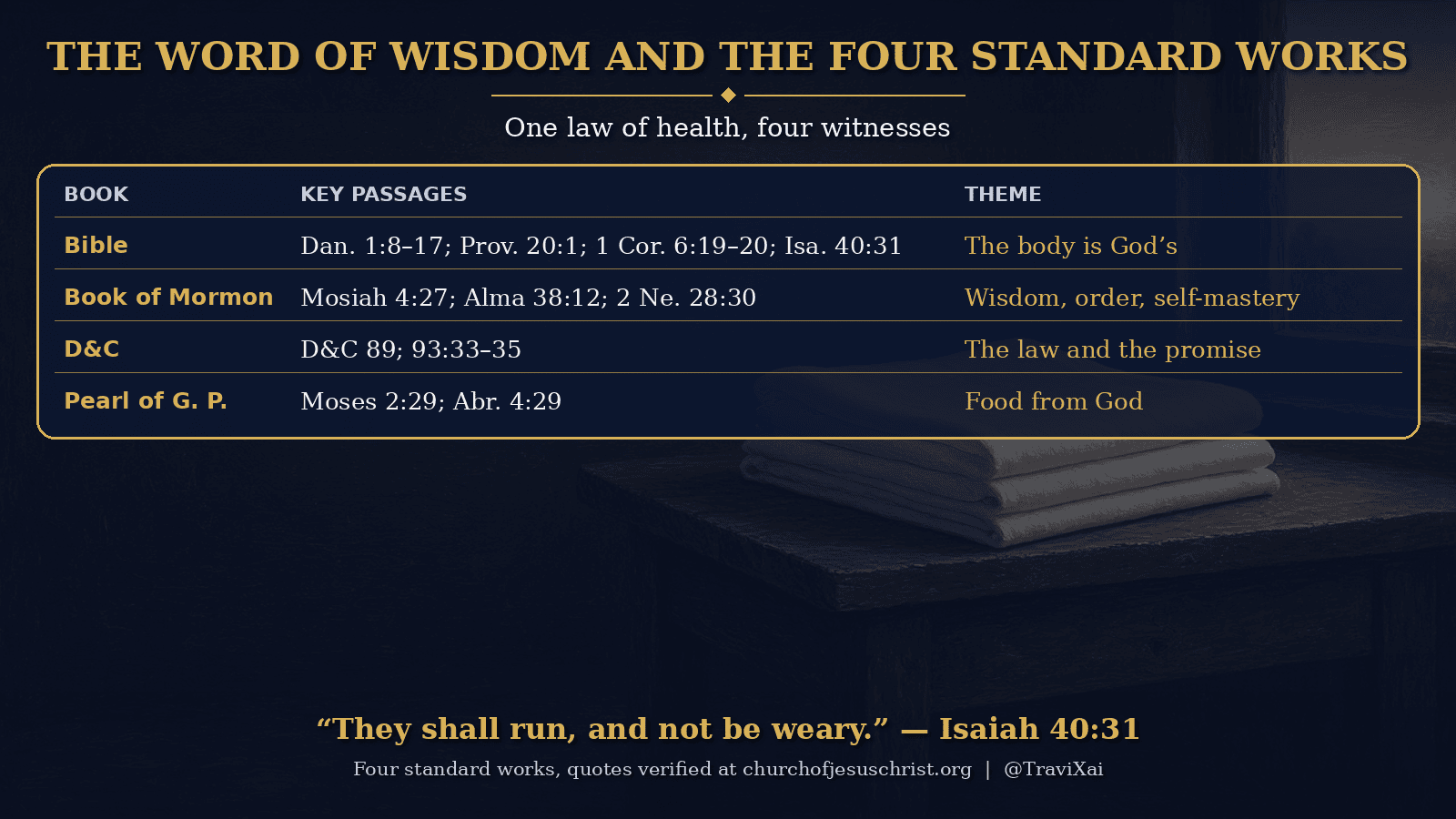
Daniel kept a health law in a foreign court: “Daniel purposed in his heart that he would not defile himself with the portion of the king’s meat, nor with the wine which he drank.” He asked for a test: “Prove thy servants, I beseech thee, ten days; and let them give us pulse to eat, and water to drink.” The result: “their countenances appeared fairer and fatter in flesh than all the children which did eat the portion of the king’s meat,” and “God gave them knowledge and skill in all learning and wisdom” (Daniel 1:8–17). Health and wisdom together. Sound familiar? Compare D&C 89:18–19.
Proverbs is blunt: “Wine is a mocker, strong drink is raging: and whosoever is deceived thereby is not wise” (Proverbs 20:1). Paul gives the principle: “know ye not that your body is the temple of the Holy Ghost which is in you, which ye have of God, and ye are not your own? For ye are bought with a price: therefore glorify God in your body, and in your spirit, which are God’s” (1 Corinthians 6:19–20). And D&C 89:20 borrows Isaiah’s promise: “they shall run, and not be weary; and they shall walk, and not faint” (Isaiah 40:31).
The Book of MormonWisdom, order and self-mastery
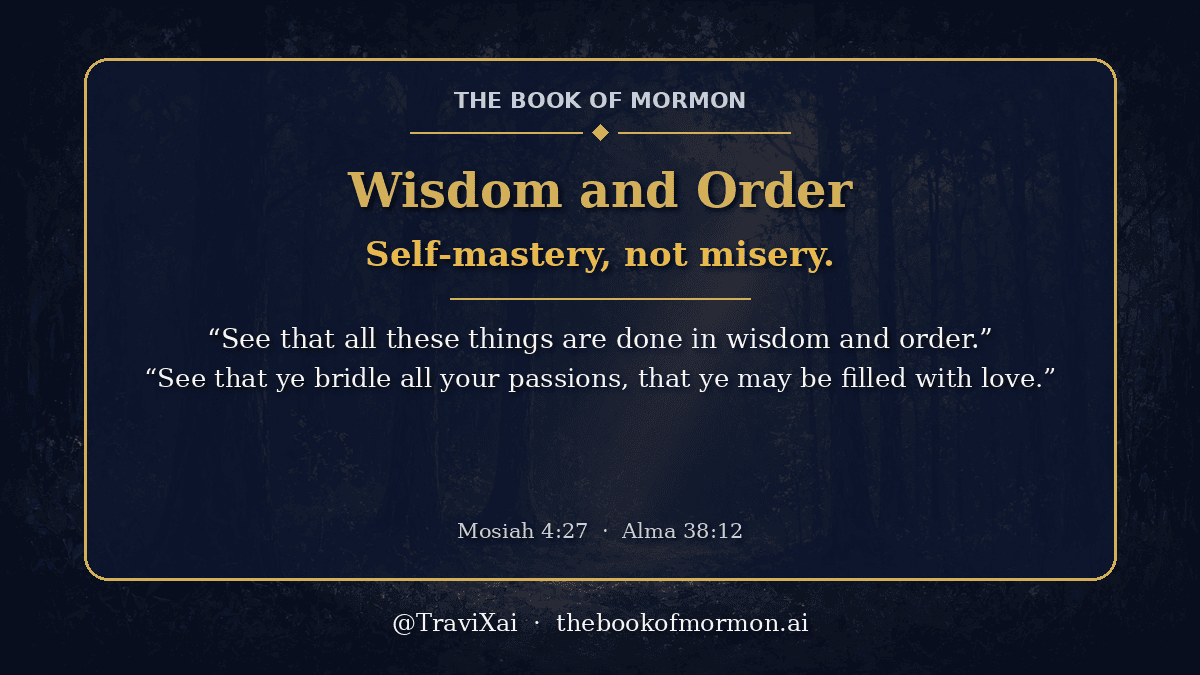
The Book of Mormon does not list foods, but it teaches the posture behind the Word of Wisdom. King Benjamin: “see that all these things are done in wisdom and order; for it is not requisite that a man should run faster than he has strength” (Mosiah 4:27). Alma to his son Shiblon: “see that ye bridle all your passions, that ye may be filled with love” (Alma 38:12). An addiction is the opposite of a bridle. The Word of Wisdom keeps the spirit in charge of the body instead of the other way around.
The Doctrine and CovenantsWhy the body matters this much
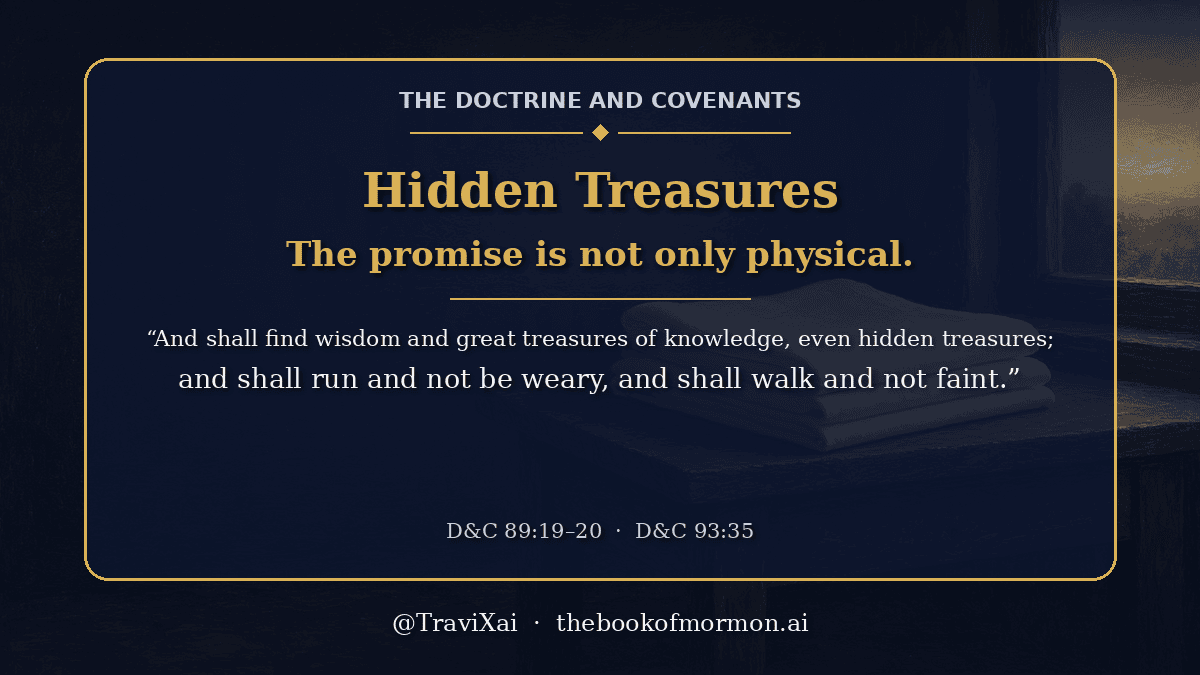
Latter-day Saints take the body more seriously than most Christians because of what we believe about God. “The Father has a body of flesh and bones as tangible as man’s; the Son also” (D&C 130:22). We are His children, and gaining a body is a step toward becoming like our Father, not a fall into matter. So: “spirit and element, inseparably connected, receive a fulness of joy; And when separated, man cannot receive a fulness of joy. The elements are the tabernacle of God; yea, man is the tabernacle of God, even temples; and whatsoever temple is defiled, God shall destroy that temple” (D&C 93:33–35).
That is why a law about coffee and tobacco sits in the same book as the vision of the degrees of glory. The body is not a disposable shell. It is part of what will be raised, glorified and, for the exalted, carried into eternal progression. See What Is the Doctrine and Covenants? and What Is the Law of Chastity?.
The Pearl of Great PriceFood from the hand of God
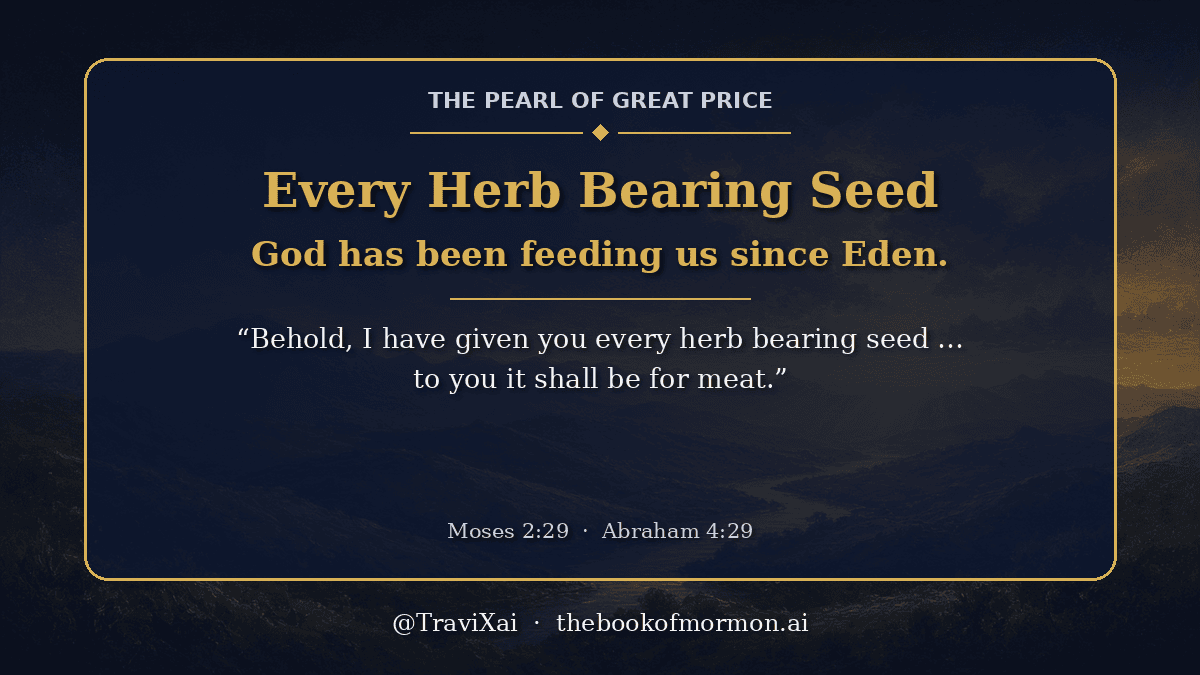
The positive half of the Word of Wisdom goes back to the Creation. In Moses: “And I, God, said unto man: Behold, I have given you every herb bearing seed, which is upon the face of all the earth, and every tree in the which shall be the fruit of a tree yielding seed; to you it shall be for meat” (Moses 2:29). In Abraham, the Gods in council plan it: “Behold, we will give them every herb bearing seed … it shall be for their meat” (Abraham 4:29). D&C 89 says the same thing: these were “ordained for the constitution, nature, and use of man.” Food is a gift; the Word of Wisdom teaches us to receive it “with prudence and thanksgiving.”
Check the premiseThe presuppositions baked into the question
Before this question can be answered fairly, the person asking has to justify a few assumptions packed inside it:
- That the Word of Wisdom is just a list of banned drinks. Most of D&C 89 is about what to eat and what God promises, including “wisdom and great treasures of knowledge.”
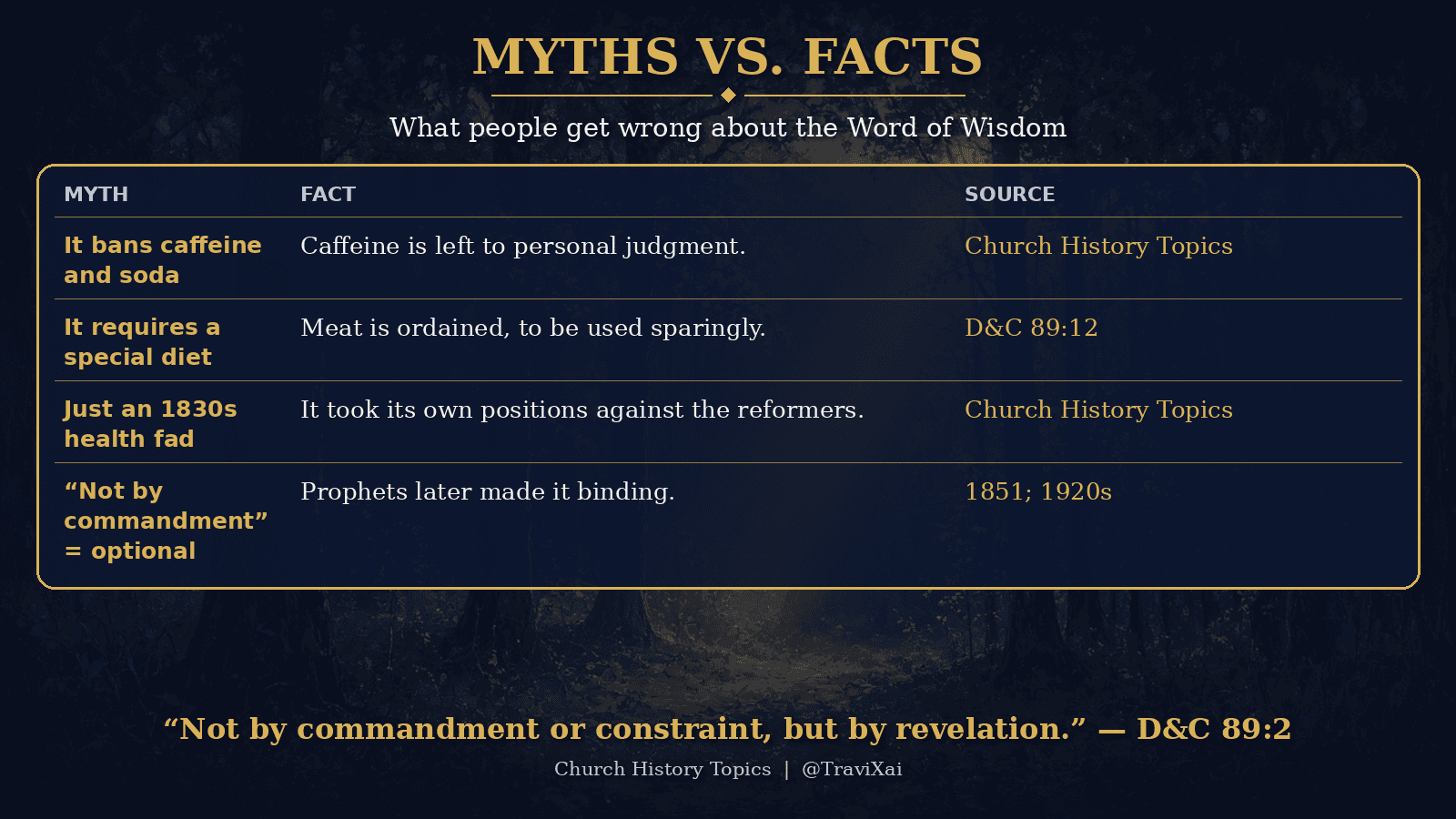
- That “not by commandment or constraint” means it is optional. It was given gently in 1833; later prophets made it binding (1851) and a temple recommend requirement (early 1920s). Line upon line is how revelation works (2 Nephi 28:30).
- That it bans caffeine, soda or meat. Caffeine is left to personal judgment, and meat is “ordained,” to be used sparingly.
- That Joseph Smith copied the temperance movement. He lived in the middle of that debate, but the revelation took its own positions, endorsing meat when some reformers rejected it, and attached promises no reformer could make.
FAQQuick answers
What is the Word of Wisdom?
A revelation given to Joseph Smith on February 27, 1833, now D&C 89. It is the Latter-day Saint law of health, with a promise of health and wisdom.
What does the Word of Wisdom forbid?
Alcohol, tobacco, coffee and tea. Church leaders have added vaping, recreational drugs, green tea and coffee-based products.
What does “hot drinks” mean in D&C 89?
Tea and coffee. Hyrum Smith said so in 1842, and the Church has taught it since.
Does the Word of Wisdom forbid caffeine?
No. Caffeine is left to personal judgment and is not a temple recommend question.
Can Latter-day Saints eat meat?
Yes. D&C 89:12 says the Lord ordained it, to be used sparingly.
When did the Word of Wisdom become a commandment?
Brigham Young called the Saints to covenant to keep it in 1851, and it became a temple recommend requirement in the early 1920s.
Why was the Word of Wisdom given?
Tobacco use in the School of the Prophets prompted Joseph to ask. The Lord said it was a warning against “conspiring men in the last days” (D&C 89:4).
What does the Word of Wisdom promise?
Health, “wisdom and great treasures of knowledge,” the strength to “run and not be weary,” and protection from the destroying angel (D&C 89:18–21).
SummaryKey takeaways
- D&C 89, given February 27, 1833, in Kirtland.
- No alcohol, tobacco, coffee or tea; no vaping or recreational drugs.
- Grain, fruit and wholesome food with thanksgiving; meat sparingly.
- Given gently, made binding over time: 1851, then the temple recommend in the early 1920s.
- The promise covers body and mind: health, wisdom, strength and protection.
Read D&C 89 tonight; it takes three minutes. For quick, sourced answers, open Galatians18, and follow me on X at @TraviXai.
Sources
- King James Bible (churchofjesuschrist.org): Proverbs 20:1 · Isaiah 40:31 · Daniel 1:8–17 · 1 Corinthians 6:19–20
- Book of Mormon: 2 Nephi 28:30 · Mosiah 4:27 · Alma 38:12
- Doctrine and Covenants: D&C 89 · D&C 93:33–35 · D&C 130:22
- Pearl of Great Price: Moses 2:29 · Abraham 4:29
- Church History Topics, “Word of Wisdom (D&C 89)” · Church History Library, “Top Reference Questions about the Word of Wisdom” · D&C Student Manual, section 89 (Hyrum Smith, Times and Seasons, June 1, 1842)
- Enstrom and Breslow, “Lifestyle and reduced mortality among active California Mormons, 1980–2004,” Preventive Medicine (2008)
- Featured image and in-article graphic: original graphics by thebookofmormon.ai (painterly backgrounds; no photographs or likenesses of real people).