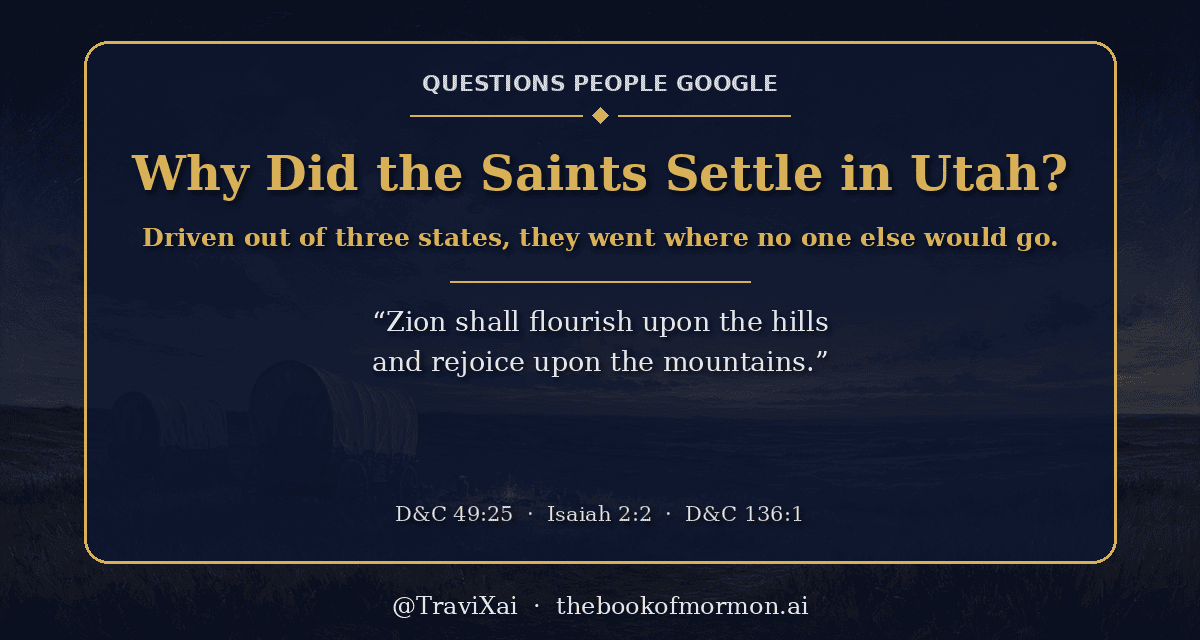

They were driven from three states before they found a valley no one else wanted. Here is why the Latter-day Saints settled in Utah, and why they saw scripture in it.
The question often assumes they chose Utah, or that Joseph Smith led them there. Neither is quite right. The Latter-day Saints settled in Utah because mobs had driven them from Missouri and Illinois and killed Joseph Smith in 1844. Brigham Young led them west under the revelation in D&C 136 to the Great Basin, an isolated region outside the United States that no one else wanted, and entered the Salt Lake Valley on July 24, 1847. They saw it as the Lord’s promise that “Zion shall flourish upon the hills and rejoice upon the mountains” (D&C 49:25).
Why they leftDriven out
The Latter-day Saints did not move to Utah because they wanted a desert. They went because they had been driven from every place they had built. They gathered to Ohio in 1831 and to Missouri, were expelled from Jackson County in 1833 and from the whole state in 1838–39 under Governor Boggs’s extermination order, and built Nauvoo, Illinois, into one of the largest cities in the state. See Why Was Joseph Smith in Liberty Jail?.
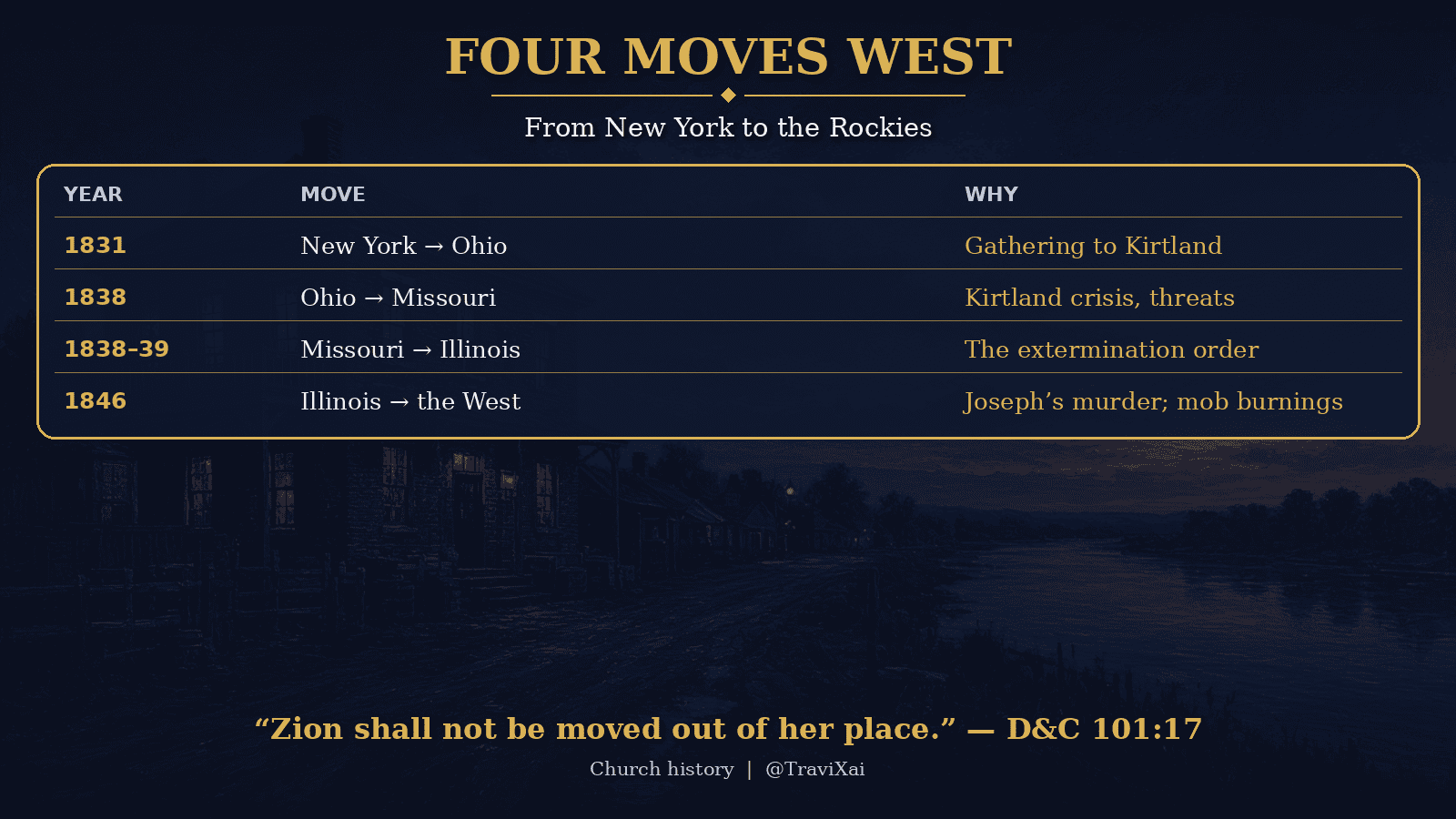
Then on June 27, 1844, Joseph and Hyrum Smith were murdered at Carthage. The Illinois legislature had already repealed Nauvoo’s charter, and in September 1845 mobs burned homes and barns in outlying Latter-day Saint settlements. Under pressure from state officials, Church leaders agreed to leave Illinois the next spring. Joseph had already been looking west: in February 1844 he directed the Twelve to send an expedition to explore Oregon and California for a new home. See Carthage: Like a Lamb to the Slaughter and Why Did Joseph Smith Run for President?.
The exodusNauvoo to the valley
In February 1846, with the Nauvoo Temple not yet finished, the first wagons crossed the Mississippi into Iowa, some over the frozen river. Brigham Young and the Twelve led them across Iowa in cold rain and mud to Winter Quarters, on the Missouri River, where hundreds died that winter. There, on January 14, 1847, Brigham Young received “The Word and Will of the Lord concerning the Camp of Israel in their journeyings to the West” (D&C 136:1), and with it an explanation: “My people must be tried in all things, that they may be prepared to receive the glory that I have for them, even the glory of Zion” (D&C 136:31).
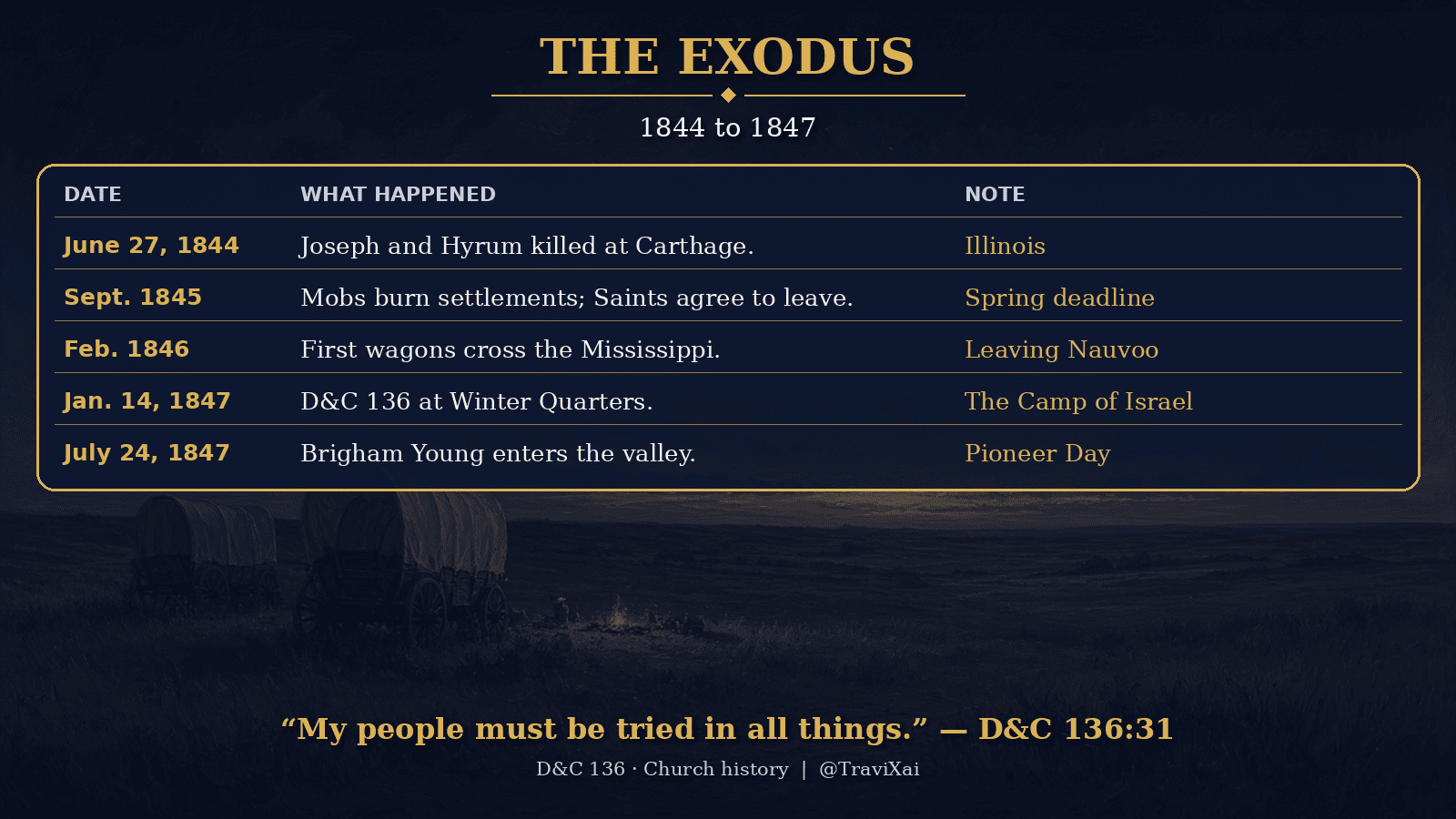
A vanguard company of 148 left in April 1847. Advance scouts entered the Salt Lake Valley on July 21–22, and Brigham Young, sick with mountain fever, arrived on July 24, now Pioneer Day. Wilford Woodruff later recalled that Brigham looked over the valley and said, “This is the right place.” Over the next two decades about 70,000 Latter-day Saints crossed the plains. See Who Was Brigham Young?.
Why the Great BasinWhy there and not Oregon or California
Brigham Young studied John C. Frémont’s reports of his western expeditions and chose the Great Basin on purpose. It was isolated, hundreds of miles from any settlement that might turn into a mob. When the Saints set out in 1846 it was Mexican territory, outside the United States that had failed to protect them; the U.S. acquired it in 1848. And no one else wanted it. Oregon and California were drawing settlers; a salt lake in a dry valley was not. That meant room for a whole people to gather and build.
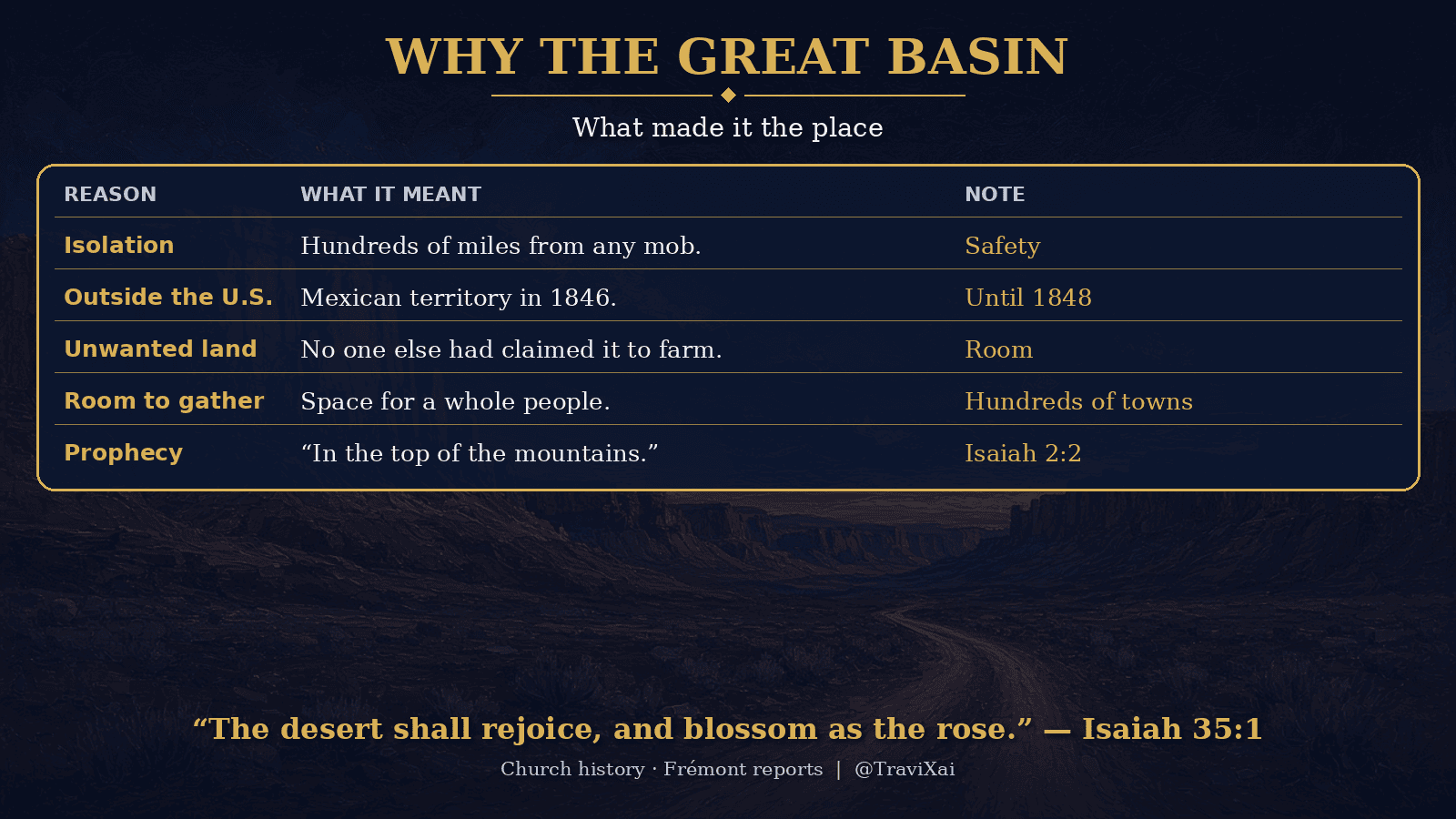
From that valley they founded hundreds of towns. And they took the place as a fulfillment of scripture: Zion in the mountains. See What Is the Gathering of Israel?.
The BibleThe mountain of the Lord’s house
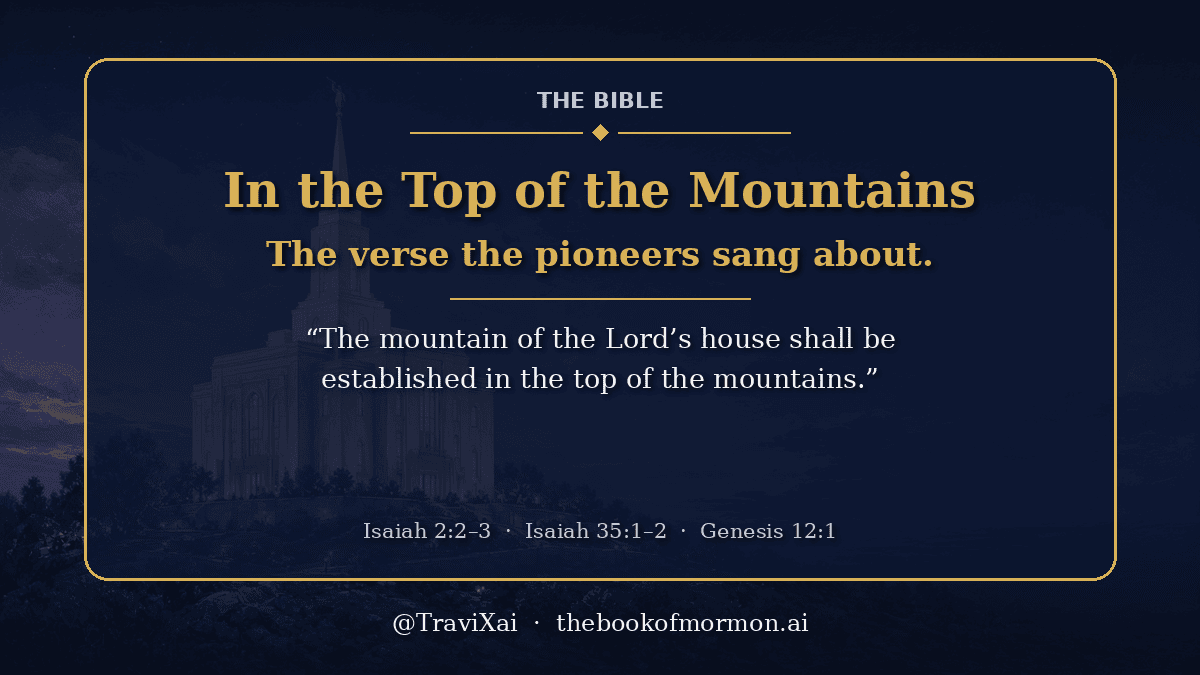
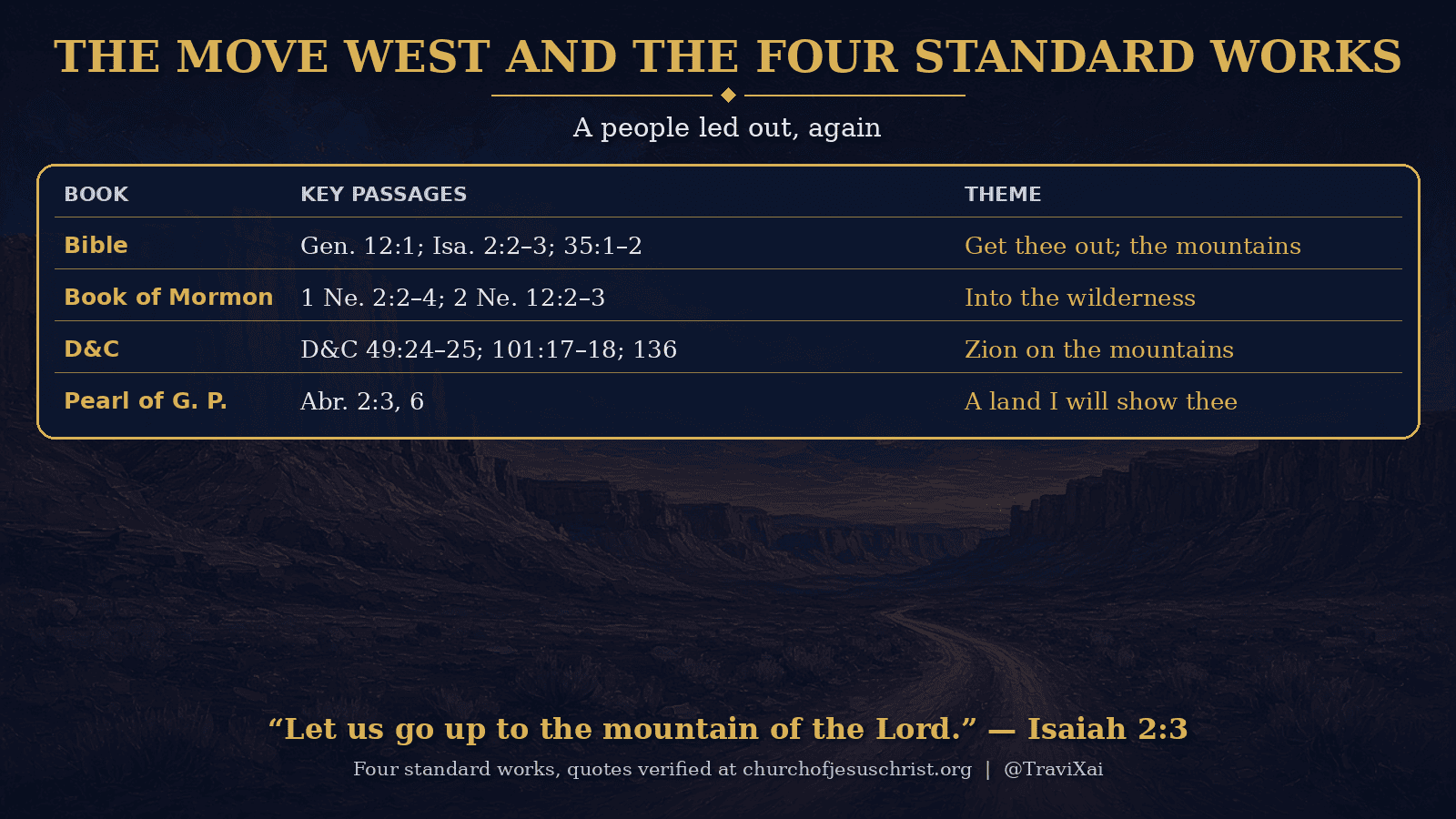
The pioneers read Isaiah as their own story: “it shall come to pass in the last days, that the mountain of the Lord’s house shall be established in the top of the mountains, and shall be exalted above the hills; and all nations shall flow unto it. And many people shall go and say, Come ye, and let us go up to the mountain of the Lord, to the house of the God of Jacob” (Isaiah 2:2–3). They began the Salt Lake Temple six years after arriving. They planted orchards and canals in a desert and quoted Isaiah 35: “The wilderness and the solitary place shall be glad for them; and the desert shall rejoice, and blossom as the rose” (Isaiah 35:1–2). And the whole pattern goes back to Abram: “Get thee out of thy country, and from thy kindred, and from thy father’s house, unto a land that I will shew thee” (Genesis 12:1).
The Book of MormonLehi’s pattern
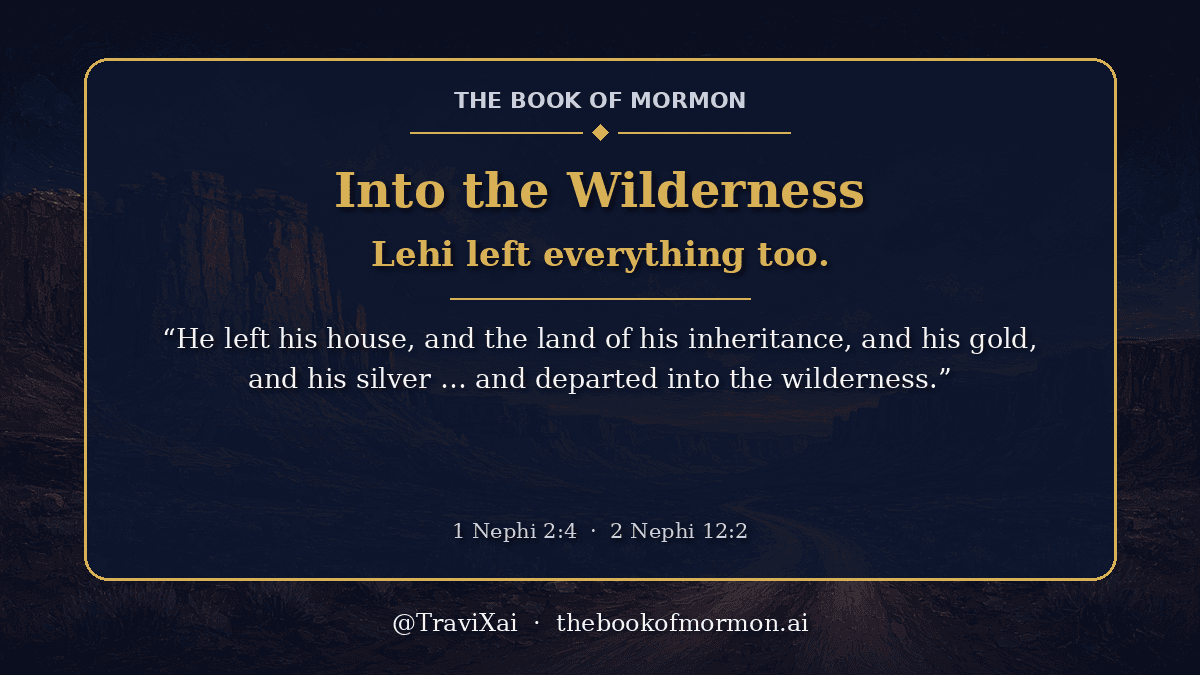
The Book of Mormon opens with a family doing what the Saints did: “the Lord commanded my father, even in a dream, that he should take his family and depart into the wilderness … And he left his house, and the land of his inheritance, and his gold, and his silver, and his precious things, and took nothing with him, save it were his family, and provisions, and tents” (1 Nephi 2:2–4). The Saints left their homes, their farms and a nearly finished temple. Nephi also preserved Isaiah’s promise about the mountain of the Lord’s house (2 Nephi 12:2–3).
The Doctrine and CovenantsZion upon the mountains
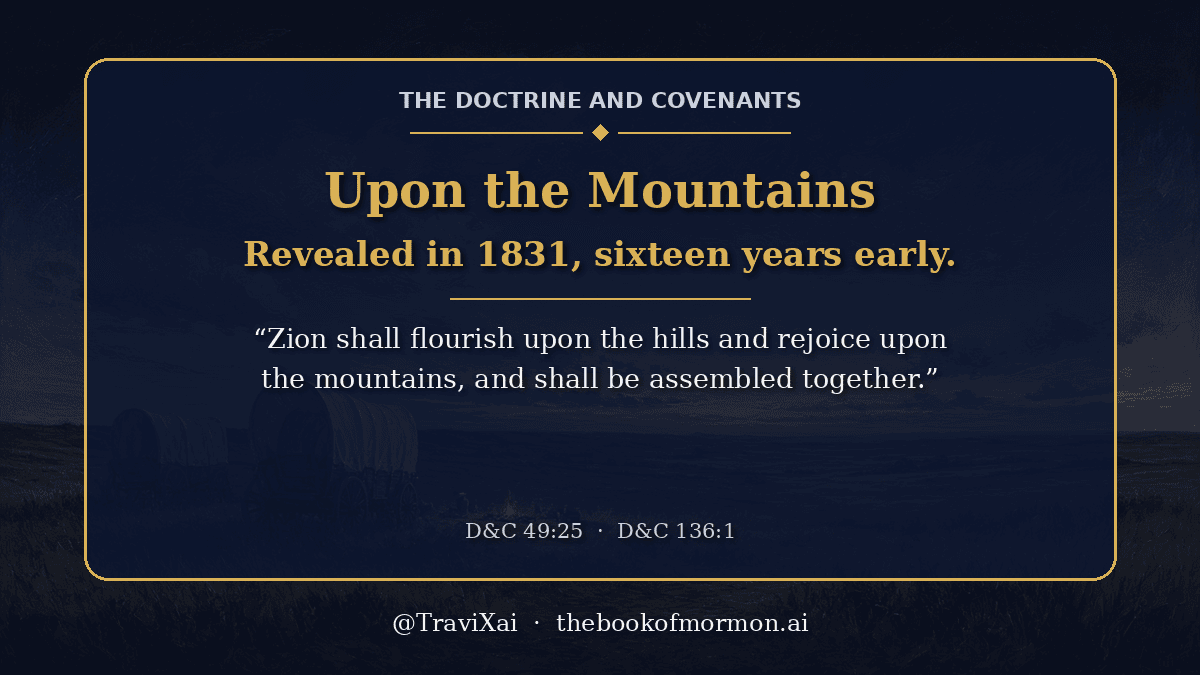
In 1831, years before anyone thought of the Rockies, the Lord said: “before the great day of the Lord shall come, Jacob shall flourish in the wilderness, and the Lamanites shall blossom as the rose. Zion shall flourish upon the hills and rejoice upon the mountains, and shall be assembled together unto the place which I have appointed” (D&C 49:24–25).
Utah is not the center place of Zion. That is still Jackson County, Missouri: “Zion shall not be moved out of her place, notwithstanding her children are scattered. They that remain, and are pure in heart, shall return” (D&C 101:17–18). The Great Basin was a refuge and a gathering place in the meantime. See Do Latter-day Saints Believe Jesus Will Return to Missouri?.
The Pearl of Great PriceAbraham, again

Abraham’s own record adds the reason: “the Lord had said unto me: Abraham, get thee out of thy country, and from thy kindred, and from thy father’s house, unto a land that I will show thee … I have purposed to take thee away out of Haran, and to make of thee a minister to bear my name in a strange land which I will give unto thy seed after thee for an everlasting possession” (Abraham 2:3, 2:6). Abraham left for the sake of a covenant, and so did the pioneers. See What Is the Book of Abraham?.
TodayWhy so many Latter-day Saints still live in Utah
Utah has the highest concentration of Latter-day Saints anywhere because that is where the pioneers settled and raised families, and Church headquarters remain in Salt Lake City. But the gathering is no longer to one place. Since the 1950s Church leaders have taught members to build Zion where they live, and today most of the Church’s more than 17 million members live outside the United States.
Check the premiseThe presuppositions baked into the question
Before this question can be answered fairly, the person asking has to justify a few assumptions packed inside it:
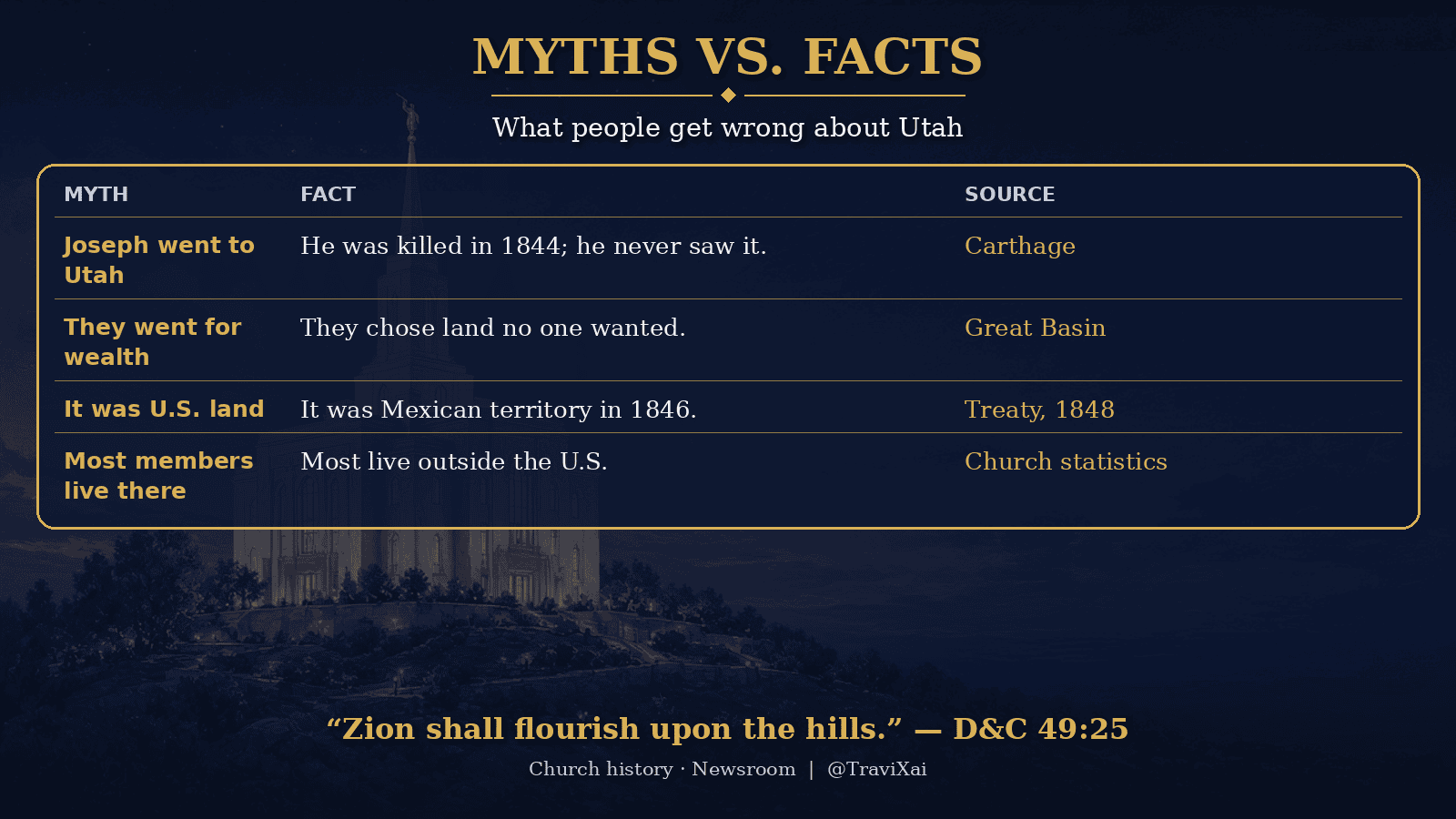
- That Joseph Smith led the Saints to Utah. He was killed in 1844. Brigham Young and the Twelve led the exodus (D&C 136).
- That they chose Utah for its riches. They chose land no one else wanted, far from the mobs that had driven them out of Ohio, Missouri and Illinois.
- That Utah is the Latter-day Saint promised land. The center place of Zion is still Jackson County, Missouri (D&C 101:17–18); Utah was a refuge and gathering place.
- That Latter-day Saints mostly live in Utah. Most of the Church’s members live outside the United States.
FAQQuick answers
Why did the Latter-day Saints go to Utah?
After mobs drove them from Missouri and Illinois and killed Joseph Smith in 1844, Brigham Young led them to the isolated Great Basin, then outside the United States, where no one could easily drive them out again.
When did the pioneers arrive in the Salt Lake Valley?
Advance scouts arrived July 21–22, 1847, and Brigham Young entered on July 24, 1847, now celebrated as Pioneer Day.
Did Joseph Smith go to Utah?
No. He was killed in Carthage, Illinois, in 1844, three years before the pioneers reached Utah.
Who led the Saints to Utah?
Brigham Young, President of the Quorum of the Twelve Apostles, under the revelation in D&C 136.
Was Utah part of the United States in 1847?
No. It was Mexican territory. The U.S. acquired it in 1848 under the Treaty of Guadalupe Hidalgo.
What does “This is the right place” mean?
Wilford Woodruff later recalled Brigham Young saying it when he first saw the valley on July 24, 1847.
How many pioneers crossed the plains?
About 70,000 Latter-day Saints crossed by wagon and handcart between 1847 and the coming of the railroad in 1869.
Do most Latter-day Saints live in Utah?
No. Utah has the highest concentration, but most of the Church’s more than 17 million members live outside the United States.
SummaryKey takeaways
- Moved from New York, then driven from Ohio, Missouri and Illinois.
- Joseph Smith was killed in 1844; Brigham Young led the exodus.
- The Great Basin was isolated, unwanted and outside the U.S. in 1846.
- Brigham Young entered the Salt Lake Valley on July 24, 1847.
- Utah is a refuge; the center place of Zion is still Missouri (D&C 101:17).
Read D&C 136 tonight. For quick, sourced answers, open Galatians18, and follow me on X at @TraviXai.
Sources
- King James Bible (churchofjesuschrist.org): Genesis 12:1 · Isaiah 2:2–3 · Isaiah 35:1–2
- Book of Mormon: 1 Nephi 2:2–4 · 2 Nephi 12:2–3
- Doctrine and Covenants: D&C 49:24–25 · D&C 101:17–18 · D&C 136:1 · D&C 136:31
- Pearl of Great Price: Abraham 2:3 · Abraham 2:6
- Church History Library pioneer records · Wilford Woodruff, Pioneer Day address (1880) · Church Newsroom, Facts and Statistics
- Featured image and in-article graphic: original graphics by thebookofmormon.ai (painterly backgrounds; no photographs or likenesses of real people).