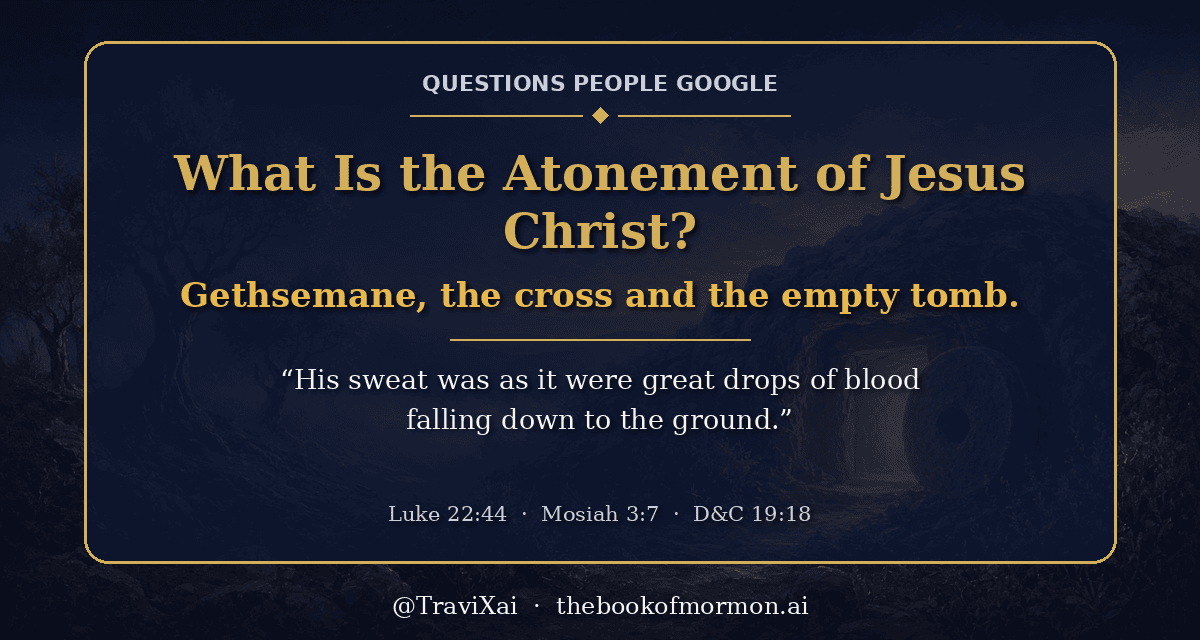

Gethsemane, Golgotha and the empty tomb: what Latter-day Saints believe Christ did, from all four standard works.
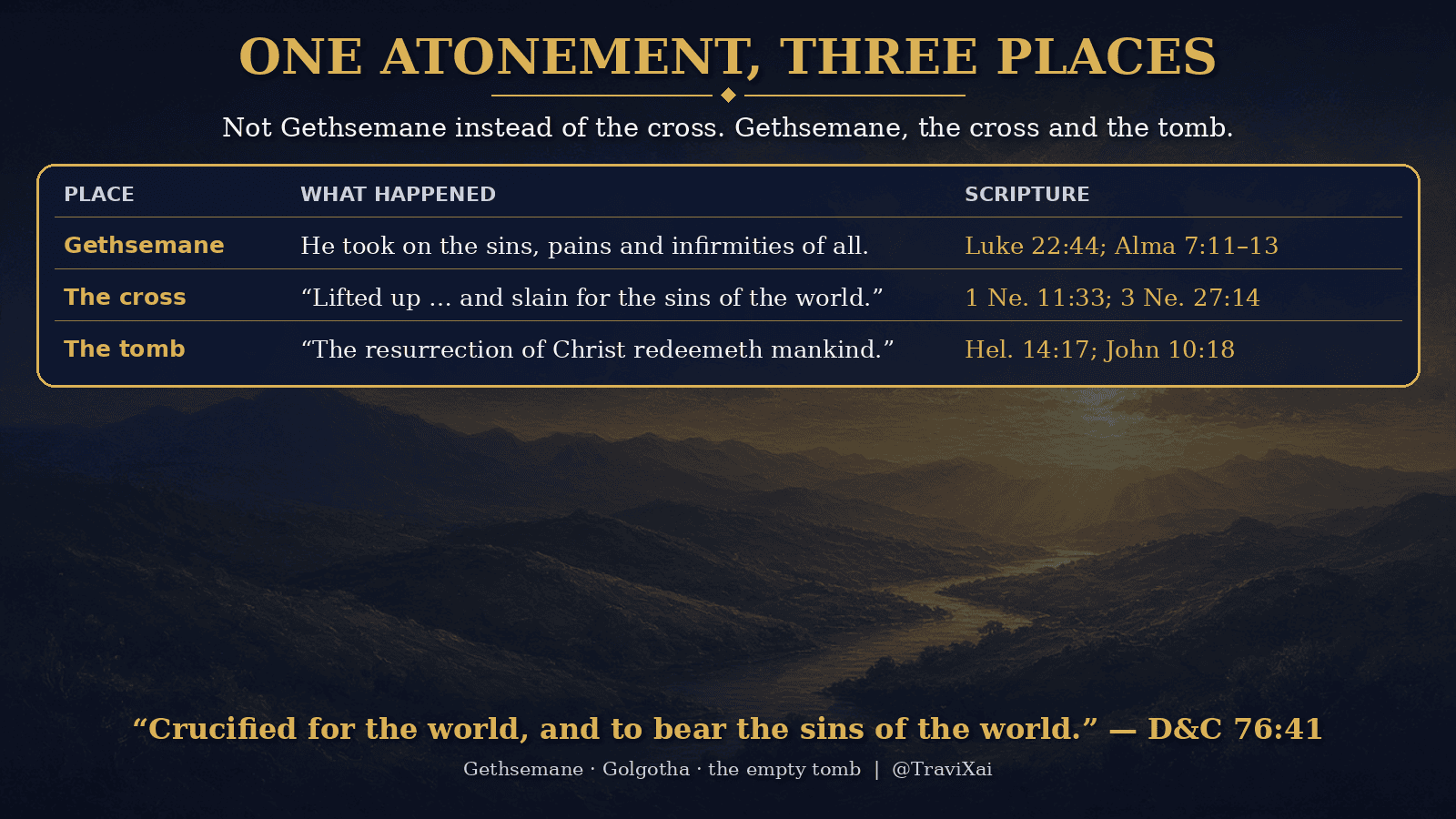
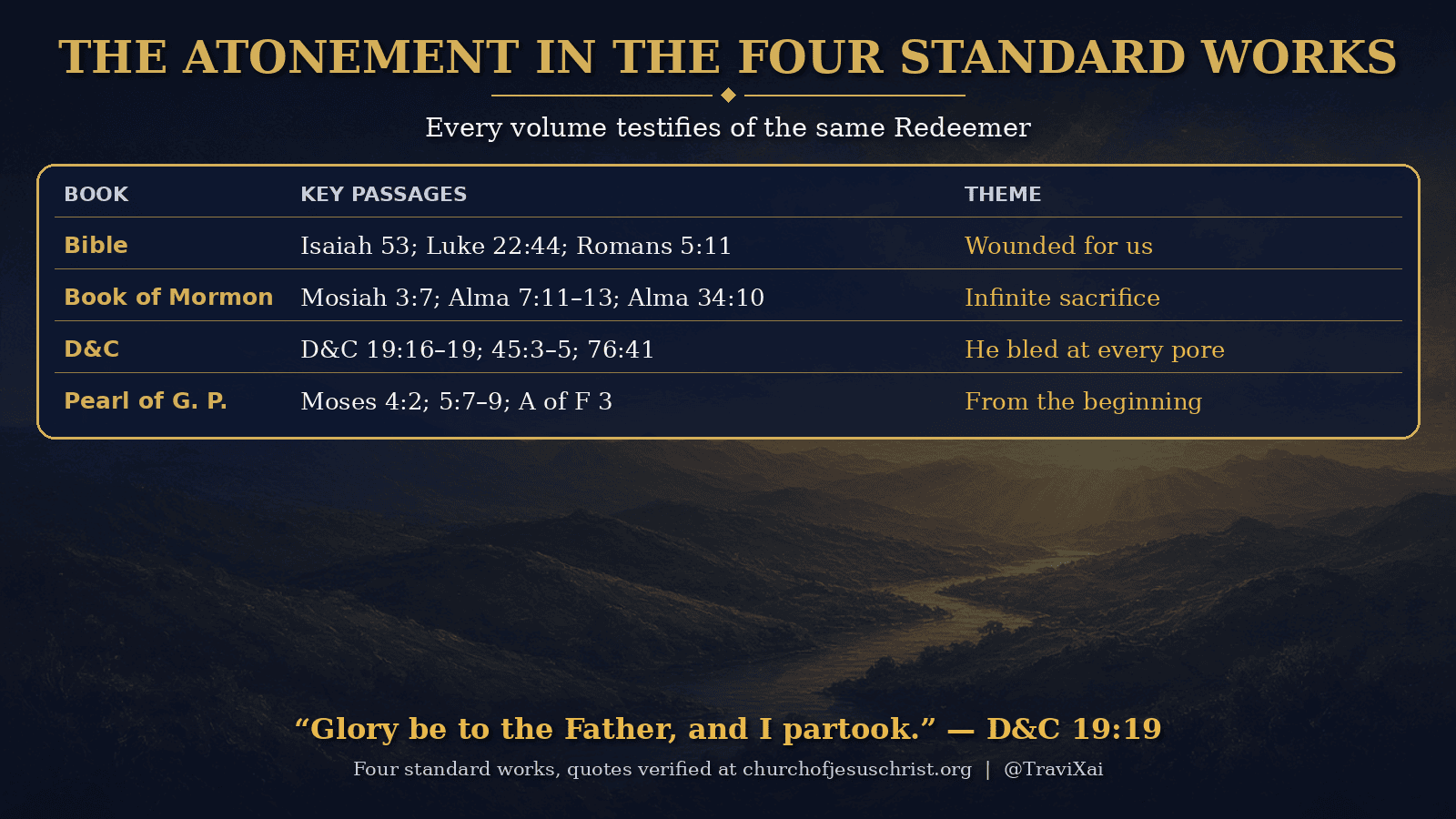
The question often assumes Latter-day Saints swap the cross for Gethsemane, or try to earn what only Christ can give. Neither is true. The Atonement is Christ’s suffering in Gethsemane, where He bled “at every pore” (D&C 19:18; Mosiah 3:7; Luke 22:44), His death on the cross “for the sins of the world” (1 Nephi 11:33), and His Resurrection, which “redeemeth mankind, yea, even all mankind” (Helaman 14:17). Through it “all mankind may be saved, by obedience to the laws and ordinances of the Gospel” (Article of Faith 3).
What it isAt-one-ment with the Father
The Atonement of Jesus Christ is His suffering, death and Resurrection, by which He paid for the sins of everyone who repents, overcame death for everyone, and made it possible for us to return to the Father. The Articles of Faith put it in one line: “We believe that through the Atonement of Christ, all mankind may be saved, by obedience to the laws and ordinances of the Gospel” (Article of Faith 3).
The word is in the King James Bible. Paul: “we also joy in God through our Lord Jesus Christ, by whom we have now received the atonement” (Romans 5:11). The law of Moses taught the idea through blood: “it is the blood that maketh an atonement for the soul” (Leviticus 17:11). Moses 5 shows that sacrifice was always pointing to Christ: “This thing is a similitude of the sacrifice of the Only Begotten of the Father” (Moses 5:7).
GethsemaneDid Jesus bleed in Gethsemane?
Yes, and Latter-day Saints have three scriptural witnesses for it. Luke: “being in an agony he prayed more earnestly: and his sweat was as it were great drops of blood falling down to the ground” (Luke 22:41–44). King Benjamin, about 124 years before Christ was born: “blood cometh from every pore, so great shall be his anguish for the wickedness and the abominations of his people” (Mosiah 3:7). And the Savior Himself, in 1830: “Which suffering caused myself, even God, the greatest of all, to tremble because of pain, and to bleed at every pore, and to suffer both body and spirit” (D&C 19:18).
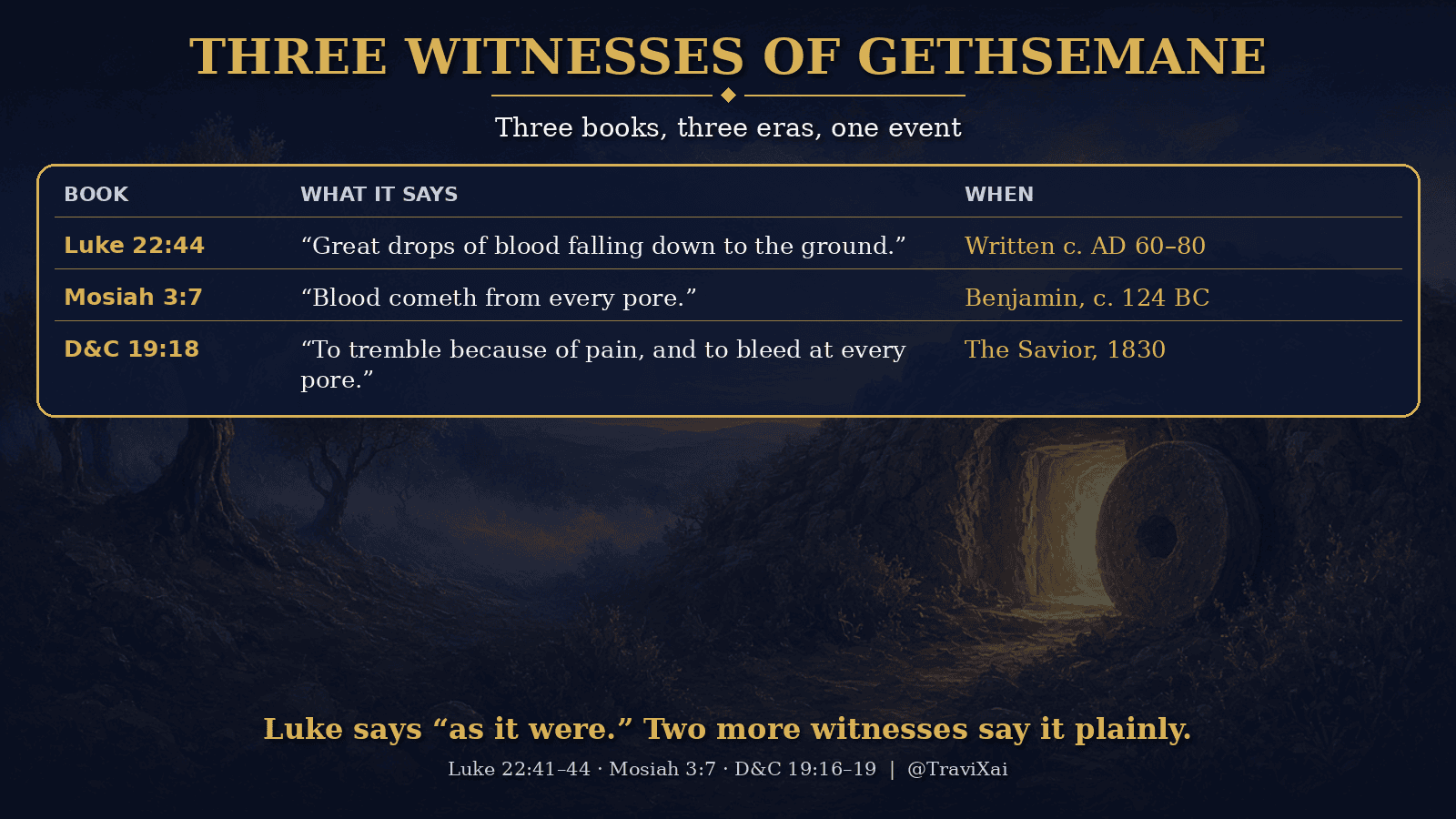
Critics point out that Luke 22:43–44 is missing from some early manuscripts, such as Papyrus 75 and Codex Vaticanus. That is true. It is also present in others, including the original hand of Codex Sinaiticus and Codex Bezae, and second-century writers such as Justin Martyr and Irenaeus knew of the bloody sweat. Anyone who drops Luke 22:44 over a textual question has to apply the same standard to the rest of their Bible. Latter-day Saints have no such problem. Two more books of scripture state it plainly, and one of them quotes the Sufferer. See “As Far As It Is Translated Correctly”.
The BibleThe Lamb, the cup and the cross
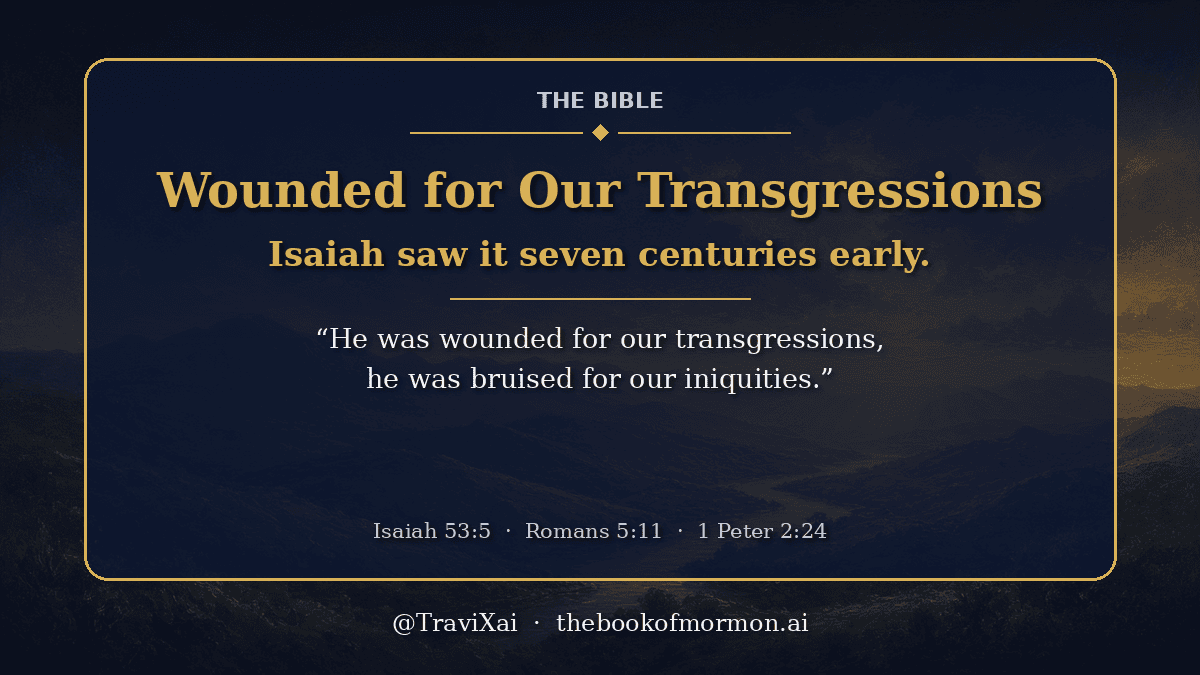
Isaiah: “Surely he hath borne our griefs, and carried our sorrows … he was wounded for our transgressions, he was bruised for our iniquities: the chastisement of our peace was upon him; and with his stripes we are healed” (Isaiah 53:4–5). In the garden, the Son submitted to the Father: “O my Father, if it be possible, let this cup pass from me: nevertheless not as I will, but as thou wilt” (Matthew 26:39). Peter: He “his own self bare our sins in his own body on the tree” (1 Peter 2:24). John: “the blood of Jesus Christ his Son cleanseth us from all sin” (1 John 1:7).
He was not a helpless victim: “No man taketh it from me, but I lay it down of myself. I have power to lay it down, and I have power to take it again. This commandment have I received of my Father” (John 10:17–18). And because He suffered, He understands: “we have not an high priest which cannot be touched with the feeling of our infirmities; but was in all points tempted like as we are, yet without sin” (Hebrews 4:15).
The Book of MormonAn infinite atonement
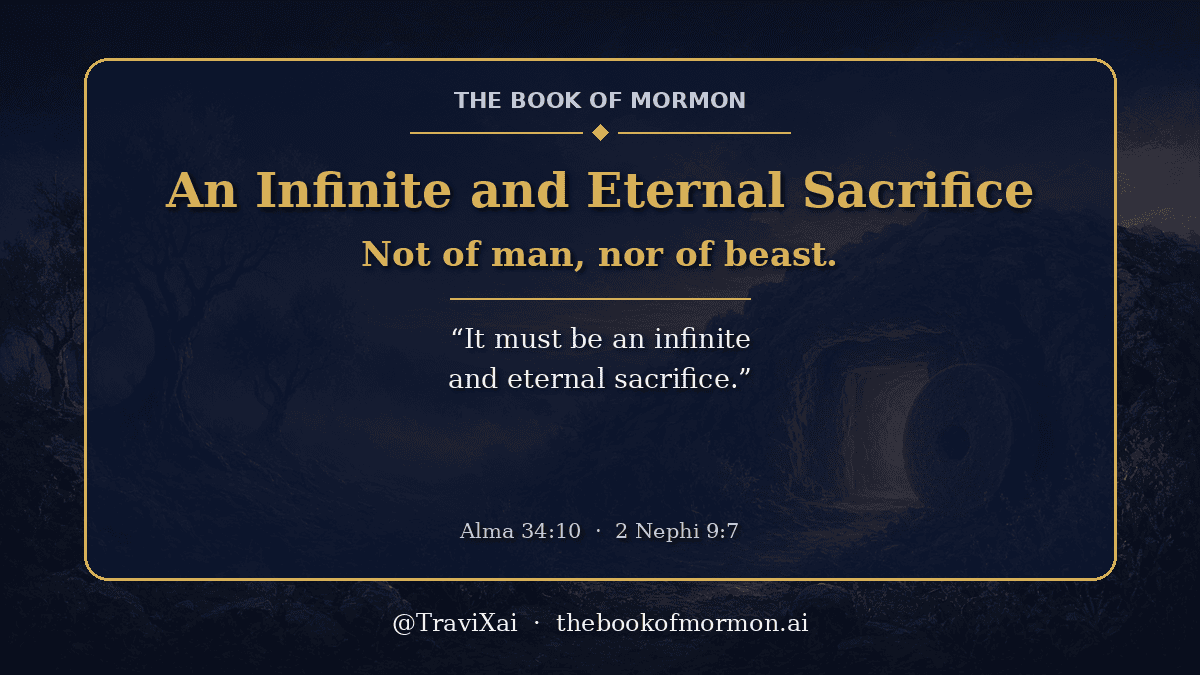
Amulek: “it is expedient that there should be a great and last sacrifice; yea, not a sacrifice of man, neither of beast … but it must be an infinite and eternal sacrifice” (Alma 34:9–10). Jacob: “it must needs be an infinite atonement—save it should be an infinite atonement this corruption could not put on incorruption” (2 Nephi 9:7). It reaches every person: “he suffereth the pains of all men, yea, the pains of every living creature, both men, women, and children, who belong to the family of Adam” (2 Nephi 9:21).
Alma adds something the Bible only hints at. Christ took more than sins: “he shall go forth, suffering pains and afflictions and temptations of every kind … and he will take upon him their infirmities, that his bowels may be filled with mercy, according to the flesh, that he may know according to the flesh how to succor his people according to their infirmities” (Alma 7:11–12). The Atonement covers grief, sickness and weakness as well as guilt.
The Book of Mormon puts the cross at the center too. Nephi “saw that he was lifted up upon the cross and slain for the sins of the world” (1 Nephi 11:33), and the risen Lord told the Nephites, “my Father sent me that I might be lifted up upon the cross” (3 Nephi 27:14). Then the tomb: “the resurrection of Christ redeemeth mankind, yea, even all mankind, and bringeth them back into the presence of the Lord” (Helaman 14:17).
Justice and mercy
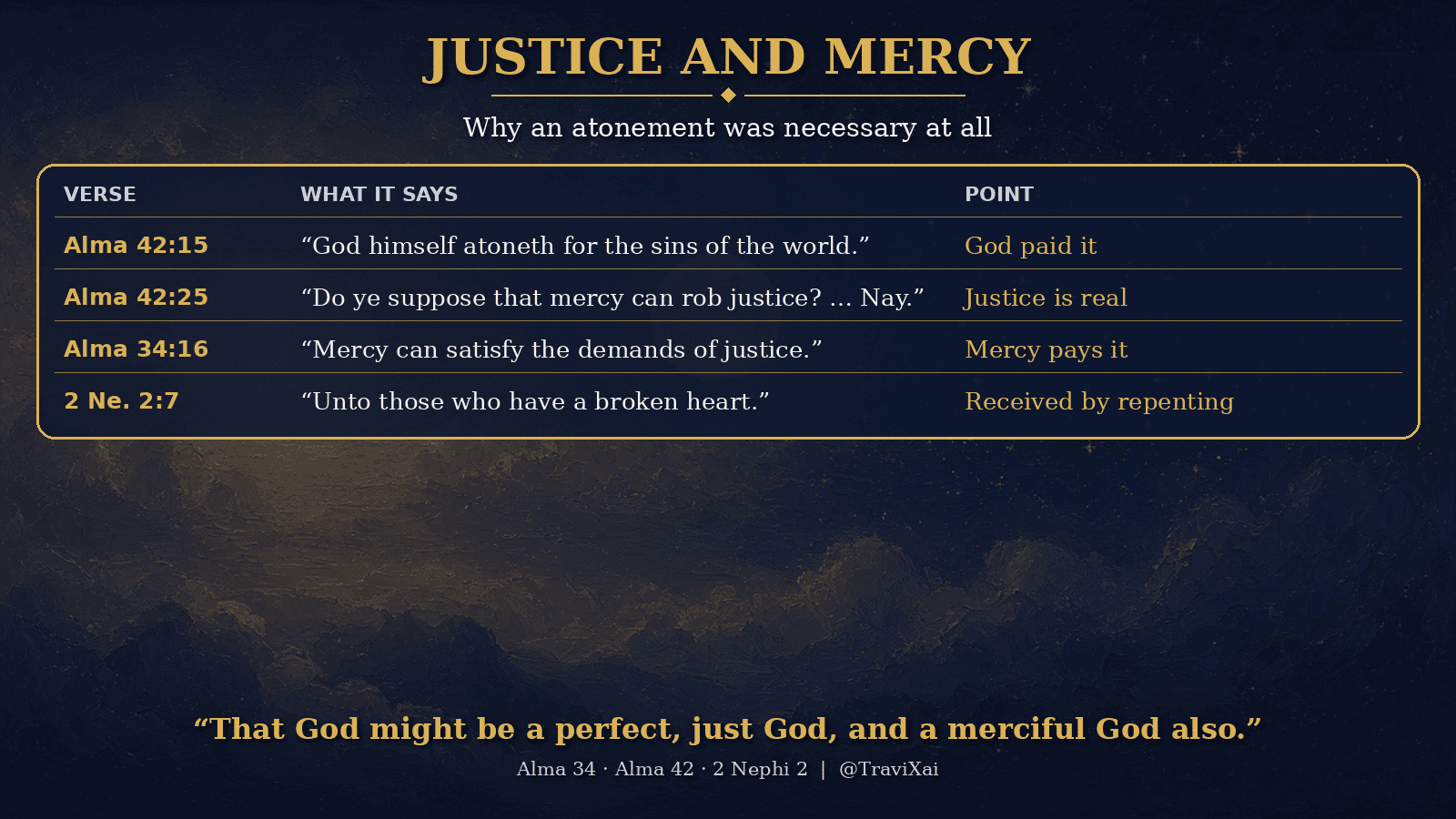
Alma explains why the price had to be paid: “the plan of mercy could not be brought about except an atonement should be made; therefore God himself atoneth for the sins of the world, to bring about the plan of mercy, to appease the demands of justice, that God might be a perfect, just God, and a merciful God also” (Alma 42:15). “What, do ye suppose that mercy can rob justice? I say unto you, Nay; not one whit” (Alma 42:25). Instead, “mercy can satisfy the demands of justice, and encircles them in the arms of safety” (Alma 34:16).
The Doctrine and CovenantsThe Sufferer speaks
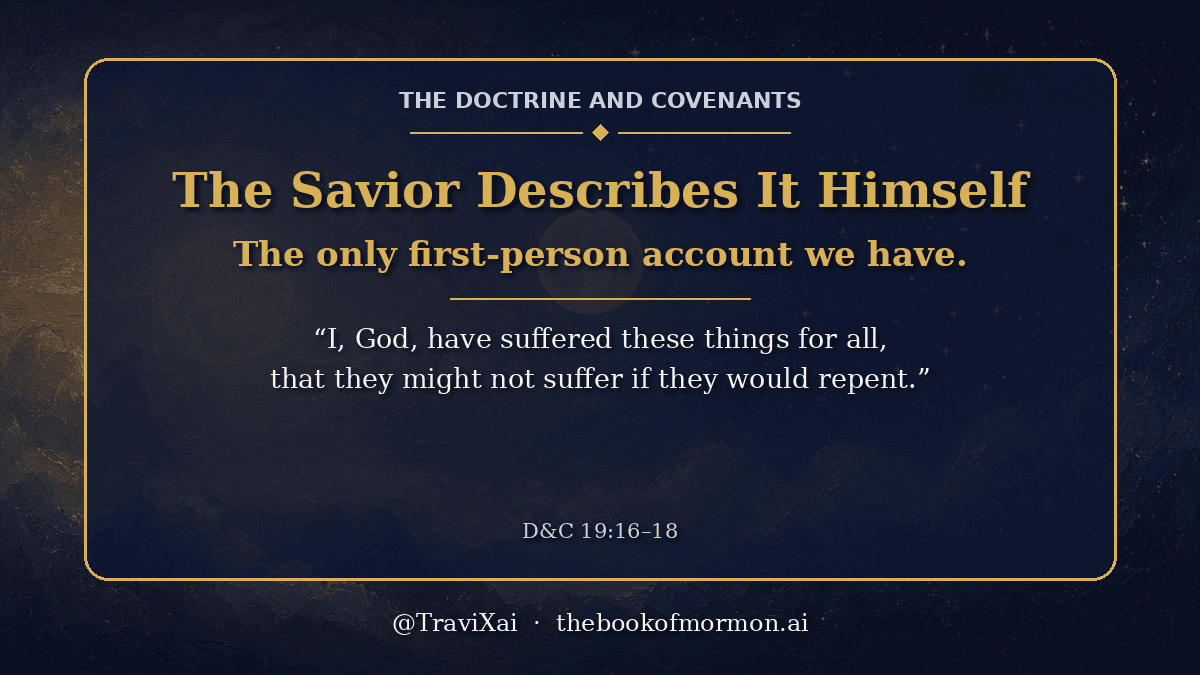
D&C 19 is the only first-person description of the Atonement in scripture: “For behold, I, God, have suffered these things for all, that they might not suffer if they would repent; but if they would not repent they must suffer even as I; which suffering caused myself, even God, the greatest of all, to tremble because of pain, and to bleed at every pore, and to suffer both body and spirit—and would that I might not drink the bitter cup, and shrink—nevertheless, glory be to the Father, and I partook and finished my preparations unto the children of men” (D&C 19:16–19).
He now pleads our cause: “Father, behold the sufferings and death of him who did no sin, in whom thou wast well pleased; behold the blood of thy Son which was shed … Wherefore, Father, spare these my brethren that believe on my name” (D&C 45:3–5). Section 76 names the cross: “he came into the world, even Jesus, to be crucified for the world, and to bear the sins of the world” (D&C 76:41). The exalted are “just men made perfect through Jesus the mediator of the new covenant, who wrought out this perfect atonement through the shedding of his own blood” (D&C 76:69).
The Pearl of Great PriceChosen from the beginning
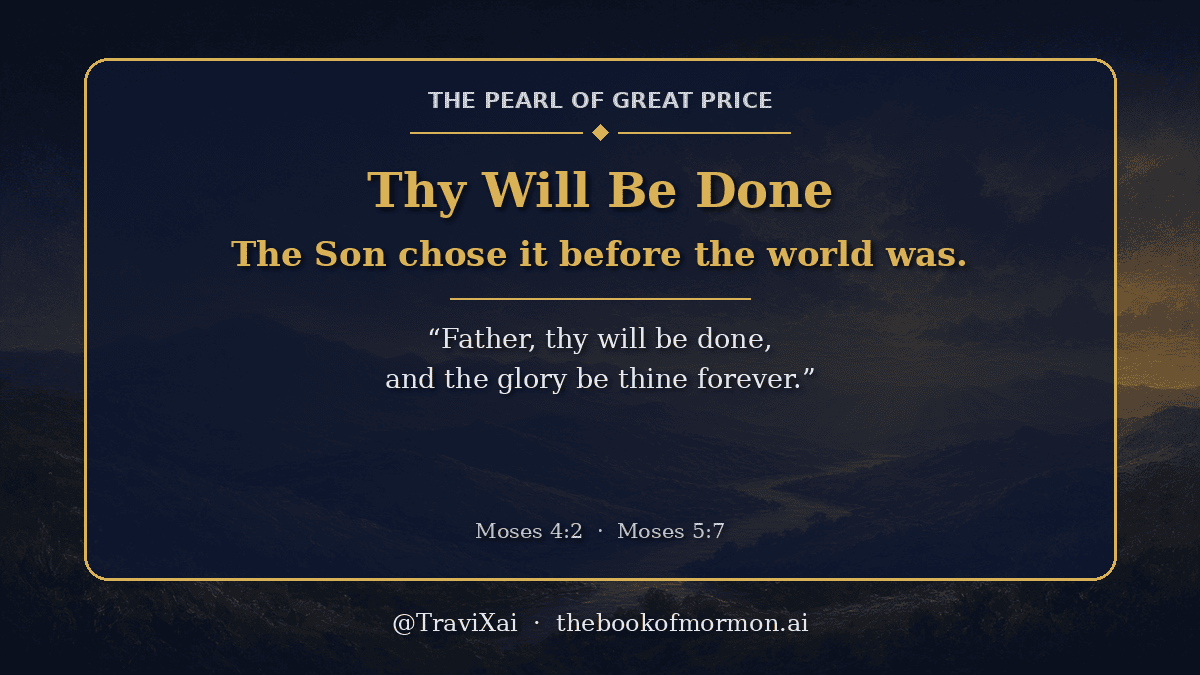
The Atonement was planned before the world. In the premortal council the Father’s “Beloved Son, which was my Beloved and Chosen from the beginning, said unto me—Father, thy will be done, and the glory be thine forever” (Moses 4:2). After the Fall, the Holy Ghost testified to Adam: “I am the Only Begotten of the Father from the beginning, henceforth and forever, that as thou hast fallen thou mayest be redeemed, and all mankind, even as many as will” (Moses 5:9). Enoch was taught that we must “be cleansed by blood, even the blood of mine Only Begotten; that ye might be sanctified from all sin” (Moses 6:59). See What Do Latter-day Saints Believe About the Fall?.
Grace and the goalWhat the Atonement makes possible
Everyone will be resurrected because of Christ, whatever they did (Helaman 14:17). Forgiveness comes through repentance: “unto those who have a broken heart and a contrite spirit; and unto none else can the ends of the law be answered,” and “there is no flesh that can dwell in the presence of God, save it be through the merits, and mercy, and grace of the Holy Messiah” (2 Nephi 2:7–8). “It is by grace that we are saved, after all we can do” (2 Nephi 25:23) does not mean grace kicks in after we have done our part. It means grace is what saves, whatever we have managed to do. Moroni puts it this way: “then is his grace sufficient for you, that by his grace ye may be perfect in Christ” (Moroni 10:32). See Are Latter-day Saints Saved?.
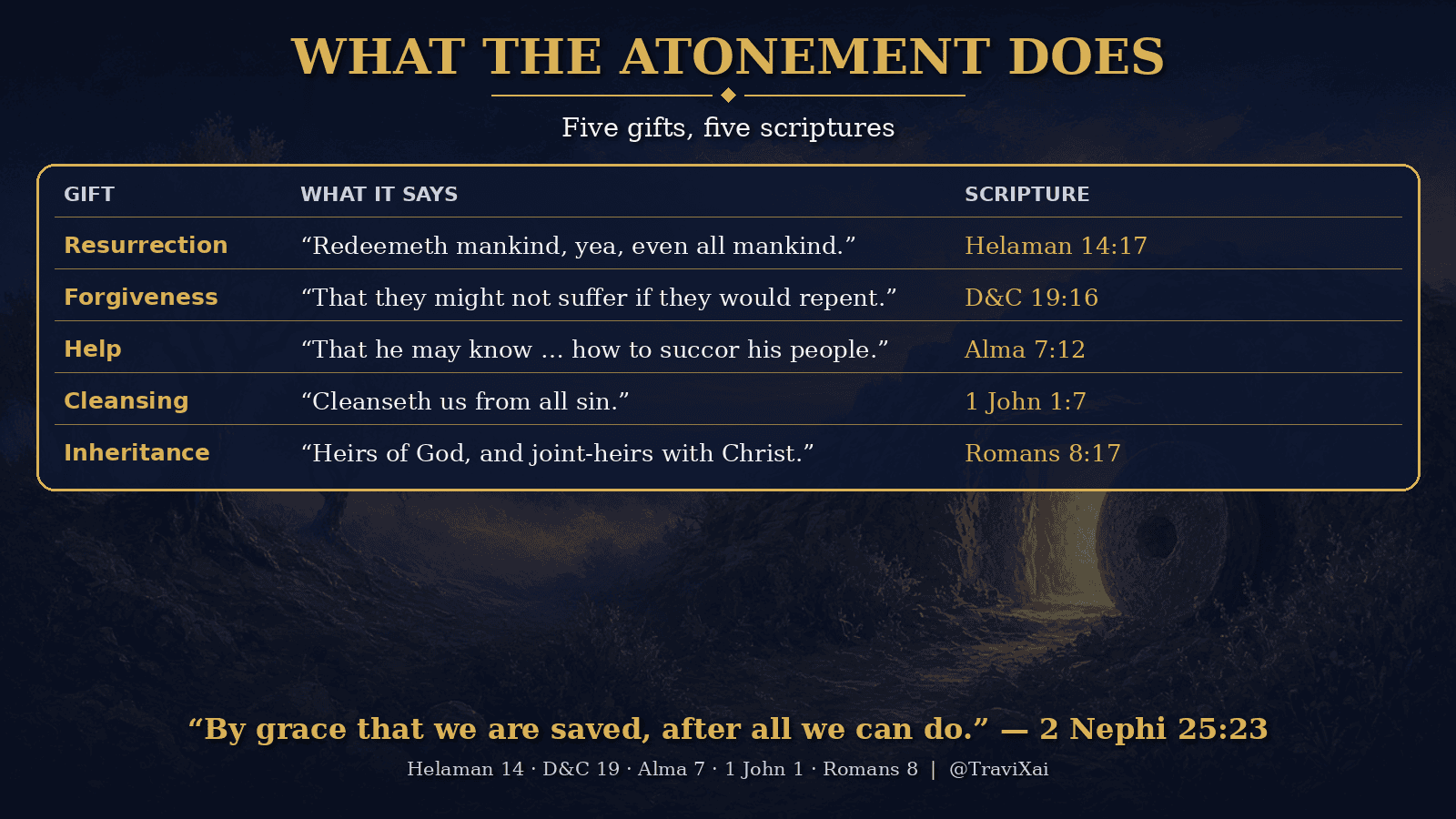
The Atonement aims higher than forgiveness. The Father’s stated work is “to bring to pass the immortality and eternal life of man” (Moses 1:39), and Paul says what eternal life includes: “if children, then heirs; heirs of God, and joint-heirs with Christ” (Romans 8:16–17). Through Christ’s blood the Father can give His children what He has, including eternal increase and the work of creation as He does it (D&C 132:19–20). Scripture also shows the order. Even in Gethsemane the Son said, “glory be to the Father” (D&C 19:19), and before the world He said, “the glory be thine forever” (Moses 4:2). Exaltation through the Atonement makes us heirs. It never puts us above our Father. He is our Father forever. See The Three Degrees of Glory.
Check the premiseThe presuppositions baked into the question
Before this question can be answered fairly, the person asking has to justify a few assumptions packed inside it:
- That Latter-day Saints put Gethsemane in place of the cross. Scripture we hold puts the cross at the center: 1 Nephi 11:33, 3 Nephi 27:14 and D&C 76:41. We teach Gethsemane and the cross and the Resurrection.
- That not wearing crosses means not valuing the Crucifixion. We choose to show the living Christ. A symbol is not a creed. See Why Don’t Latter-day Saints Wear Crosses?.
- That Latter-day Saints earn salvation by works. “No flesh … can dwell in the presence of God, save it be through the merits, and mercy, and grace of the Holy Messiah” (2 Nephi 2:8).
- That “atonement” is not a biblical word. It is in the KJV: Romans 5:11 and Leviticus 17:11.
- That Luke 22:44 is too doubtful to use. It is attested in the second century, and Mosiah 3:7 and D&C 19:18 confirm it independently.
FAQQuick answers
What is the Atonement of Jesus Christ?
His suffering in Gethsemane, death on the cross and Resurrection, by which He paid for the sins of the repentant, overcame death for all and opened the way back to the Father (Article of Faith 3; Alma 7:11–13).
Do Latter-day Saints believe Jesus bled in Gethsemane?
Yes. Luke 22:44 records “great drops of blood,” Mosiah 3:7 says “blood cometh from every pore,” and in D&C 19:18 Christ says He bled “at every pore.”
Do Latter-day Saints believe in the cross?
Yes. Christ was “lifted up upon the cross and slain for the sins of the world” (1 Nephi 11:33; 3 Nephi 27:14; D&C 76:41).
Why was an atonement necessary?
Because mercy cannot “rob justice.” Christ paid justice’s demands so that mercy can claim the penitent (Alma 42:15, 25; Alma 34:16).
Does the Atonement cover more than sin?
Yes. Christ took on “the pains and the sicknesses of his people” and “their infirmities” so He can succor us (Alma 7:11–12; Hebrews 4:15).
Who is resurrected because of the Atonement?
Everyone. “The resurrection of Christ redeemeth mankind, yea, even all mankind” (Helaman 14:17); “in Christ shall all be made alive” (1 Corinthians 15:22).
What does “after all we can do” mean?
It means we are saved by grace whatever we have been able to do. Grace is the power that saves and perfects us (2 Nephi 25:23; Moroni 10:32).
Does the Atonement make us equal to God the Father?
No. It makes us “joint-heirs with Christ” (Romans 8:17), heirs of what the Father has. The Father is always our Father and always above us. Even the Son says, “glory be to the Father” (D&C 19:19).
SummaryKey takeaways
- The Atonement is Gethsemane, the cross and the Resurrection together.
- Three scriptures witness that Christ bled in Gethsemane: Luke 22:44, Mosiah 3:7 and D&C 19:18.
- It is infinite, covering sin, pain, sickness and death (Alma 34:10; Alma 7:11–12).
- Grace is what saves. Repentance is how we receive it (2 Nephi 2:7–8).
- It makes us heirs of the Father, never His superiors (Romans 8:17; D&C 19:19).
Read D&C 19 and Alma 7 this week. For quick, sourced answers, open Galatians18, and follow me on X at @TraviXai.
Sources
- King James Bible (churchofjesuschrist.org): Leviticus 17:11 · Isaiah 53:4–5 · Matthew 26:39 · Luke 22:41–44 · John 10:17–18 · Romans 5:11 · Romans 8:16–17 · 1 Corinthians 15:22 · Hebrews 4:15 · 1 Peter 2:24 · 1 John 1:7
- Book of Mormon: 1 Nephi 11:33 · 2 Nephi 2:7–8 · 2 Nephi 9:7 · 2 Nephi 9:21 · 2 Nephi 25:23 · Mosiah 3:7 · Alma 7:11–12 · Alma 34:9–10 · Alma 34:16 · Alma 42:15 · Alma 42:25 · Helaman 14:17 · 3 Nephi 27:14 · Moroni 10:32
- Doctrine and Covenants: D&C 19:16–19 · D&C 45:3–5 · D&C 76:41 · D&C 76:69 · D&C 132:19–20
- Pearl of Great Price: Moses 1:39 · Moses 4:2 · Moses 5:7–9 · Moses 6:59 · Article of Faith 3
- Manuscript note on Luke 22:43–44: absent from Papyrus 75 and Codex Vaticanus; present in Codex Sinaiticus (original hand) and Codex Bezae; the bloody sweat is cited by Justin Martyr (Dialogue with Trypho 103) and Irenaeus (Against Heresies 3.22.2).
- Featured image and in-article graphic: original graphics by thebookofmormon.ai (painterly backgrounds; no photographs or likenesses of real people).